
A follow-on to What does the Patriot Air and Missile Defense System cost? (April 2024)
When we published our cost breakdown of the Patriot Air and Missile Defense System in April 2024, the arithmetic was uncomfortable but stable. A battery cost roughly $360 million bare. The magazine cost more than the fire unit. A four-launcher battery loaded with 24 PAC-3 MSE and eight GEM-T came to approximately $560 million — meaning the missiles alone accounted for something on the order of 36 percent of the total, and the PAC-3 MSE component alone for 30 percent.
That structure — where the reload is the dominant cost driver over a system’s life — is the central economic fact of modern long-range air defense. It is why Patriot procurement decisions are so politically difficult, and why the gap between owning a battery and sustaining one is where most national plans quietly fail.
On 20 July 2026, at Farnborough, Lockheed Martin introduced a variable that changes this arithmetic.
What was announced
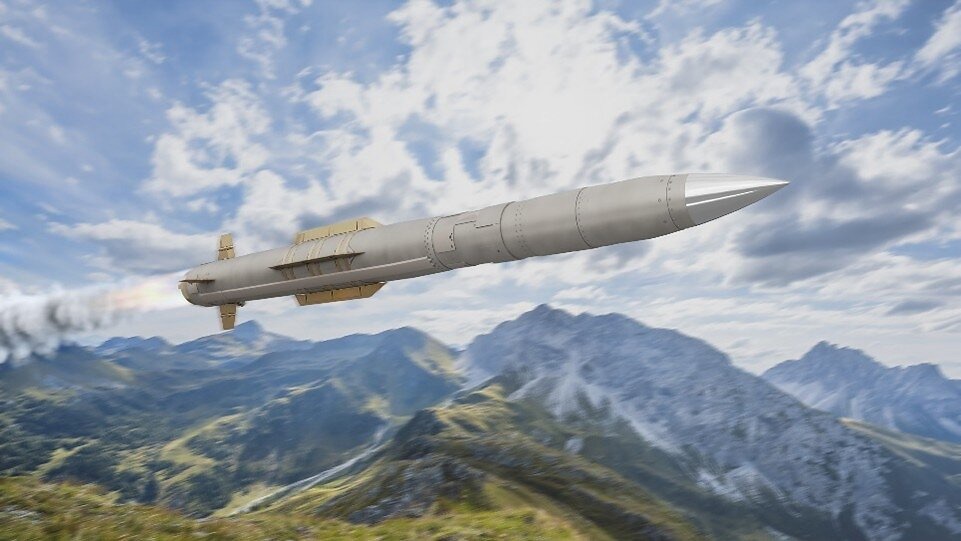
Lockheed Martin announced the PAC-3 Adapted Capability Effector (PAC-3 ACE), a low-cost interceptor built to defeat a wide range of air and missile threats for less than half the cost of a PAC-3 MSE per unit. By leveraging the existing PAC-3 fire-control architecture and the Integrated Battle Command System, the company says the new interceptor will cost less than half as much as the in-production PAC-3 MSE while providing a high-volume option for defeating aircraft, cruise missiles, and shorter-range ballistic missile threats.
The threat set is explicitly bounded. PAC-3 ACE is designed to counter airbreathing threats, cruise missiles, and close-range and short-range ballistic missiles within a single platform. Note what is absent from that list: medium-range ballistic missiles. This is not the missile that closes Norway’s BMD requirement, and readers should resist the temptation to read it that way.
Lockheed states it will collaborate with American and European industry partners and suppliers, and describes ACE as a rapidly fielded complement to existing Patriot interceptors. Complement, not replacement — the word choice matters, and we will return to it.
The unit price question
Public figures require care. Our 2024 analysis used approximately $7 million for PAC-3 MSE, derived from Foreign Military Sale case values that bundle in logistics, spares, training, and support. Current open reporting works from a lower baseline: based on the ballpark figure provided by Lockheed Martin, a single PAC-3 ACE would cost around $2.5 million, compared to roughly $5 million for the PAC-3 MSE.
This discrepancy is not a contradiction. It is the difference between flyaway unit cost and FMS case cost, and it is the single most common source of error in public debate about air defense economics. A ratio of “less than half” is the honest claim. An absolute price of $2.5 million is a Farnborough press-release figure that has not yet survived contact with a signed contract, tooling amortisation, European co-production overheads, or the surcharge structure of Foreign Military Sales.
For the purposes of this analysis, we therefore model ratios, not absolutes.
Rebuilding the battery cost
Taking our original 2024 framework and holding all non-missile costs constant:
Configuration: / Cost: Fire unit / Missiles / Total
2024 baseline: 24 PAC-3 MSE + 8 GEM-T $360M ~$200M ~$560M
All-ACE substitution: 24 ACE + 8 GEM-T $360M ~$116M ~$476M
Mixed: 12 MSE + 12 ACE + 8 GEM-T $360M ~$158M ~$518M
Constant-cost volume: ~48 ACE + 8 GEM-T $360M+ ~$200M ~$560M
Figures indicative, using FMS-basis pricing consistent with our 2024 article. The fourth row assumes additional launchers.
Three observations follow.
First, the battery does not become cheap. Substituting ACE for every PAC-3 MSE in a standard load-out reduces total battery cost by roughly 15 percent. That is meaningful, but it does not transform a $560 million capability into an affordable one. The fire unit — radar, launchers, engagement control station, power, communications, logistics tail — remains the floor, and ACE does nothing to lower it. Anyone expecting a cheaper missile to make Patriot accessible to smaller budgets has misread where the money sits.
Second, the real gain is depth, not savings. For the same magazine budget, a nation can hold roughly twice the interceptor count. This is the far more consequential effect. The announcement comes as Patriot missile stocks are under immense pressure globally and after the U.S. Army made its hunt for lower cost interceptors official. The binding constraint in every recent conflict has not been the number of fire units but the number of rounds behind them.
Third, the cost-per-engagement problem is only partially addressed. PAC-3 interceptors have been cited at an estimated $4 million against the roughly $35,000 price of an Iranian Shahed-type drone. Halving the interceptor still leaves an exchange ratio of some 70:1 against a cheap one-way attack drone. ACE improves a catastrophic economic exchange to a merely bad one. It does not solve the low-end problem — and this is precisely why the SHORAD and VSHORAD layer cannot be substituted by a cheaper long-range round, a point we have made repeatedly and which this announcement does not disturb.
A cheaper interceptor does not make a Patriot battery affordable. It makes a Patriot battery sustainable. These are different problems, and only one of them is Norway’s.
Why “complement” is the operative word
The deliberate framing of ACE as complementary rather than substitutional has a straightforward architectural logic. A Patriot battery’s load-out is a portfolio problem: GEM-T for cost-efficient volume against airbreathing threats, PAC-3 MSE for the demanding ballistic intercepts, and — now — ACE for the broad middle band of cruise missiles, aircraft, and shorter-range ballistic threats where MSE is capability-excessive and GEM-T is capability-marginal.
Reporting notes that ACE’s configuration appears notably similar to the PAC-3 MSE in Lockheed’s released graphic, which is consistent with an approach that preserves the seeker and fire-control lineage while economising elsewhere — likely in propulsion, materials, and manufacturing tolerance. If ACE retains the twelve-per-launcher packing density of MSE rather than the four-per-launcher of GEM-T, the magazine-depth implications compound: a launcher’s worth of ACE would offer three times the round count of a GEM-T launcher at a comparable total cost. This remains unconfirmed and is the single most important technical parameter for anyone modelling battery economics.
The trade being made is almost certainly at the top end of the ballistic envelope. That is a rational trade — most engagements are not against the hardest target — but it means ACE cannot be counted toward a ballistic missile defense requirement of the kind Norway has left unresolved since 2016.
The European industrial dimension
The most strategically interesting element of the announcement is not the price. Lockheed’s stated intent to collaborate with American and European industry partners and suppliers, presented as enhancing the resilience of the U.S. defense industrial base worldwide, arrives at a moment when European interceptor production capacity — not European procurement budgets — has become the limiting factor on delivery timelines.
As one analysis observes, increasing production to meet demand in a short space of time creates stress throughout the supply chain, stress that can be difficult to absorb. A new missile designed from the outset for high-rate manufacture and distributed European production addresses that constraint more directly than any additional order for MSE could.
This has obvious relevance to the EDIP framework and to European co-production debates more broadly. It also raises a question worth watching: whether a US-designed, European-co-produced interceptor is understood in Brussels as European industrial capacity or as American market consolidation dressed in a partnership. The answer will differ depending on who is asked and in which capital.
What this means for Norway
Norway’s position is distinctive and largely unaffected in the near term. Under the revised Long-Term Defence Plan, acquisition of long-range air defense does not begin until 2033. Norway has no Patriot batteries, no Patriot magazine, and no pending competition in which ACE could be scored.
Three implications nonetheless deserve recording.
The timing is favourable in one narrow sense. A nation that has not yet bought will enter the market after ACE has matured, after co-production arrangements are established, and with a broader load-out menu than Sweden or Poland faced. Whether this is worth eighteen years of gap is a separate question, and one we have addressed elsewhere at length.
It does not alter the comparative position. Sweden, Finland, and Denmark have made binding system decisions. A cheaper interceptor for a system Norway has not selected changes nothing about that comparison. If anything, it modestly improves the sustainment economics of the Swedish investment relative to a Norwegian non-investment.
It does not touch the BMD requirement. ACE’s stated envelope stops at short-range ballistic missiles. The requirement Norway has carried unfulfilled since 2016 concerns a more demanding threat class, and the candidate systems for it — PAC-3 MSE, SAMP/T NG, David’s Sling — remain exactly as they were on 19 July 2026.
Provisional conclusions
PAC-3 ACE is best understood as a magazine-depth instrument, not a procurement-cost instrument. It reduces the marginal cost of holding rounds; it does not reduce the fixed cost of holding a system. For nations that already operate Patriot, this is materially good news and will show up in sustainment budgets within a few years. For nations that do not, it changes very little.
The figures in this analysis are provisional. There is, as yet, no contract, no FMS case, no confirmed European production arrangement, and no independent verification of the price claim. We would note that low-cost interceptor programmes have a long history of converging upward toward the systems they were meant to undercut. The claim of “less than half” should be revisited when the first signed case appears — as should our own 2024 numbers, which we will update in a consolidated revision once ACE pricing is documented rather than announced.
Image: Courtesy of Lockheed Martin
This article was produced with AI assistance.

