
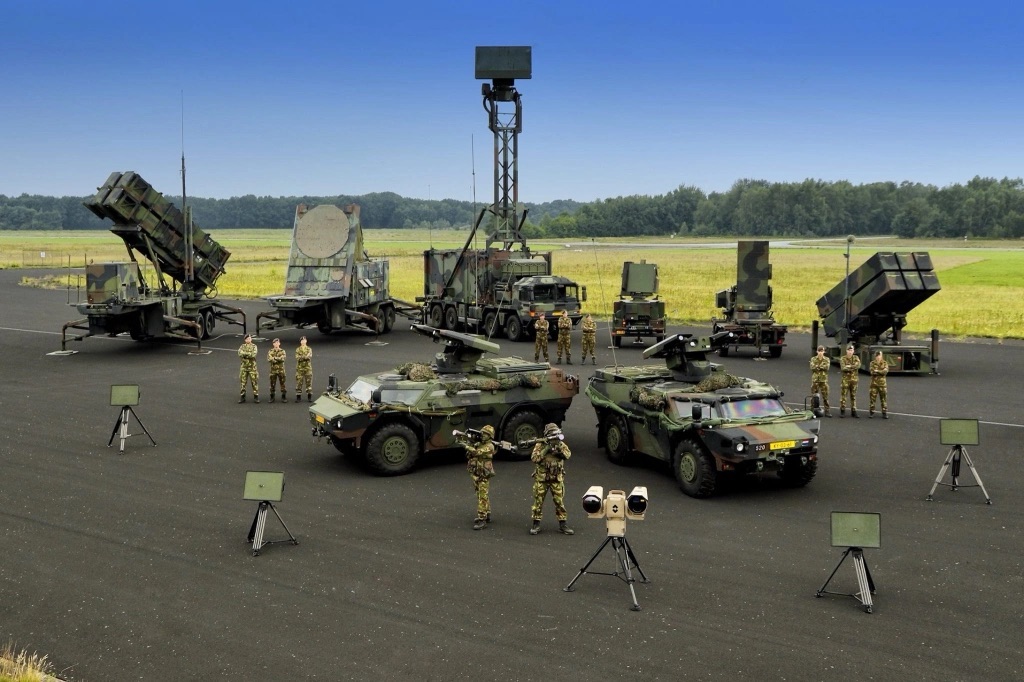
The Ukraine conflict has fundamentally validated two cornerstone air defense systems: Norway’s NASAMS and America’s PATRIOT. Both systems have proven their combat effectiveness against sophisticated Russian threats, but analysis reveals they serve complementary rather than competitive roles in modern air defense architecture. NASAMS excels at cruise missile and aircraft interception with 94% effectiveness at significantly lower cost, while PATRIOT specializes in ballistic missile defense with proven success against hypersonic threats. For NATO allies, the strategic question isn’t which system to choose, but how to optimize their combined deployment.
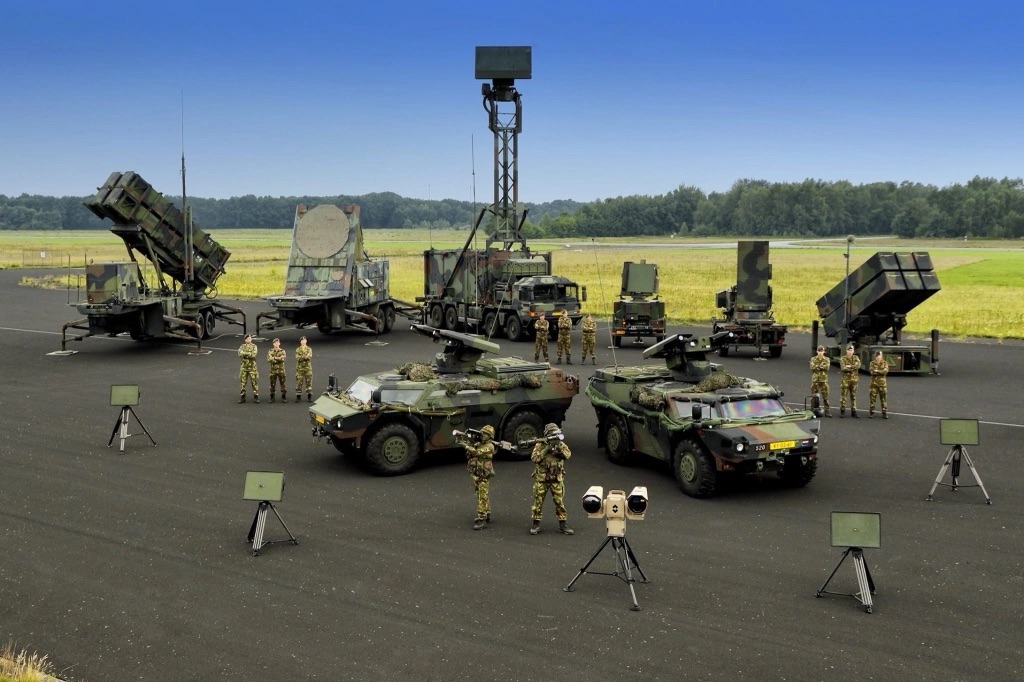
This comprehensive analysis examines both systems’ technical capabilities, operational performance, and strategic implications for Nordic and European defense. The findings demonstrate that Norway’s NASAMS represents a cost-effective, mobile solution that has forced Russian tactical adaptations, while PATRIOT provides specialized high-end protection that no other system can match.
Norwegian engineering excellence proven in combat
The Norwegian Advanced Surface-to-Air Missile System (NASAMS) represents a remarkable success story of Norwegian defense innovation. Developed by Kongsberg Defence & Aerospace in partnership with Raytheon, NASAMS has evolved from protecting Norwegian airspace to defending the U.S. National Capital Region and proving its mettle in Ukrainian skies.
NASAMS III, the current generation, demonstrates sophisticated engineering with its distributed architecture allowing components to be separated by over 20 kilometers from the Fire Distribution Center. This design philosophy prioritizes survivability through dispersion—a lesson learned from Norwegian Cold War doctrine. The system’s AN/MPQ-64F1 Sentinel radar provides 360-degree coverage with 2-second data updates, while the upcoming GhostEye radar, co-developed with Norway, will incorporate gallium nitride technology for enhanced performance.
The system’s missile flexibility represents perhaps its greatest technical achievement. NASAMS employs the same AIM-120 AMRAAM missiles used by fighter aircraft, creating logistics synergies that reduce costs and complexity. The newer AMRAAM-ER extends range to 50 kilometers— a 70% improvement in maximum altitude engagement. This dual-use approach means NATO air forces maintain common missile inventories, streamlining supply chains and reducing training requirements.
Combat performance in Ukraine has been exceptional: 94% interception success rate with over 900 aerial targets destroyed since November 2022. Remarkably, 60% of these intercepts were cruise missiles, including advanced Russian Kh-101, Kh-555, and Kalibr variants. The system’s finest moment came when a single NASAMS battery intercepted 11 Russian cruise missiles in under two minutes— demonstrating the rapid engagement capability that sets it apart from slower-reacting systems.
PATRIOT’s evolution from Cold War stalwart to modern defender
The PATRIOT system represents four decades of continuous evolution, transforming from a Cold War-era anti-aircraft system into today’s premier ballistic missile defense platform. Current PAC-3 MSE missiles cost $7 million each but provide unmatched capability against ballistic threats, with nearly double the range of earlier versions and enhanced agility for engaging hypersonic weapons.
PATRIOT’s technical sophistication centers on its AN/MPQ-65A radar with 5,161 phased array elements and next-generation LTAMDS radar entering service in 2025. The system’s hit-to-kill technology in PAC-3 missiles represents a quantum leap over earlier blast-fragmentation approaches, directly destroying incoming threats through kinetic impact. This precision eliminates the debris rain that plagued earlier systems, critical for defending populated areas.
The system’s combat record spans five nations and 250+ engagements since 1982. In Ukraine, PATRIOT has successfully intercepted over 20 Russian Kinzhal hypersonic missiles— weapons Russia claimed were “invincible.” This achievement forced Russian tactical adaptations and demonstrated that advanced air defense can counter emerging threats through continuous modernization rather than complete system replacement.
However, PATRIOT’s complexity demands significant resources. A fully equipped battery requires 70-90 personnel and costs up to $1.09 billion, compared to NASAMS’ more modest footprint. The system’s 12-month production timeline has created supply constraints as global demand increased 150% since 2022. Switzerland’s recent $450 million sustainment contract for just five systems illustrates the long-term investment required.
Technical comparison reveals complementary strengths
Direct comparison reveals these systems address different threat spectrums with remarkable efficiency. NASAMS provides 25-50 kilometer engagement range optimized for cruise missiles and aircraft, while PATRIOT offers 90-160 kilometer range specialized for ballistic missile interception. This difference reflects fundamental design philosophies: NASAMS prioritizes cost-effective area defense, while PATRIOT focuses on high-value asset protection.
Mobility characteristics highlight another key distinction. NASAMS achieves 10-minute deployment time with air-liftable launchers, making it ideal for rapidly changing tactical situations. Components can be dispersed over 20 kilometers, enhancing survivability against counter-battery fire. PATRIOT’s battalion-level operations require more complex deployment procedures but provide greater defensive coverage once established.
The cost differential is striking and strategically significant. NASAMS batteries cost approximately $180 million versus PATRIOT’s $360 million to $1.09 billion. More importantly, NASAMS’ $300,000 AMRAAM missiles compare favorably to PATRIOT’s $4-7 million interceptors. This cost structure allows Norway and allies to deploy more NASAMS batteries for area defense while reserving PATRIOT for critical assets requiring ballistic missile protection.
Integration capabilities demonstrate NATO interoperability at its finest. Both systems use Link 16 communications and NATO-standard protocols. Significantly, NASAMS was explicitly designed to integrate with PATRIOT systems, creating layered defense networks where NASAMS handles cruise missile threats while PATRIOT engages ballistic missiles. This complementary approach maximizes defensive effectiveness while optimizing resource allocation.
Strategic implications for Nordic and European defense
The Ukraine conflict has accelerated European recognition of air defense gaps, with NATO identifying a 5% shortfall in alliance-wide coverage. Norway’s deployment of NASAMS to protect Poland’s Rzeszów Airport in December 2024 exemplifies how Norwegian systems contribute to collective defense. This deployment protects the critical logistics hub supporting Ukraine while demonstrating NASAMS’ operational flexibility.
Nordic defense cooperation has strengthened significantly, with Norway’s NOK 4.8 billion contract for additional NASAMS systems ensuring continued technological leadership. The Nordic Council’s Vision 2030 emphasizes interoperability and shared capabilities, with NASAMS serving as a cornerstone of regional air defense architecture. Finland’s NATO accession brings additional NASAMS expertise, while Sweden’s integration enhances the alliance’s northern flank protection.
The European Sky Shield Initiative presents interesting dynamics for both systems. ESSI’s 24 participating nations have adopted a multi-layered approach: IRIS-T for short-range, PATRIOT for medium-range, and Arrow-3 for long-range defense. NASAMS’ proven effectiveness positions it as a potential future component, particularly for nations seeking cost-effective cruise missile defense.
Production and industrial base considerations favor Norwegian systems. While PATRIOT faces 12-month production timelines and supply constraints, NASAMS benefits from established AMRAAM production lines and Norwegian manufacturing expertise. Kongsberg’s partnership with Raytheon ensures technology transfer while maintaining Norwegian industrial capabilities— crucial for small nations requiring defense industrial sovereignty.
Lessons from Ukraine reshape air defense doctrine
Ukraine’s experience provides unprecedented real-world validation of both systems’ capabilities and limitations. NASAMS’ 94% success rate against Russian cruise missiles demonstrates the effectiveness of network-centric, distributed defense. The system’s ability to integrate with various sensors and coordinate with other air defense assets validates the Norwegian approach to flexible, adaptable systems.
PATRIOT’s successful interception of Kinzhal hypersonic missiles represents a watershed moment in air defense history. These engagements proved that advanced radar technology and hit-to-kill interceptors can counter weapons designed to be “unstoppable.” However, the high cost per engagement—$7 million missiles against million-dollar targets—highlights the economic warfare aspect of modern air defense.
The conflict has accelerated software-defined capabilities in both systems. Real-time algorithm updates based on combat performance allow existing hardware to counter new threats without expensive hardware replacements. This adaptability proves crucial as adversaries develop countermeasures and new attack vectors.
Mobile deployment advantages have become clear as static installations face constant targeting by long-range precision weapons. NASAMS’ distributed architecture and rapid deployment capability provide survivability advantages that complement PATRIOT’s stronger defensive umbrella. The combination creates defensive depth that complicates adversary targeting while maintaining coverage.
Future outlook and strategic recommendations
The trajectory toward integrated, multi-layered air defense systems favors both NASAMS and PATRIOT, but in different roles. NASAMS’ cost-effectiveness and operational flexibility make it ideal for area defense and rapid deployment scenarios, while PATRIOT’s specialized capability justifies high costs for critical asset protection. Nordic countries should continue investing in both systems while emphasizing interoperability and integration.
Norwegian technological leadership in NASAMS development positions the nation as a crucial NATO ally in air defense innovation. The upcoming GhostEye radar and continued partnership with Raytheon ensure Norwegian influence in next-generation systems. This technological sovereignty provides strategic benefits beyond mere military capability—it ensures Norwegian defense industrial expertise remains world-class.
The production capacity expansion underway for both systems will eventually address current shortages, but alliance coordination remains essential to optimize resource allocation. Norway’s contribution of proven, cost-effective systems that complement rather than compete with American capabilities exemplifies smart alliance defense industrial policy.
For Norway specifically, continued NASAMS investment represents both national security imperatives and industrial policy success. The system’s global deployment demonstrates Norwegian engineering excellence while providing economic returns through international sales. As threats evolve, Norwegian adaptability and innovation in air defense systems will remain crucial for both national defense and alliance contributions.
The NASAMS versus PATRIOT comparison ultimately reveals not competition but complementarity—two systems that together provide comprehensive air defense coverage no single platform can achieve alone. Norway’s success in developing and deploying NASAMS validates the small nation strategy of technological excellence in niche areas, while PATRIOT’s evolution demonstrates the value of continuous modernization in complex systems. Together, they represent the foundation of credible air defense for NATO’s northern flank and beyond.
AI-assisted article.

