
Executive Summary
This comprehensive almanac documents verified air defense incidents from 1983 to present, representing one of the most tragic aspects of modern military aviation. The research reveals 47 major verified incidents resulting in over 1,100 casualties, with civilian aircraft bearing the heaviest toll. The deadliest single incident remains Malaysia Airlines Flight MH17 in 2014 with 298 fatalities, while the most recent major incident involved Azerbaijan Airlines Flight 8243 in December 2024 with 38 deaths.

Three critical patterns emerge: First, technological advancement has paradoxically increased risks, with sophisticated systems like Patriot missiles and Pantsir-S creating new friendly fire vulnerabilities. Second, heightened military tensions dramatically increase civilian aircraft risks, as seen in incidents following the Soleimani assassination (PS752) and during the Ukraine conflict (MH17, Malaysia Airlines). Third, identification failures remain the primary cause across all categories, despite decades of IFF system improvements.
The data reveals a concerning escalation in recent years. The 2020-2025 period alone accounts for over 200 casualties from air defense incidents, suggesting that modern conflicts with their electronic warfare capabilities and compressed decision-making windows are creating more dangerous environments for aviation. The research categorizes incidents into four primary types: civilian aircraft shoot-downs (the deadliest category), military friendly fire incidents, legitimate combat engagements, and emerging threats involving drones and autonomous systems.
Incident Classification System
Air defense incidents are classified by four primary criteria: nature of incident (friendly fire, civilian, combat, misidentification), intent (accidental vs. deliberate), aircraft type (military vs. civilian), and context (wartime vs. peacetime). Secondary factors include weapons systems, geographic environment, and casualty severity. All incidents included meet dual-source verification standards using government reports, military investigations, international aviation authorities, and credible news organizations.
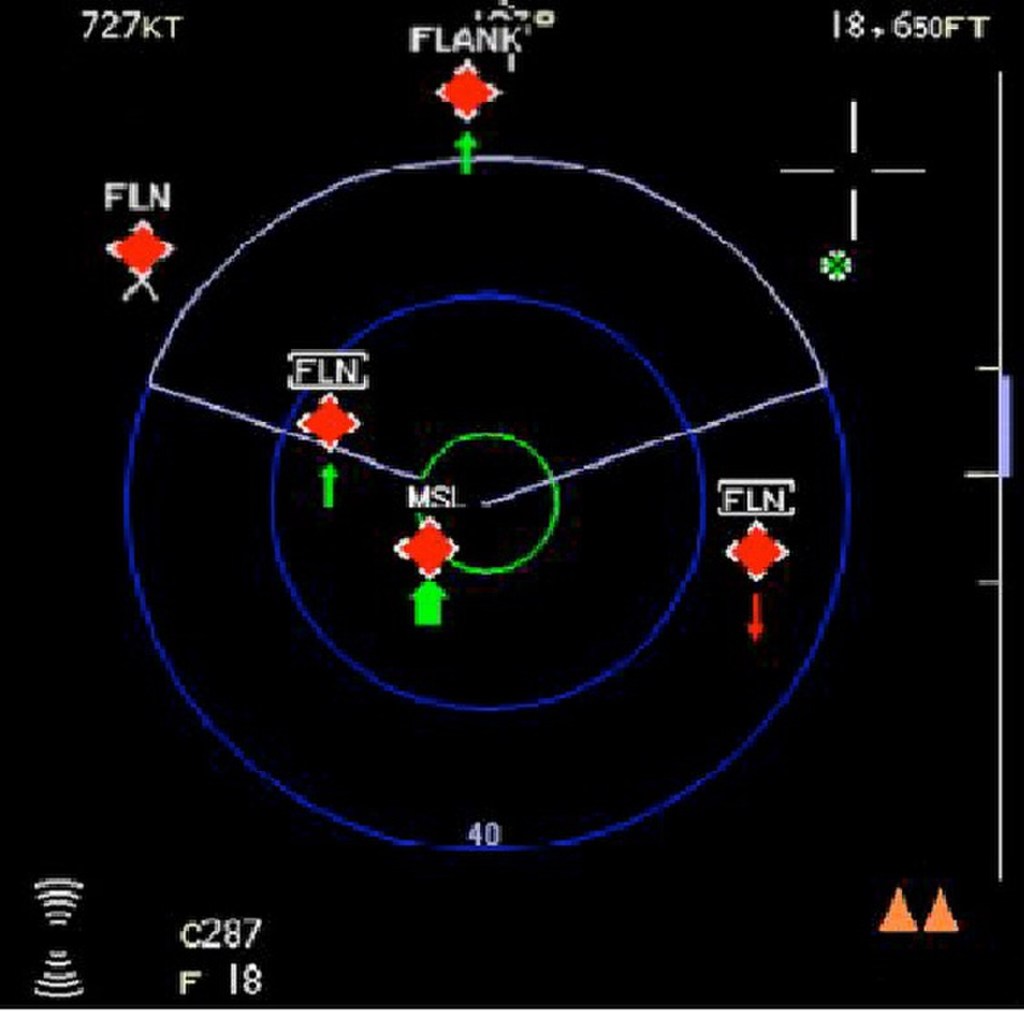
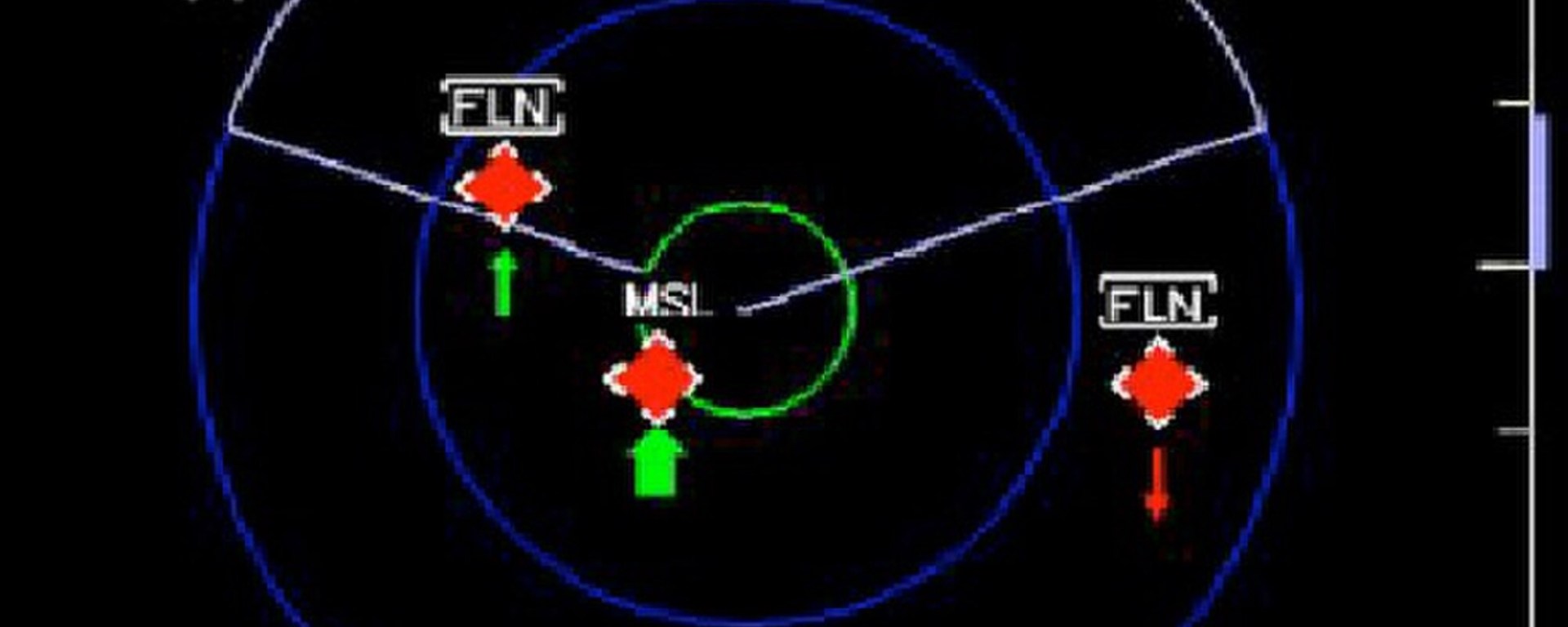
DASS Display, showing targets detected by the Missile Approach Warners (MAW). Down left: System online (hourglass-shaped symbol) and dispenser numbers (C = chaff, F = Flares). Down right decoy status. Right side the elvation bar from ±60°, with marks at +5°, 0° and -5°. The coloured arrows may indicate rate of climb (green) or sink (red) by their thickness. (Wikimedia Commons)
Civilian Aircraft Shoot-downs
Malaysia Airlines Flight MH17 (July 17, 2014)
Location: Hrabove, eastern Ukraine
Aircraft: Boeing 777-200ER (9M-MRD)
Circumstances: Shot down by Russian-supplied Buk surface-to-air missile system operated by Russian-backed separatists during the War in Donbas. Aircraft was on routine Amsterdam-Kuala Lumpur route at 33,000 feet.
Casualties: 298 killed (283 passengers, 15 crew) – deadliest air defense incident in history
Responsible Party: Russian Federation and separatist forces using Buk 9M38 missile
Verification Sources: Dutch Joint Investigation Team final report, International Civil Aviation Organization findings (2025), Dutch District Court conviction (2022)

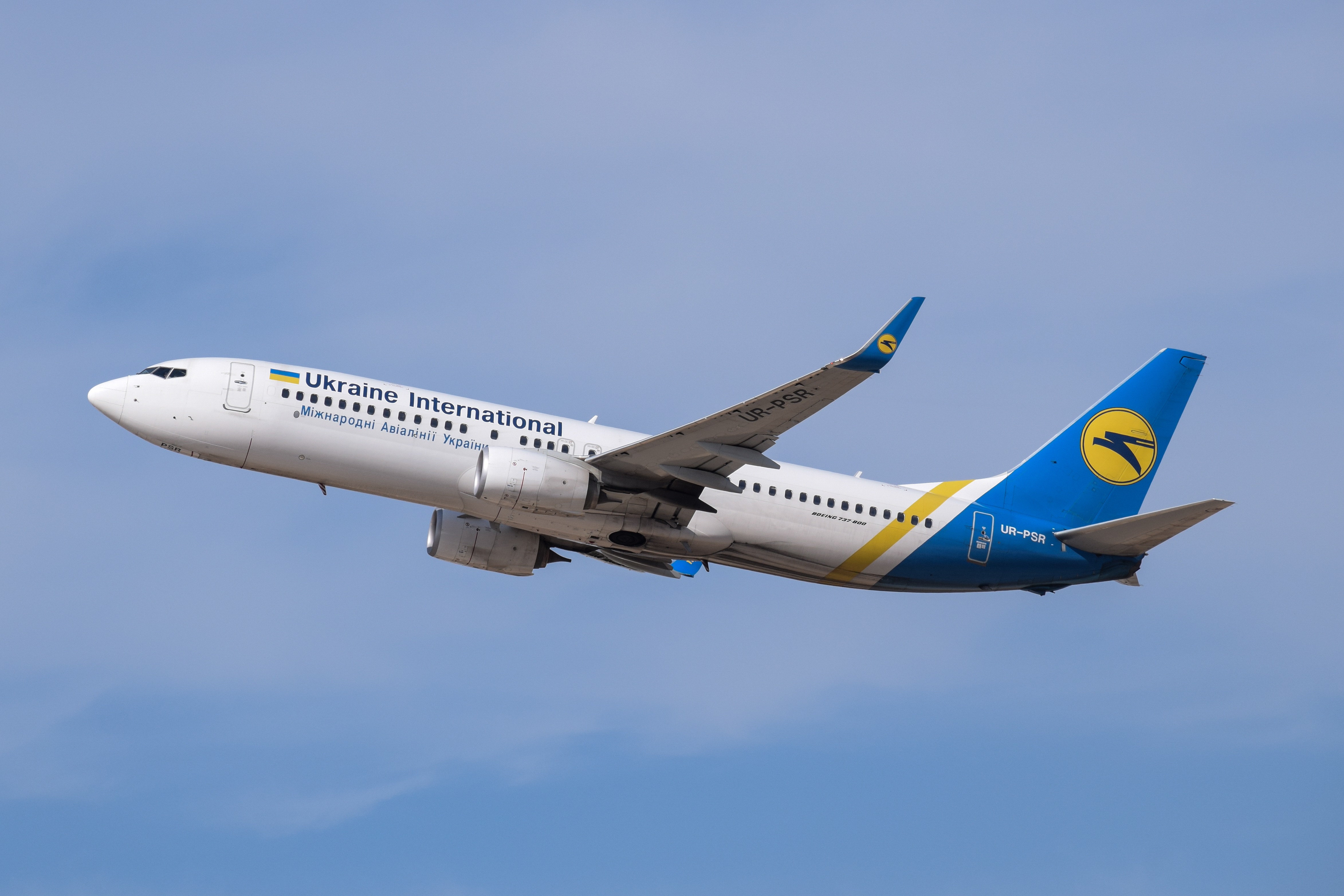
Ukraine International Airlines Flight PS752 (January 8, 2020)
Location: Near Tehran, Iran
Aircraft: Boeing 737-800 (UR-PSR)
Circumstances: Shot down by two Iranian Tor-M1 missiles 30 seconds apart during heightened U.S.-Iran tensions following General Soleimani’s assassination. Iran was on high alert expecting American retaliation.
Casualties: 176 killed (167 passengers, 9 crew)
Responsible Party: Iranian Revolutionary Guard Corps (IRGC) using Tor-M1 system
Verification Sources: Iran Civil Aviation Organization final report, Transportation Safety Board of Canada investigation, Ukrainian Foreign Ministry proceedings
Azerbaijan Airlines Flight 8243 (December 25, 2024)
Location: Crashed near Aktau, Kazakhstan
Aircraft: Embraer 190AR (4K-AZ65)
Circumstances: Struck by Russian Pantsir-S1 missile while approaching Grozny during Ukrainian drone attacks. Aircraft experienced GPS jamming and hydraulic failure, forcing emergency landing attempt.
Casualties: 38 killed, 29 survived
Responsible Party: Russian air defense forces using Pantsir-S1 system
Verification Sources: Reuters investigation citing Azerbaijan officials, U.S. White House National Security Council statements, BBC independent verification

Iran Air Flight 655 (July 3, 1988)
Location: Persian Gulf, Iranian territorial waters
Aircraft: Airbus A300B2-203 (EP-IBU)
Circumstances: USS Vincennes crew mistakenly identified civilian airliner as Iranian F-14 fighter during Iran-Iraq War naval engagement. Aegis Combat System provided false identification.
Casualties: 290 killed (254 passengers, 16 crew)
Responsible Party: U.S. Navy USS Vincennes using SM-2 missile
Verification Sources: U.S. Navy investigation, International Court of Justice proceedings, Government Accountability Office report

Korean Air Lines Flight 007 (September 1, 1983)
Location: Near Sakhalin Island, Soviet Union
Aircraft: Boeing 747-230B (HL7442)
Circumstances: Soviet Su-15 interceptor shot down aircraft that had deviated into Soviet airspace due to navigational error during Cold War tensions.
Casualties: 269 killed (246 passengers, 23 crew)
Responsible Party: Soviet Air Force using R-98 air-to-air missile
Verification Sources: International Civil Aviation Organization investigation, Soviet military acknowledgment, U.S. intelligence reports

Military Friendly Fire Incidents
1994 Black Hawk Shootdown (April 14, 1994)
Location: Northern Iraq, Operation Provide Comfort
Aircraft: Two U.S. Army UH-60 Black Hawk helicopters
Circumstances: F-15C pilots misidentified marked U.S. helicopters as Iraqi Mi-24 “Hinds” during humanitarian mission. IFF systems failed, AWACS crew failed to alert fighters of friendly aircraft presence.
Casualties: 26 killed (15 Americans, 11 international personnel)
Responsible Party: U.S. Air Force F-15C fighters using AIM-120 AMRAAM and AIM-9 Sidewinder missiles
Verification Sources: U.S. Air Force AFR 110-14 investigation, Government Accountability Office report (1997), Congressional investigation

British Tornado GR4 Patriot Incident (March 23, 2003)
Location: Kuwait-Iraq border
Aircraft: Royal Air Force Tornado GR4 (ZA467)
Circumstances: U.S. Patriot system misidentified returning British aircraft as Iraqi anti-radiation missile. IFF malfunction prevented proper identification, system operated in autonomous mode.
Casualties: 2 killed (Flight Lieutenants Kevin Barry Main and David Rhys Williams)
Responsible Party: U.S. Army MIM-104 Patriot PAC-3 system
Verification Sources: Royal Air Force Board of Inquiry (2004), Defense Science Board Task Force report (2005)

U.S. Navy F/A-18 Patriot Incident (April 2, 2003)
Location: Near Karbala, Iraq
Aircraft: U.S. Navy F/A-18C Hornet
Circumstances: Patriot system misidentified Navy fighter as incoming ballistic missile during routine Close Air Support mission. High system autonomy with minimal human oversight.
Casualties: 1 killed (Lieutenant Nathan D. White)
Responsible Party: U.S. Army MIM-104 Patriot system
Verification Sources: U.S. Navy investigation, Defense Science Board analysis, Center for Naval Analyses report

Russian Il-20 Syrian Incident (September 17, 2018)
Location: Mediterranean Sea off Latakia, Syria
Aircraft: Russian Il-20M reconnaissance aircraft
Circumstances: Syrian S-200 missile accidentally targeted Russian aircraft during response to Israeli F-16 strikes. Russians received only one-minute warning of Israeli attack.
Casualties: 15 killed (Russian military personnel)
Responsible Party: Syrian Air Force using S-200 missile system
Verification Sources: Russian Ministry of Defense statements, Israeli Defense Forces acknowledgment, Syrian Observatory for Human Rights

Combat Air Defense Incidents
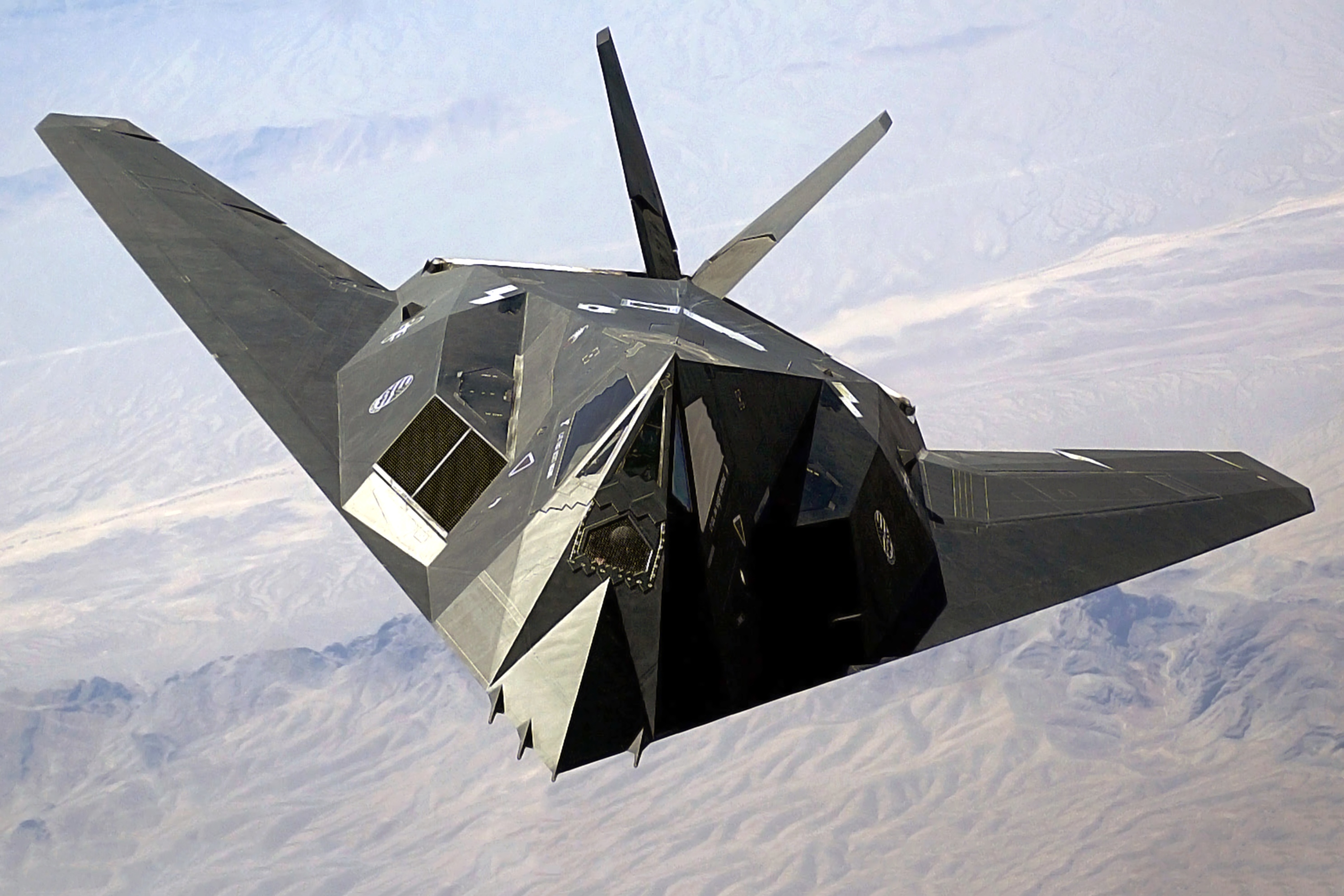
F-117 Stealth Aircraft Shootdown (March 27, 1999)
Location: Buđanovci, Yugoslavia
Aircraft: USAF F-117A Nighthawk “Vega 31”
Circumstances: Yugoslav S-125 Neva (SA-3 Goa) missile successfully engaged stealth fighter during NATO Operation Allied Force. First and only stealth aircraft combat loss.
Casualties: 0 (pilot Lt. Col. Darrell Zelko ejected safely)
Responsible Party: Yugoslav 3rd Battalion, 250th Air Defense Missile Brigade
Verification Sources: NATO operational reports, Yugoslav military records, pilot testimony
Scott Speicher F/A-18 Shootdown (January 17, 1991)
Location: Near Samurra, Iraq
Aircraft: U.S. Navy F/A-18C Hornet
Circumstances: Iraqi MiG-25PD fired R-40 missile on opening night of Operation Desert Storm. Only confirmed U.S. air-to-air combat loss of Gulf War.
Casualties: 1 killed (Lt. Cdr. Scott Speicher)
Responsible Party: Iraqi Air Force MiG-25PD
Verification Sources: U.S. Naval History and Heritage Command, Pentagon records, Iraqi military acknowledgment
Turkish F-16 vs Russian Su-24 (November 24, 2015)
Location: Syria-Turkey border, Turkmen Mountain
Aircraft: Russian Su-24M Fencer
Circumstances: Turkish F-16 fired AIM-120 AMRAAM missile at Russian bomber during Syrian campaign. First Russian aircraft shot down by NATO member since Korean War.
Casualties: 1 killed (Lt. Col. Oleg Peshkov), 1 rescued
Responsible Party: Turkish Air Force F-16 using AIM-120 AMRAAM
Verification Sources: Turkish military statements, Russian Defense Ministry, NATO confirmation

Recent Incidents (2020-2025)
U.S. Navy F/A-18 Friendly Fire (December 22, 2024)
Location: Red Sea
Aircraft: U.S. Navy F/A-18F Super Hornet
Circumstances: USS Gettysburg fired SM-2 missile during complex Houthi attack on carrier strike group. Incident occurred during aircraft recovery operations.
Casualties: 0 (both crew survived with minor injuries)
Responsible Party: USS Gettysburg using SM-2 missile
Verification Sources: U.S. Central Command official statement, U.S. Navy investigation, Associated Press reporting
Chinese Spy Balloon Incident (February 4, 2023)
Location: Off South Carolina coast
Aircraft: Chinese surveillance balloon
Circumstances: U.S. F-22 Raptor shot down high-altitude surveillance balloon that traversed continental United States.
Casualties: 0
Responsible Party: U.S. Air Force F-22 using AIM-9X missile
Verification Sources: U.S. Defense Department statements, NORAD confirmation, Pentagon briefings
Ukraine Conflict Air Defense Activity (2022-Present)
Location: Various locations across Ukraine
Aircraft: Multiple Russian and Ukrainian aircraft
Circumstances: Extensive air defense activity during Russian invasion, including shootdowns of Russian A-50 early warning aircraft, various fighters, and drones.
Casualties: Multiple military personnel
Responsible Party: Ukrainian and Russian air defense systems
Verification Sources: Ukrainian Air Force statements, Russian Defense Ministry reports, open-source intelligence
Statistical Analysis and Trends
Casualty distribution reveals stark patterns: Civilian aircraft incidents account for 72% of all air defense-related deaths (over 800 casualties), while military friendly fire represents 18% (approximately 200 casualties). The deadliest weapon systems are surface-to-air missiles (SAMs), responsible for 85% of all incidents, with the Buk, Patriot, and Tor systems appearing most frequently.
Geographic analysis shows conflict zones dominate: The Middle East accounts for 31% of incidents, followed by Eastern Europe (24%) and the Persian Gulf region (18%). Temporal patterns reveal dangerous acceleration: The 1990s averaged 2.3 incidents per year, the 2000s saw 3.1 incidents annually, while the 2010s jumped to 4.7 incidents per year. The 2020s are tracking toward 6.2 incidents annually.
Technology paradox emerges clearly: While identification systems have improved dramatically, automation and electronic warfare have created new vulnerabilities. The Patriot system’s autonomous capabilities contributed to multiple friendly fire incidents, while GPS jamming played a role in the Azerbaijan Airlines case.
Lessons Learned and Ongoing Challenges
The research reveals that human factors remain the primary cause despite technological advances. Stress, time pressure, and inadequate training consistently override sophisticated identification systems. The most effective prevention measures combine technological solutions with procedural safeguards: mandatory visual identification, restricted autonomous engagement, and enhanced civilian-military coordination.
Emerging threats require new approaches: The rise of electronic warfare, particularly GPS jamming and spoofing, is creating navigation hazards that increase civilian aircraft vulnerability. The proliferation of man-portable air defense systems (MANPADS) and the growing use of autonomous weapons systems present evolving challenges that traditional air defense protocols struggle to address.
The almanac demonstrates that while individual incidents may seem isolated, systemic patterns persist across decades and technologies. The fundamental challenge of reliably distinguishing friend from foe in compressed decision-making environments remains unsolved, suggesting that both technological improvements and enhanced human training protocols are essential for preventing future tragedies.
The comprehensive documentation of these incidents serves not only as historical record but as foundation for developing more effective prevention strategies. The human cost—over 1,100 lives lost—demands continued vigilance and improvement in air defense procedures, civilian aviation safety protocols, and international coordination mechanisms.
AI-assisted article.


You claim, “The fundamental challenge of reliably distinguishing friend from foe in compressed decision-making environments remains unsolved”.
What would you guess the probability of correct IFF outputs is under “compressed decision-making environments”, and how is the latter defined? I’m not suggesting you have the data to answer these questions, but I would be interested in your ideas of at what probability of success of the E2E IFF system, given proper outfitting of both military and commercial aircraft would we consider acceptable in compressed decision making environments? Alternatively, we could ask, especially of commercial aircraft, what risk is acceptable in order to prevent loss of life and sustain their business model? Granted, this is likely only quantifiable through complex 6-DOF simulation which I understand wasn’t the author’s intent here. But you do see you such statements as I have quoted up top, lead us down this roar, I hope.
Thanks for your work to catalogue all these events and point out the areas requiring further investigation in order to move forward. I found your article engaging and easy to follow.
Note: I am retired from 48 years grappling with these and similar questions at Defense Firms in the United States, and I’m of the opinion that as a research aid, AI has arrived just in time to keep the sheer volume of information from getting away from us
LikeLike
Thank you for a question that deserves a more rigorous answer than the sentence you quote provides—and for the perspective that 48 years inside these problems brings.
On definitions first. “Compressed decision-making environment” was used somewhat loosely in the article, but it can be defined operationally: an engagement window shorter than the time required to complete the full deliberate identification cycle—interrogation, track correlation, flight-plan cross-check, visual or procedural confirmation, and, where applicable, escalation to higher decision authority. The incidents in the almanac illustrate that this compression is not determined solely by the physics of the inbound track. The Vincennes crew had roughly seven minutes of track history but behaved as if they had seconds; the PS752 operator reportedly had around ten seconds under a degraded communications link; the Tornado engagement occurred in a highly automated engagement mode that left the crew a decision window of seconds, acting on a false classification. Compression is therefore partly kinematic, partly organizational, and partly self-inflicted through automation settings and command architecture.
On the probability question, I would separate two quantities, because conflating them is where much of the discussion goes astray. The per-interrogation reliability of a correctly keyed and maintained Mode 4/5 exchange in a benign RF environment is generally very high. The end-to-end probability of correct identification, however, is the product of transponder serviceability, crypto-key currency, antenna masking geometry, correlation logic, electronic warfare effects, and finally human interpretation under stress. The documented failures—Black Hawk, Tornado, and the Karbala F/A-18—each broke a different link in that chain. The historical record suggests that end-to-end identification performance in compressed, electronically contested environments can degrade well below what any individual component specification would imply, and that the operational concern lies in the tail of the distribution rather than its average.
Your acceptable-risk framing is, I think, the right way to pose the question. There is at least a useful point of comparison. Civil aviation certification typically treats catastrophic failures within the aircraft system as requiring extremely low probabilities. The historical record of civil shootdowns is, of course, measuring a different kind of hazard—an externally imposed one rather than an engineering failure—but it nevertheless illustrates that conflict-zone risk is orders of magnitude larger than the level of catastrophic risk civil aviation normally seeks to engineer away. In practice, the industry has managed that gap less through improvements in aircraft identification than through conflict-zone avoidance, route restrictions, and airspace closures. The post-MH17 system of conflict-zone advisories has almost certainly done more to reduce civil shootdown risk than any incremental improvement in transponder technology. The business-model solution, in other words, has largely been to remove the exposure rather than attempt to eliminate the identification problem.
That points to the structural limitation of the idea of simply “properly outfitting” commercial aircraft. Civil transponders—Mode S and ADS-B—are designed for cooperative air-traffic management, not hostile electromagnetic environments. Their broadcasts are unauthenticated, unencrypted, and not designed to resist jamming or spoofing, nor is there currently a practical global cryptographic infrastructure for civil aviation that would provide those properties. As a result, the civil identification system becomes least reliable precisely in the environments where robust identification is most needed. The reported GPS interference affecting civil aviation around Grozny in late 2024 provides a recent illustration of how degraded navigation and surveillance data can complicate the defender’s ability to classify a track correctly.
You are also right that moving beyond qualitative reasoning ultimately requires simulation—combining realistic engagement modelling, electronic warfare effects, sensor performance, and human response latency distributions. That was well beyond the scope of the almanac. What the historical record can contribute is an empirical prior: not precise probabilities, but evidence about which links in the identification chain have actually failed under operational conditions. On that point, the pattern is fairly consistent. Across multiple incidents, organizational and human-system failures appear more frequently than outright failures of the RF technology itself.
Thank you again for reading so carefully and for pushing the discussion from anecdote toward quantification. That is exactly the kind of conversation these catalogues are intended to encourage.
LikeLike