
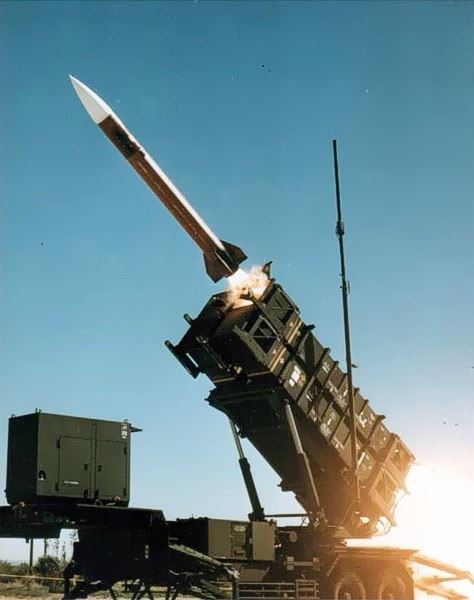
The Patriot Air and Missile Defense System, a cornerstone of Western air defense, is in higher demand than ever. As nations across Europe and the globe seek to bolster their security against increasingly sophisticated aerial threats, a key question arises: What is the actual cost of acquiring this advanced capability?
While the final price of these multi-billion dollar defense contracts can be complex due to industrial partnerships and support packages, public records and official announcements provide a clear framework for understanding the investment required.
The Building Blocks of Patriot: Component Costs
A Patriot system is not a single item but a modular system of components. The core of a Patriot “battery” typically includes a radar system, an engagement control station, power generation, and multiple launching stations.
- A Single Patriot Battery: A new battery with all its essential ground components is estimated to cost around $400 million.
- The Missiles: The launchers are only one part of the equation; the interceptor missiles themselves represent a significant and ongoing expense.
- PAC-2 GEM-T (Guidance Enhanced Missile): This missile, effective against aircraft and cruise missiles, costs approximately $4 million per missile. A standard launcher holds four.
- PAC-3 MSE (Missile Segment Enhancement): A more advanced and agile interceptor designed to defeat tactical ballistic missiles, the PAC-3 MSE comes with a price tag of about $7 million per missile. A launcher can carry twelve of these smaller missiles.
A fully equipped battery with four launchers, loaded with a mix of 24 PAC-3 MSE and eight GEM-T missiles, could therefore have an initial acquisition cost upwards of $560 million.
Global and European Patriot Procurements: A Comparative Look
The cost and composition of Patriot acquisitions vary significantly based on the number of batteries, missile loadouts, and included support and training. Here’s a look at recent procurements:
Poland 2018
Phase one included four radars, 16 launchers, and 219 PAC-3 MSE missiles for $4.75 billion.
In March 2025, Poland signed a $2 billion deal for logistical support. The country has also requested to purchase nearly 800 additional PAC-2 GEM-T missiles.
Romania 2017
Initial agreement for seven batteries, including 28 launchers, 56 GEM-T, and 168 PAC-3 MSE missiles for $3.9 billion. Following the transfer of a system to Ukraine, the U.S. approved a sale of a replacement fire unit for approximately $280 million in April 2025.
Germany 1989
As a long-time operator, Germany has continuously upgraded its systems. A 2019 purchase included 50 PAC-3 MSE missiles for $401 million. In early 2024, as part of a NATO initiative, Germany joined a $5.5 billion deal to procure up to 1,000 Patriot GEM-T missiles. In July 2025, talks were underway for Germany to finance the acquisition of two more Patriot systems for Ukraine.
Sweden 2018
Acquired four batteries, 12 launchers, 100 GEM-T, and 200 PAC-3 missiles for approximately $3.2 billion.
Switzerland 2022
Contract for five batteries, including 17 launchers and 70 GEM-T missiles, for about $2.1 billion. In late 2023, Switzerland signed a contract for the more advanced PAC-3 MSE missiles.
Netherlands 1987
A long-standing user, the Netherlands is also part of the 2024 NATO joint procurement of 1,000 Patriot missiles.
Spain 2004
Upgrading its older German-acquired systems. Total upgrade and new battery acquisition estimated at €1.4 billion. Also a partner in the 2024 NATO missile procurement deal.
The Strategic Imperative: Why is Patriot in Such High Demand?
The significant cost of the Patriot system is driven by its proven effectiveness and the current geopolitical landscape. The system’s high success rate in intercepting ballistic and cruise missiles in conflict zones has underscored its strategic value. For many European nations, particularly those on NATO’s eastern flank, investing in advanced, integrated air defense is a critical national security priority.
Recent initiatives, such as the NATO Support and Procurement Agency’s multi-billion dollar contract for a collective purchase of 1,000 Patriot missiles by Germany, the Netherlands, Romania, and Spain, highlight a shift towards joint procurement to enhance interoperability, create economies of scale, and bolster Europe’s overall defensive posture. This collaborative approach also aims to establish missile production facilities in Europe, reducing reliance on U.S. manufacturing and strengthening the continent’s defense industrial base.
AI-assisted article.

