

The MIM-104 Patriot missile system represents one of the most successful examples of adaptive military technology in modern history, evolving from a 1961 Cold War concept into today’s premier air and missile defense system capable of intercepting hypersonic weapons. Over six decades, battlefield experience has directly driven its transformation through multiple technical generations, with development costs exceeding $30 billion and current interceptors costing up to $7 million each.
The system’s journey from the Army Air Defense System for the 1970s to today’s PAC-3 MSE interceptors demonstrates how sustained operational feedback can fundamentally reshape military technology, creating a weapon system that has successfully adapted to threats ranging from bombers to hypersonic missiles.
From Soviet bombers to mobile defense
The Patriot concept originated in 1961 when the U.S. Army Missile Command identified critical gaps in existing air defense systems. The massive, static Nike Hercules installations required extensive construction time and created vulnerable fixed positions unsuitable for protecting mobile military formations during the Cold War’s evolving strategic environment.
The driving problem was mobility and technological obsolescence. Static systems like Nike Hercules were designed for slower, high-altitude bombers but struggled against emerging Soviet jet aircraft. The Cuban Missile Crisis in 1962 demonstrated the urgent need for rapid-deployment defensive systems that could move with field armies, while NATO requirements demanded mobile systems protecting forward-deployed forces in Europe.
The program’s early years were marked by significant technical challenges and revolutionary decisions. Initially called AADS-70, the program was renamed Surface-to-Air Missile Development (SAM-D) in October 1964. Raytheon was selected as prime contractor in 1967, building on their experience with earlier surface-to-air missile programs. The first flight test occurred in November 1969 at White Sands Missile Range, but early results revealed fundamental guidance system limitations.
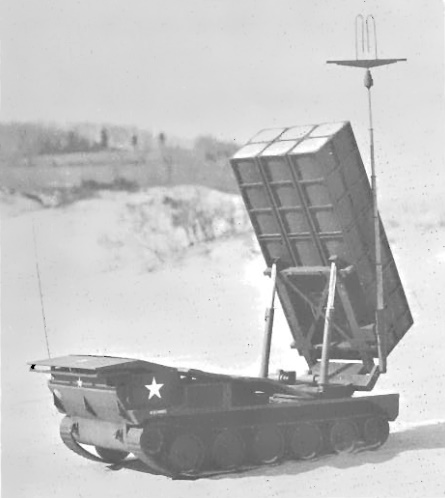
January 10, 1974 marked the program’s pivotal transformation. The Department of Defense mandated adoption of Track-Via-Missile (TVM) guidance, a revolutionary technology where target tracking information is transmitted from the missile back to the ground control station. This breakthrough provided superior accuracy compared to ground-based radar alone and dramatically enhanced the system’s ability to discriminate between actual targets and decoys.
The successful demonstration of TVM guidance in 1975, followed by the patriotic renaming to PATRIOT (Phased Array Tracking Radar to Intercept On Target) in May 1976 during America’s Bicentennial celebration, marked the beginning of full-scale development. The system achieved Initial Operating Capability in 1984, culminating a 23-year development journey from concept to deployment.
Technical evolution driven by expanding threats
The Patriot system’s technical architecture has undergone six major evolutionary phases, each addressing specific capability gaps revealed through operational experience or emerging threats.
The original Patriot (1984-1986) featured the world’s first mobile phased-array air defense radar (AN/MPQ-53) and revolutionary TVM guidance, but was designed exclusively for high-performance aircraft threats. The MIM-104A interceptor carried a 90-kilogram blast-fragmentation warhead with a maximum range of 70 kilometers against aircraft targets.
PAC-1 (1986-1988) represented the first adaptation to ballistic missile threats through software modifications alone, proving the system’s flexible architecture. Key changes included expanding radar search from 25-degree to 89-degree elevation and implementing specialized “TBM search mode” with tightened radar beams. This upgrade provided limited capability against Soviet tactical ballistic missiles like the SS-21 Scarab, achieved entirely through enhanced target discrimination algorithms and improved tracking of ballistic trajectories.
The PAC-2 evolution (1988-1994) introduced the MIM-104C interceptor with enhanced blast-fragmentation warhead and faster proximity fuze designed to detonate closer to incoming ballistic missiles. A critical 1993 enhancement enabled remote launch capability, allowing launchers to deploy up to 10 kilometers from the radar, quintupling the defended area from 10-20 square kilometers to 50-100 square kilometers.

Configuration-based development (1995-1998) Before formal PDB designations, the system underwent three major “Configuration” upgrades:
- Configuration 1 (1995): New pulse Doppler processor, enhanced Engagement Control Station, optical disk recording capability.
- Configuration 2 (1996): Improved communications processor, JTIDS integration, anti-radiation missile capability.
- Configuration 3 (2000): AN/MPQ-65 radar with dual traveling wave tube units, extended remote launch capability.
The three-phase Configuration approach demonstrated that incremental hardware-software co-evolution could maintain operational readiness while adding revolutionary capabilities. Configuration 3’s success with both PAC-2 GEM and PAC-3 integration proved the viability of mixed missile inventories through software coordination.
Formal PDB era: Software-driven modernization
PDB 5 (1999): Network-centric warfare foundation.
Release context: First formally designated PDB version, coinciding with Configuration-3 hardware deployment.
Key technical capabilities:
- Link 16 Command and Control integration using Class 2M Terminal or MIDS LVT Radio for NATO-standard data sharing.
- Tailored Tactical Ballistic Missile search capability optimizing radar resource allocation.
- “Keepout altitude” functionality ensuring chemical warheads or submunitions are destroyed at specified altitudes.
- Enhanced communications system overhaul enabling coalition interoperability
Software architecture changes: Complete communication protocol modernization with NATO Link 16 networks and advanced target discrimination algorithms. This version established the foundation for network-centric operations that would become critical in subsequent decades.
Hardware relationship: Specifically designed for Configuration-3 ground units supporting both PAC-2 GEM and initial PAC-3 missile integration.
PDB 6 (2004): Multi-threat discrimination mastery
Release context: Developed following initial PAC-3 operational deployment and lessons from Operation Iraqi Freedom MIM-104 Patriot.
Key technical capabilities:
- Comprehensive target discrimination for all threat types including anti-radiation missile carriers, helicopters, unmanned aerial vehicles, cruise missiles, and traditional ballistic missiles MIM-104 Patriot.
- Enhanced Configuration-3 system optimization maximizing radar and missile coordination.
- Advanced threat classification algorithms providing unprecedented target identification accuracy.
- Electronic countermeasures resistance against increasingly sophisticated jamming
Operational enhancements: This version directly addressed the friendly fire incidents from Iraq War 2003, implementing enhanced IFF systems that reduced friendly fire incidents while maintaining engagement effectiveness against legitimate threats.
Combat validation: Successfully demonstrated in multiple theaters with 90% intercept rates in Saudi Arabia operations beginning around 2015.
PDB 7 (2013): Digital processing revolution
Release context: Major hardware modernization enabling next-generation capabilities after a decade of operational experience.
Revolutionary technical changes:
- Analog to digital signal processing transition providing 30% increase in detection range compared to analog systems
- 10-fold increase in digital processing system reliability with 40% improvement in overall radar reliability
- Modern Man Station (MMS) implementation replacing Cathode Ray Tube technology with 30-inch color LCD displays, touch screens, and soft key interfaces
Hardware integration requirements:
- Modern Adjunct Processor (MAP) increasing command and control computer processing power by “several orders of magnitude”
- Radar Digital Processor (RDP) with ruggedized Commercial Off-The-Shelf processors.
- Enhanced Battle Management Command, Control, Communications, Computers, and Intelligence (BMC4I) integration.
Software architecture evolution: Complete transition to digital signal processing enabled advanced target detection, identification, and multifunction surveillance capabilities that were impossible with analog systems. This represented the most significant architectural change since system inception.
Operational impact: Extended threat detection range and enhanced situational awareness through advanced operator interfaces, dramatically reducing training time requirements and improving reaction speeds.
PAC-3 development (2001-2015) represented a complete technological paradigm shift from blast-fragmentation to hit-to-kill technology. The MIM-104F interceptor weighs only 312 kilograms—one-third the weight of PAC-2—but features an active Ka-band radar seeker and 180 solid-fueled attitude control motors for precision maneuvering. This revolutionary approach eliminates contamination risk from chemical or biological warheads by achieving direct kinetic impact rather than proximity explosion.
The 2003-2015 timeframe served as a combat validation period. Operation Iraqi Freedom provided perfect 9-for-9 intercept rates but also revealed friendly fire vulnerabilities. PDB 6’s development directly addressed these lessons, while subsequent Middle East operations provided continuous validation of improvements. Saudi Arabia’s over 375 cross-border intercepts with 90% success rates demonstrated sustained combat effectiveness.
The latest PAC-3 MSE (Missile Segment Enhancement) variant, entering service in 2015, features a dual-pulse solid rocket motor providing nearly double the range of earlier PAC-3 interceptors. With demonstrated capability against medium-range ballistic missiles and ranges exceeding 60 kilometers, PAC-3 MSE represents the current state-of-the-art in mobile air defense technology.

PDB 8 (2018): PAC-3 MSE optimization and friendly fire reduction
Release context: Developed to support Missile Segment Enhancement (MSE) capabilities and address continued friendly fire concerns.
Key technical capabilities:
- Fire Control Computer redesign providing full PAC-3 MSE capability support for extended-range engagements.
- Weapons Control Computer enhancement with up to 50% increase in processing power using commercial off-the-shelf processors.
- Advanced ballistic missile discrimination algorithms optimized for MSE’s extended engagement envelope.
- Enhanced friendly fire incident reduction through improved IFF systems.
Performance validation: Successfully demonstrated extended-range ballistic missile engagements and showed marked improvement in friendly fire incident reduction compared to previous versions.
International cooperation: Funded by 13-nation Patriot partnership consortium, demonstrating global commitment to continued capability enhancement.
PDB 8.1 (2019-2023): Gaming interface revolution
Development period: Testing began 2019, achieved Initial Operational Capability 2022-2023.
Revolutionary innovation – Warfighter Machine Interface (WMI):
The most visible transformation in PDB 8.1 was the complete user interface revolution from 1980s-style monochrome displays to 3D graphics-based gaming interfaces:
- 3D graphics-based terrain and airspace rendering providing intuitive battlespace visualization.
- Game-style user interface with dropdown menus replacing complex directory navigation.
- Enhanced reaction time and reduced engagement errors through intuitive controls.
- Significantly reduced operator training time requirements.
- Search functions with intuitive navigation replacing complex command structures.
Next-generation integration:
- Lower Tier Air and Missile Defense Sensor (LTAMDS) compatibility for 360-degree radar coverage.
- Integrated Battle Command System (IBCS) networking capability enabling multi-sensor data fusion.
- Enhanced multi-sensor data fusion supporting joint all-domain operations.
Deployment status: All 60 U.S. fire units and 15 battalion headquarters equipped with PDB 8.1, with international deployment available to partner nations adopting the upgrade.
Modern threat adaptation (2015-present)
The progression from PDB 7 through 8.1 reflects adaptation to hypersonic threats, drone swarms, and multi-domain operations. Each version built incrementally on previous capabilities while adding revolutionary interfaces and processing power to handle increasingly complex threat environments.
Combat experience reshaping development
The 1991 Gulf War fundamentally transformed Patriot development priorities despite initial claims of 97% success rates later challenged by Congressional investigations. The war revealed critical technical limitations that drove the system’s evolution toward hit-to-kill technology and enhanced discrimination capabilities.
Initial performance claims of “41 for 42” successful intercepts, announced by President Bush, were later revised downward to 70% overall effectiveness, with Congressional investigations suggesting possibly zero verified successful intercepts. The Dhahran incident on February 25, 1991, which killed 28 U.S. soldiers, was caused by software clock drift after 100+ hours of continuous operation—a timing precision error that led to comprehensive software validation protocols and operational time limits.
Critical technical problems included Iraqi Al-Hussein missiles breaking apart during reentry, creating multiple false targets that overwhelmed the system’s discrimination algorithms. The PAC-2’s blast-fragmentation warhead often failed to destroy incoming missiles completely, while 45% of Patriots launched were fired at debris or false targets rather than actual threats.
Operation Iraqi Freedom (2003) validated PAC-3’s hit-to-kill improvements with successful intercepts of 9 out of 9 Iraqi missiles, including 2 Scud intercepts by PAC-3 and 7 by PAC-2 GEM variants. However, friendly fire incidents—including the shooting down of a British Tornado GR4 and U.S. Navy F/A-18C—revealed continued challenges with identification friend-or-foe systems and autonomous engagement protocols.

Ukraine operations since 2023 have demonstrated the system’s hypersonic intercept capability, marking the first confirmed intercepts of Kh-47 Kinzhal hypersonic missiles in May 2023. Ukrainian forces report successful engagement of all 20+ Kinzhal missiles targeting Kyiv, though verification challenges similar to the 1991 Gulf War persist regarding actual success rates.
Recent Middle East operations have recorded 177+ successful intercepts of Houthi missiles since 2015, though independent analysis suggests some claimed intercepts may have been unsuccessful, highlighting continuing challenges in combat assessment verification.
Cost evolution reflecting technological complexity
The Patriot program’s financial evolution reflects the increasing sophistication required to address evolving threats, with total development costs reaching $17 billion through 2000 (approximately $30+ billion in 2025 dollars when adjusted for inflation).
Original development (1970s-1980s) consumed substantial resources over the 23-year development period, with the critical 1974 decision to adopt TVM guidance adding approximately $6.9 billion to program costs while extending development by seven years. The technical complexity of developing the world’s first mobile phased-array radar and hit-to-kill technology drove these cost increases.
PAC-3 program costs experienced significant growth from a 1994 baseline of $3.9 billion for 1,200 missiles to $6.9 billion for 1,012 missiles by 2000—a 77% increase coupled with a 15.7% reduction in planned quantities. The difficulty of developing reliable hit-to-kill technology and integrating active radar seekers drove these cost escalations.
Current interceptor costs reflect advanced technology requirements. PAC-3 MSE missiles cost $3.7-7 million per interceptor depending on support packages, while PAC-2 GEM-T variants cost approximately $4 million each. Complete Patriot batteries cost $1.09 billion when fully loaded with missiles, spares, and training, including a $150 million AN/MPQ-65 radar system.
Production scale effects have provided some cost relief. PAC-3 MSE Program Acquisition Unit Cost decreased 4.33% from FY 2018-2024 as volume increased from 1,528 to 3,624 units, spreading fixed costs across larger quantities. Current annual procurement exceeds $1-2 billion for missiles alone, with international sales adding $2-5 billion annually in Foreign Military Sales.
Lifecycle costs represent 70% of total system expenses over 20-year operational periods according to GAO estimates. Annual operating costs reach $12 million per battery, including $3 million for radar maintenance, $4 million for missile recertification, and $3 million for software sustainment.
Current modernization transforming capabilities
The most significant Patriot modernization since initial deployment is currently underway, driven by proven combat effectiveness in Ukraine and evolving global threats, particularly in the Indo-Pacific and Middle East theaters.
RTX’s Lower Tier Air and Missile Defense Sensor (LTAMDS), branded “GhostEye,” transitioned to low-rate initial production in April 2025. This revolutionary radar features three overlapping 120-degree fixed arrays providing seamless 360-degree coverage, eliminating the blind spots that have plagued Patriot systems since inception. Using gallium nitride power amplifiers, LTAMDS provides more than twice the power of legacy Patriot radars while maintaining comparable costs of $125-130 million per unit.

PAC-3 MSE production is experiencing dramatic expansion with Lockheed Martin awarded contracts in November 2024 to increase annual capacity to 650 missiles by 2027, up from current production exceeding 500 missiles annually. The Army Requirements Oversight Council increased procurement goals from 3,376 to 13,773 PAC-3 MSE missiles—nearly a four-fold increase reflecting urgent operational needs.
The Integrated Battle Command System (IBCS) achieved Initial Operational Capability in May 2023, enabling “connect any sensor to any shooter” capability. This modular, open architecture connects Patriot radars with THAAD sensors, naval radars, and F-35 data links, creating real-time data fusion and coordinated engagement responses across multiple platforms.
International partnerships are driving modernization funding. Germany, Netherlands, Spain, and Romania ordered 1,000 PAC-2 GEM-T missiles in a $5.5 billion contract, while Poland became the first international IBCS customer with a $4 billion system purchase. European MBDA production facilities in Germany will become operational by September 2026, creating 300+ jobs while maintaining European production control.
Timeline for complete modernization extends through 2028, when the integrated LTAMDS radar, PAC-3 MSE missiles, and IBCS command system will create the next-generation Patriot capability. The Army scrapped the Lower-Tier Future Interceptor program in October 2024, opting instead to enhance existing PAC-3 MSE technology based on proven combat effectiveness.
Future evolution addressing hypersonic threats
The next decade will focus on integration and advanced threat response as the Patriot system adapts to increasingly sophisticated weapons including hypersonic glide vehicles and advanced cruise missiles with electronic warfare countermeasures.
Hypersonic defense capability has been proven through Ukraine operations, where PAC-3 MSE interceptors successfully engaged Kinzhal missiles—the first confirmed hypersonic intercepts in combat history. However, Ukrainian forces report a 25% interception rate requiring salvo firing of multiple interceptors, driving demand for improved engagement efficiency and increased magazine depth.
Network integration represents the next evolutionary phase. IBCS integration with THAAD and Aegis systems will create layered defense architectures, while Lockheed Martin’s $100 million investment to integrate PAC-3 MSE with naval Vertical Launch Systems could enable ship-based deployment of Patriot interceptors.
The 2030-2040 timeframe will see continued PAC-3 MSE evolution incorporating artificial intelligence-enhanced threat discrimination, space-based sensor integration, and potential directed energy weapon coordination. The system is expected to remain in service until at least 2040, with ongoing capability enhancements addressing faster, more maneuverable threats.
Production constraints remain a critical challenge with PAC-3 MSE lead times of 34-36 months and maximum annual capacity reaching 650 units by 2027. The high cost per interceptor ($3.871-5.17 million) drives continued emphasis on improved engagement efficiency and multi-target capabilities.
Conclusion
The Patriot missile system’s 60-year evolution demonstrates how sustained operational feedback can drive fundamental technological transformation in complex defense systems. From its origins addressing Soviet bomber threats to current capability against hypersonic missiles, each combat deployment has revealed specific technical gaps that shaped subsequent development phases.
The system’s success lies in its adaptive architecture, proven through transitions from anti-aircraft to ballistic missile defense, blast-fragmentation to hit-to-kill technology, and standalone operation to network-centric integration. Combat lessons from the Gulf War drove the revolutionary PAC-3 development, while recent Ukraine operations have validated hypersonic intercept capabilities that seemed impossible during the system’s initial conception.
With ongoing modernization investments exceeding $50 billion in total program costs and annual procurement reaching $2 billion, the Patriot system remains the world’s premier mobile air defense platform. The current integration of LTAMDS radar, IBCS networking, and expanded PAC-3 MSE production positions the system to address evolving threats through 2040 and beyond, continuing its role as the cornerstone of allied air and missile defense capabilities.
Image: The Army test fires a Patriot missile in a recent test. The Patriot missile system is a ground-based, mobile missile defense interceptor deployed by the United States to detect, track and engage unmanned aerial vehicles, cruise missiles, and short-range and tactical ballistic missiles. Patriot, along with other missile defense systems, are included in the Army Air and Missile Defense 2028, which provides the Army’s overarching vision for the AMD force, describes how the AMD force is postured to support the Army and joint forces, and articulates what must be accomplished to achieve the 2028 desired end state of preventing and defeating adversary air and missile attacks through a combination of deterrence, active and passive defense, and support to attack operations. (U.S. Army photo)

