
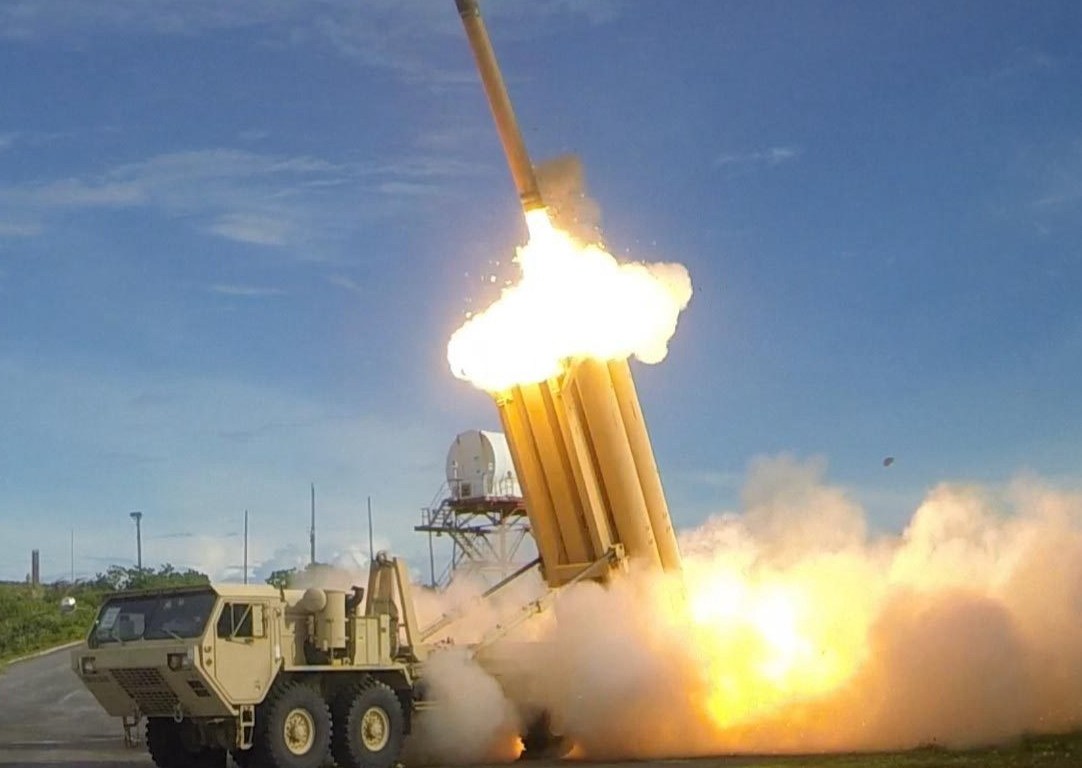
Strategic Defense at Premium Pricing
THAAD (Terminal High Altitude Area Defense) commands $12.7 million per interceptor in 2024-2025, positioning it as a mid-tier option between the ultra-premium SM-3 Block IIA and more affordable Patriot PAC-3 MSE. This pricing reflects its unique capability to intercept threats in both atmospheric and exo-atmospheric environments, a technical feat that no other mobile system can match. Recent combat deployments in Israel and growing international demand validate customer willingness to pay premium prices for proven, versatile defense capabilities.
THAAD’s strategic value lies in filling a crucial gap in layered missile defense architectures. While the SM-3 Block IIA excels at long-range ICBM interception and Patriot PAC-3 MSE handles shorter-range threats, THAAD bridges this coverage gap with unmatched flexibility and proven combat effectiveness.
Current cost structure reveals strategic positioning
THAAD interceptors cost $12.7 million each based on the FY2025 Missile Defense Agency budget, representing a 41% increase from previous estimates. This pricing includes production costs of $12-15 million per interceptor, with total program costs reaching $18-27 million when including research and development expenses. A complete THAAD battery, comprising six launchers, 48 interceptors, AN/TPY-2 radar, and fire control systems, costs $1.0-1.8 billion.
SM-3 Block IIA interceptors command $27.9 million each, making them 120% more expensive than THAAD. This premium reflects their advanced capabilities for intercepting intercontinental ballistic missiles at ranges exceeding 1,200 kilometers. However, their higher cost and complexity make them less suitable for the medium-range ballistic missile threats that THAAD was designed to counter.
Patriot PAC-3 MSE interceptors cost $3.7-4.2 million each, making them 71% less expensive than THAAD. While significantly cheaper, they offer limited range (20-35 kilometers) and altitude capabilities, making them suitable only for terminal-phase interceptions of shorter-range threats.
Combat effectiveness justifies premium pricing
THAAD’s 100% success rate in operational testing and recent combat deployments demonstrates superior reliability. The system successfully intercepted Houthi missiles defending the UAE in 2022 and was extensively used during Israel’s defense against Iranian attacks in 2024-2025. Defense officials estimate 39-93 THAAD interceptors were used during a 12-day conflict period, with mission success rates remaining at 100%.
The system’s unique dual-environment capability allows it to intercept targets both inside and outside Earth’s atmosphere, providing coverage gaps that neither SM-3 nor Patriot systems can fill. This flexibility enables a single THAAD battery to protect against medium-range ballistic missiles, tactical ballistic missiles, and some intermediate-range threats.
Technical specifications demonstrate advanced capabilities: THAAD intercepts targets at ranges up to 200 kilometers and altitudes up to 150 kilometers using hit-to-kill technology. The system’s mobility advantage over fixed SM-3 installations and superior range compared to Patriot systems create tactical advantages worth the premium cost.
International sales validate market positioning
Major international contracts demonstrate customer confidence in THAAD’s value proposition. The UAE’s $3.38 billion investment in THAAD systems (2011-2022) represents one of the most successful foreign military sales programs. Saudi Arabia’s $15 billion contract for seven THAAD batteries includes 44 launchers, 360 interceptors, and seven AN/TPY-2 radars, with local manufacturing partnerships reducing long-term costs.
Recent pricing trends show sustained demand: Qatar’s $42 billion military package includes THAAD systems, while Lockheed Martin received a $2.8 billion contract for THAAD 6.0 development through 2035. The company delivered its 900th interceptor in January 2025, with production scaling to meet growing international demand.
Twenty-year lifecycle costs for a complete THAAD battery range from $2-3 billion, including operations, sustainment, and interceptor replenishment. This compares favorably to fixed SM-3 installations when considering mobility advantages and reduced infrastructure requirements.
Strategic value proposition drives customer decisions
THAAD fills critical capability gaps in regional missile defense architectures. Iran’s expanding ballistic missile arsenal, including medium-range systems that exceed Patriot capabilities but don’t require SM-3’s full ICBM-class performance, creates demand for THAAD’s specific capability set.
Operational flexibility justifies costs for many customers. Unlike fixed SM-3 installations, THAAD batteries can be rapidly deployed to respond to emerging threats or support expeditionary operations. This mobility advantage proved crucial during recent Middle East deployments.
Interoperability benefits enable THAAD to integrate with existing Aegis, Patriot, and other defense systems, creating layered defense architectures that maximize cost-effectiveness across different threat scenarios.
THAAD’s position as the world’s most advanced mobile missile defense system, combined with its proven combat record and unique technical capabilities, justifies its premium pricing in an increasingly complex threat environment. The system’s ability to bridge capability gaps between shorter-range and strategic defense systems makes it an essential component of modern missile defense architectures.
Image: The U.S. Army Ralph Scott/Missile Defense Agency/U.S. Department of Defense
AI-assisted article.

