
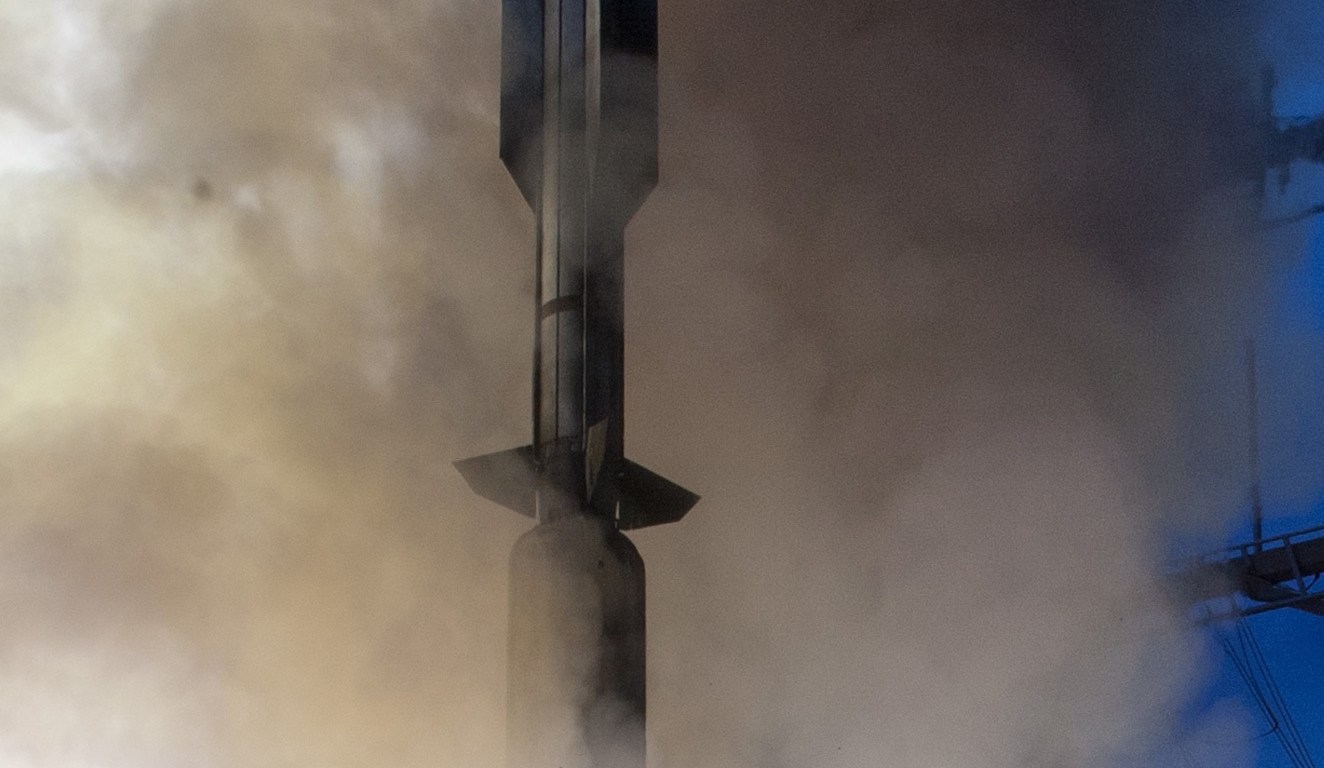
America’s Combat-Proven Naval Multi-Mission Shield
The Standard Missile-6 stands as the world’s only tri-mission naval interceptor, combining air defense, ballistic missile defense, and anti-surface strike capabilities in a single weapon system. Combat-validated through 80 missile firings during Red Sea operations, SM-6 has proven its operational effectiveness while securing over $8.1 billion in international contracts, establishing itself as the cornerstone of allied naval defense architecture through 2035.
This revolutionary weapon system represents a $12 billion program investment delivering unmatched versatility at $4.0-4.9 million per interceptor, with production scaling from 125 to 300 missiles annually by 2028 to meet surging global demand.
Detailed cost breakdown reveals strategic value proposition
Per-interceptor costs have stabilized around $4.0-4.9 million for current Block I/IA variants based on 2024-2025 contract analysis, representing a 13.6% cost reduction through multi-year procurement strategies. The Defense Department’s December 2022 Selected Acquisition Report documents $11.996 billion in total program costs for 2,356 planned missiles, with $7.589 billion allocated for procurement.
Recent international sales demonstrate premium pricing but strong demand. Japan’s January 2025 foreign military sale approval valued 150 missiles at $900 million, equating to $6 million per unit including training and support. Australia’s comprehensive program totals $4.7 billion USD for SM-6 and SM-2 integration across their surface fleet.
The upcoming SM-6 Block IB variant commands significantly higher costs due to its revolutionary 21-inch diameter motor and hypersonic engagement capability. This next-generation interceptor began production in late FY2024 with initial operational capability projected for 2027. Production investments include $508.2 million in multi-year procurement savings and substantial facility expansion at Raytheon’s Tucson, Alabama, and Massachusetts facilities.
Total system integration costs encompass $934 million in research and development through 2022, with $1.018 billion in operations and sustainment over the missile’s 30-year lifecycle. The program benefits from $333.3 million in recent contracts with potential expansion to $908.1 million through option exercises.
Performance metrics establish multi-mission superiority
Technical specifications reveal unprecedented versatility across all SM-6 variants. The baseline Block I/IA configuration delivers 240-463 km range at speeds exceeding Mach 3, carrying a 64kg blast-fragmentation warhead with dual-mode active/semi-active radar guidance derived from the AIM-120 AMRAAM.
Test success rates validate operational readiness despite early development challenges. Initial operational testing achieved 58% success rates, but subsequent refinements eliminated fuze software errors and navigation glitches. Since achieving initial operational capability in 2013, SM-6 has maintained highly successful test and operational records.
The Block IB variant represents a revolutionary leap in capability, featuring uniform 21-inch diameter construction, dual-pulse rocket motor, and hypersonic engagement capability. This configuration enables terminal-phase intercepts of hypersonic glide vehicles, positioning SM-6 as America’s primary near-term defense against these emerging threats.
Multi-mission capabilities distinguish SM-6 from all competitors. Anti-air warfare performance extends to 463km against aircraft, UAVs, and cruise missiles through Cooperative Engagement Capability networking. Ballistic missile defense provides terminal-phase intercept of short and medium-range ballistic missiles, while anti-surface warfare enables strikes beyond 200 nautical miles using GPS guidance.
Recent test milestones include the March 2025 Flight Test Other-40 “Stellar Banshee,” where USS Pinckney successfully validated hypersonic target engagement using integrated satellite tracking data. July 2025 exercises demonstrated first land-based SM-6 firing outside the continental United States via the Army’s Typhon system.
Combat effectiveness proven through Red Sea operations
Operational validation in the Red Sea represents the most comprehensive combat test of any modern naval interceptor. Between October 2023 and January 2025, U.S. Navy ships fired 80 SM-6 missiles across diverse threat scenarios, establishing definitive combat effectiveness data.
Key engagement milestones include USS Laboon’s December 26, 2023 intercept of three anti-ship ballistic missiles – the first combat ballistic missile engagement in SM-6 history. USS Carney achieved the first publicly acknowledged ballistic missile intercept on January 30, 2024, in the Gulf of Aden. Most significantly, USS Spruance successfully defeated 3 anti-ship ballistic missiles, 3 anti-ship cruise missiles, and 7 unmanned aerial vehicles in a single complex engagement.
Combat success rates align with test predictions at approximately 50% single-shot probability of kill, requiring two rounds per incoming missile according to Vice Admiral McLane. This performance represents “exactly as advertised” effectiveness according to senior Navy officials. Terminal ballistic missile defense achieved 100% success in acknowledged engagements, validating the Sea-Based Terminal capability.
Mission effectiveness spans all three roles during Red Sea operations. SM-6 successfully engaged Houthi anti-ship ballistic missiles in terminal phase, defeated sophisticated cruise missiles with electronic warfare countermeasures, and intercepted diverse unmanned aerial vehicles. The active radar seeker demonstrated exceptional performance against electronic jamming attempts.
Cost-effectiveness analysis reveals strategic value despite high per-engagement costs. The $344 million SM-6 expenditure during Red Sea operations represents premium pricing but delivered critical strategic outcomes: protection of international shipping lanes, validation of allied naval capabilities, and demonstration of deterrent effects against regional threats.
International partnerships drive global naval integration
Major international contracts total over $8.1 billion, demonstrating unprecedented allied confidence in SM-6 capabilities. Australia leads with $4.7 billion USD invested in comprehensive SM-2 and SM-6 integration across Hobart-class destroyers and future Hunter-class frigates. This historic partnership made Australia the first country outside the United States to successfully fire SM-6 in August 2024.
Japan represents the largest single missile purchase with combined contracts totaling $1.35 billion. The 2022 approval for $450 million covered 32 missiles, followed by January 2025’s $900 million authorization for up to 150 additional interceptors. Integration targets JMSDF Atago-class and Maya-class Aegis destroyers specifically upgraded to Baseline 9 for SM-6 compatibility.
South Korea’s $650 million investment includes 38 SM-6 Block I missiles integrated with Sejong the Great-class destroyers. This partnership positions SM-6 as a cornerstone of layered missile defense architecture against North Korean and Chinese ballistic missile threats.
Technology transfer and cooperation extends beyond simple sales to genuine partnership. All three allied nations upgraded to Aegis Baseline 9 specifically for SM-6 integration, while development costs benefit from Foreign Military Sales customer funding. Common production lines reduce unit costs and increase manufacturing efficiency across the alliance network.
Additional international interest includes inquiries from six additional navies, with export authorization granted in January 2017. The system’s NATO interoperability and alliance integration capabilities position SM-6 as the preferred choice for allied naval forces requiring advanced air and missile defense.
Strategic positioning dominates naval defense market
Competitive advantages establish clear market leadership across multiple performance dimensions. SM-6’s 240-463 km range significantly exceeds ESSM’s 50km capability, Sea Ceptor’s 25km reach, and even ASTER 30’s 120km maximum. The tri-mission capability remains unique among naval interceptors, eliminating the need for separate air defense, ballistic missile defense, and anti-surface weapons.
Active radar seeker technology enables over-the-horizon engagement through Cooperative Engagement Capability networking, providing unprecedented area defense coverage. Integration with E-2D Advanced Hawkeye and F-35 sensors extends engagement ranges far beyond shipboard radar horizons.
Strategic limitations include premium pricing at $4.0-4.9 million per unit versus ESSM’s $1.7 million or ASTER’s competitive pricing. The 64kg warhead optimizes for air defense rather than heavy surface targets, while single-pack VLS requirements reduce magazine depth compared to quad-packable alternatives.
Market positioning leverages unique capabilities rather than competing on cost alone. The “three missiles in one” value proposition appeals to navies requiring maximum capability within constrained VLS cell allocations. U.S. alliance integration provides operational advantages unavailable from European alternatives.
Production monopoly advantages include Raytheon’s exclusive manufacturing capability, established supply chains, and Deep integration with Aegis Combat System. However, single-source dependency creates potential supply chain vulnerabilities requiring careful management.
Economic efficiency analysis versus competing systems
Cost-benefit analysis reveals strategic value despite premium unit pricing. SM-6’s $4.0-4.9 million cost compares to SM-3 Block IIA’s $27.9 million and SM-2 Block IIIC’s $2.349 million, positioning it between dedicated ballistic missile defense and conventional air defense interceptors.
Multi-mission capability eliminates redundancy costs associated with separate weapon systems. Traditional naval air defense required distinct missiles for air threats, ballistic missiles, and surface targets. SM-6’s tri-mission design reduces logistics complexity, training requirements, and magazine allocation challenges while providing superior flexibility.
Lifecycle cost advantages include the “wooden round” design requiring no shipboard maintenance over 30-year service life. Operations and sustainment costs of $8.3 million annually per missile remain competitive given the system’s multi-mission capability and proven reliability.
International cost-sharing effects demonstrate through multi-year procurement contracts achieving 13.6% savings versus annual purchasing. Allied funding helps sustain production capacity while reducing unit costs for all customers. Economic order quantity benefits include advanced procurement funding enabling supplier optimization and material cost reductions.
Production efficiency investments in digital manufacturing, automation, and quality improvements drive continued cost reductions. Raytheon’s six consecutive quarters of growth through 2024 demonstrate strong financial foundation for sustained production capacity expansion.
Production capacity expansion meets growing demand
Current production capacity operates at 125-155 missiles annually across primary facilities in Tucson (74%), Huntsville (19%), Andover (5%), and New Mexico (2%). Planned expansion reaches 300 units by FY2028 through significant facility investments and automation improvements.
Multi-year procurement program spanning FY2024-2028 contracts for 825 SM-6 Block IA missiles with total program planning for 2,356 total interceptors. Recent contract awards include $333.3 million in January 2025 with potential expansion to $908.1 million through option exercises.
Industrial capacity investments include RTX’s $93 billion defense backlog supporting sustained production growth. Digital manufacturing connections across 34 facilities enable analytics-driven efficiency improvements while automated production systems increase yield rates and reduce unit costs.
Supply chain constraints center on sole-source dependency requiring careful supplier management. International content includes UK production components representing 13.5% of certain contracts, while material inflation pressures are managed through multi-year advance funding mechanisms.
Procurement sustainability benefits from strong international demand providing production volume stability. Congressional support for multi-year procurement authority enables industry investment in capacity expansion while delivering taxpayer savings through economic efficiencies.
Future outlook and strategic recommendations
Technology evolution plans center on Block IB hypersonic capability achieving initial operational capability by 2027. This revolutionary variant’s 21-inch diameter motor and hypersonic engagement speeds position the United States to counter emerging threats from China and Russia. Block IAU guidance system upgrades address obsolescence while maintaining production efficiency.
Strategic procurement recommendations emphasize continued multi-year contracting to achieve cost efficiencies and production stability. International partnership expansion should target India for potential co-development opportunities while exploring NATO standardization possibilities. Technology transfer policies require careful balance between alliance strengthening and national security protection.
Production capacity planning must anticipate sustained high demand through 2035 given threat environment evolution and allied procurement programs. Supply chain diversification recommendations include selective dual-sourcing for non-critical components while maintaining security for sensitive technologies. Workforce development investments ensure skilled personnel availability for complex manufacturing processes.
Risk mitigation strategies address hypersonic threat evolution potentially outpacing defensive capabilities. Alternative development programs like the Glide Phase Interceptor provide complementary capabilities while directed energy weapons offer cost-effective solutions against lower-tier threats. Industrial base resilience requires sustained investment despite potential budget pressures.
Strategic integration opportunities include enhanced networking capabilities with next-generation combat systems and artificial intelligence integration for improved target discrimination. Air-launched variant development following the successful AIM-174B deployment expands tactical employment options across service boundaries.
Conclusion
The SM-6 missile system represents a transformational leap in naval warfare capability, successfully bridging air defense, ballistic missile defense, and anti-surface warfare in a single, combat-proven platform. With over $8.1 billion in international contracts and demonstrated effectiveness in Red Sea combat operations, SM-6 has established itself as the global standard for advanced naval defense.
Strategic value extends beyond technical specifications to encompass alliance strengthening, industrial base sustainment, and deterrent effects against emerging threats. The tri-mission capability eliminates traditional naval warfare limitations while providing unprecedented flexibility for commanders facing diverse threat environments.
Economic analysis reveals long-term value despite premium unit pricing, with multi-mission capability reducing overall system costs and complexity. Production scaling to 300 units annually by 2028 positions the industrial base to meet sustained demand while international partnerships provide cost-sharing benefits for continued capability development.
The forthcoming Block IB hypersonic defense capability ensures SM-6 remains relevant against evolving threats through 2040, while continuous modernization programs maintain technological superiority. Success requires sustained investment in production capacity, international partnerships, and next-generation variant development to preserve America’s naval defense advantage in an increasingly contested global environment.
AI-assisted article.

