
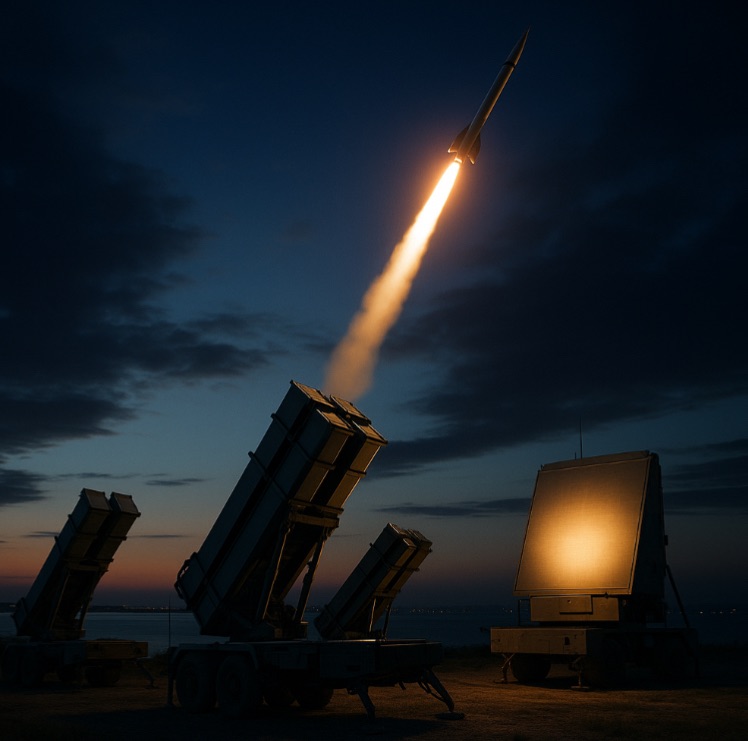
The evolution of aerial threats—ranging from hypersonic glide vehicles and cruise missiles to drone swarms—has significantly altered global security dynamics. For Western nations, long-range air defense systems have become an indispensable component of national and allied military strategies. These systems serve as a high-tech shield, intercepting threats from hundreds of kilometers away and protecting critical infrastructure, cities, and military assets.
This article explores the most advanced Western air defense systems in service today—such as the Patriot, THAAD, SAMP/T, and Arrow platforms—and how they fit into the broader architecture of integrated missile defense across NATO and its partners.
What Are Long-Range Air Defense Systems?
Long-range air defense systems are military platforms capable of detecting, tracking, and intercepting airborne threats—typically at ranges exceeding 100 kilometers. These systems integrate:
- Advanced radar technologies, such as AESA arrays.
- Interceptor missiles, like PAC-3 MSE and Aster 30.
- Networked command and control (C2) systems for real-time decision-making.
Unlike point defense systems, which protect specific assets, long-range systems create Anti-Access/Area Denial (A2/AD) zones, deterring hostile actions over broad regions.
Leading Western Air Defense Systems
Patriot Missile System (USA)
Manufacturer: Raytheon Technologies
Key Features: AESA radar, PAC-3 MSE interceptor (~160 km), mobile launchers
Targets: Aircraft, cruise missiles, ballistic missiles
Used in: USA, Germany, Poland, Sweden, Netherlands
Combat History: Active in Ukraine, intercepted Russian Kinzhal missiles
THAAD – Terminal High Altitude Area Defense (USA)
Manufacturer: Lockheed Martin
Radar: TPY-2 X-band AESA
Range: ~200 km
Altitude: ~150 km
Deployed in: South Korea, UAE, Israel, Romania
SAMP/T (France/Italy)
Developer: Eurosam (MBDA/Thales)
Missile: Aster 30 Block 1 (120 km)
Radar: Arabel AESA
Upcoming: SAMP/T NG (enhanced mobility, radar, hit-to-kill)
Used by: France, Italy, UK
Arrow 3 (Israel/USA)
Developer: Israel Aerospace Industries & Boeing
Capability: Exo-atmospheric interception (>100 km)
Variants: Arrow 2 (atmospheric), Arrow 3 (exo-atmospheric)
Strategic Value: Boosts U.S.–Israel cooperation
Radar and Interceptor Technologies
Modern air defense radar systems rely on:
- AESA for multi-target tracking
- Frequency agility and LPI signals to counter jamming
- Sensor fusion from air, space, and ground assets
Interceptor types:
- Kinetic kill (hit-to-kill): e.g., PAC-3 MSE, THAAD
- Proximity-fused warheads: e.g., Aster-30
Integrated and Layered Defense Architecture
NATO and Western nations emphasize multi-layered missile defense:
- Layer 1: NASAMS, IRIS-T (short range)
- Layer 2: Patriot, SAMP/T (medium range)
- Layer 3: THAAD, Arrow (exo-atmospheric)
NATO IAMD enables:
- Interoperability
- Real-time data sharing (Link 16)
- Shared early-warning and coordinated coverage
Emerging Threats and Future Trends
Key challenges include:
- Hypersonic weapons: fast, maneuverable, hard to intercept
- Saturation attacks: drone swarms, decoys
- Cyber/electronic warfare: jamming, spoofing, C2 disruption
Future innovations:
- AI-enhanced detection and response
- High-energy lasers for low-cost intercepts
- Space-based sensors for global coverage
- Mobile & multi-kill launchers
Strategic Impact and Conclusion
Western long-range air defense systems provide critical deterrence, infrastructure protection, and operational freedom. As global threats evolve, NATO and partner nations must continue investing in innovation, interoperability, and highly trained personnel to maintain aerial superiority.
AI-assisted article

