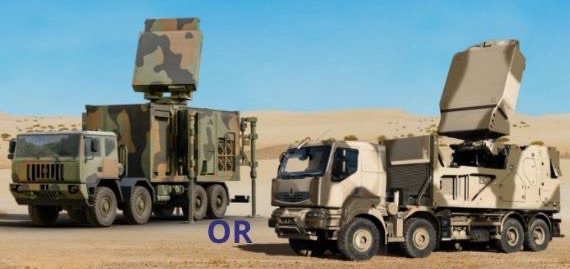
The SAMP/T air defense system has emerged as Europe’s flagship alternative to the U.S.-made Patriot, offering advanced capabilities while reinforcing continental defense sovereignty. Developed through Franco-Italian collaboration and continuously modernized, this system addresses evolving threats through cutting-edge technology and strategic interoperability.
The SAMP/T (Sol-Air Moyenne Portée Terrestre) originated from a joint effort between France and Italy under Eurosam, a consortium formed by MBDA Missile Systems and Thales. Initially deployed in 2010, its design focused on countering tactical ballistic missiles (up to 600 km range), cruise missiles, and aircraft.
SAMP/T, with Aster-15 and Aster-30 block 1 missiles, can launch to 30 and 120 km against aerodynamic profiles. The Aster-30 has a maximum speed of M4.5 and is capable of countering tactical ballistic missiles with a range of up to 600 km.
Development began in earnest in 1990, with testing of individual components from 1999 and with the entire system from 2005.

Operational since 2010, SAMP/T systems are fielded by France, Italy, and Ukraine:
- In 2010 the France acquired three batteries for its army and seven for the air force. In France the system goes under the MAMBA name. Italy had by 2012 received five batteries.
- Aster maritime application. Italy, France and Great Britain also operate the Aster-30 as maritime air defense and missile defense, and these systems are respectively called PAAMS (Fr/It) and Sea Viper.
- In March 2017, Sweden expressed a desire to start phasing in a new air defense system by 2020, and in the final phase of the tender process it was between the American Patriot and the European SAMP/T. The Swedes chose Patriot. In June 2021 Switzerland also chose Patriot over SAMP/T.
- Accelerated missile production. France and Italy accelerated Aster missile production in 2025 amid U.S. aid uncertainties, prioritizing supply chain security. Denmark’s pending choice between SAMP/T NG and Patriot reflects growing European defense autonomy.
- Ukraine’s deployment demonstrated combat efficacy, with a SAMP/T battery intercepting a Russian jet at 90-mile ranges in March 2025. Each $500 million battery can fire 8 missiles in 10 seconds.
Cost. SAMP/T as compared to Patriot seems like a more affordable system; where a full battery with Patriot costs from $600 to 1000 million, you may get SAMP/T for half the money.
A nominal battery consists of a passive phase-guided (PESA) X-band multifunction radar with 360° coverage, up to six launch pads with eight missiles, which can be deployed up to 10 km away from the radar. Such a fire unit can track more than 100 targets and engage 10 of them simultaneously. The main components of the system can be transported by C-130J and A400M transport aircraft.

Modernization. An upgraded version named SAMP/T NG, is underway and is due for serial production in 2025. The next generation SAMP/T comes with hit-to-kill missiles and an AESA radar with 360 degrees coverage.
The Aster-30 (called block 1 NT for “New Technology”). The missile gets a new radar with a higher frequency (Ka-band radar, against today’s “block 1” which uses Ku-band) for more gain/narrower lobe and with e.g. greater accuracy and resolution, and with a greater probability of direct hits.

- Aster 30 Block 1NT missiles with upgraded seekers and computers to engage hypersonic threats and medium-range ballistic missiles (up to 1,500 km)
- AESA radars (Ground Fire 300 or Kronos Grand Mobile) providing 360° coverage and detection ranges exceeding 350 km
- Modular architecture enabling integration with SHORAD systems like VL MICA and CAMM-ER for multi-layered defense
This €4 billion modernization effort, managed by OCCAR, emphasizes rapid deployment, reduced crew requirements, and compatibility with NATO networks