
In February 2025, the Norwegian Armed Forces announced that NASAMS air defense systems had achieved a remarkable 94% success rate, intercepting 900 missiles and drones over Ukraine. This battlefield validation of American and Norwegian-developed technology represents more than just a tactical victory—it exemplifies the kind of proven, combat-tested capabilities that are now reshaping American defense strategy for the next two decades.
Within the next three months, the US Army will release its Air and Missile Defense Strategy 2040, the most significant transformation in American air defense doctrine since the Cold War. This strategy will encompass lessons from Ukraine and the Middle East, along with a shifting focus on homeland defense, while driving a 30% expansion of US air defense forces and fundamentally altering NATO interoperability requirements.
For Norway and other NATO allies, this strategic shift represents both unprecedented opportunities for defense cooperation and new challenges in maintaining technological and operational compatibility with the world’s most powerful military alliance.
Strategic Drivers: Lessons Written in Blood and Steel
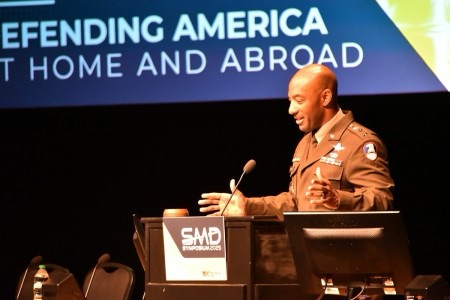
The development of Strategy 2040 has been driven by hard-earned battlefield lessons that have fundamentally challenged previous assumptions about air and missile defense. As Lt. Gen. Sean Gainey, Army Space and Missile Defense Command commander, observed: “The main thing, from a lesson learned perspective, is complexity, mass and an attempt to seek and hunt air and missile defenses.”
The conflict in Ukraine has provided the first comprehensive testing of modern Western air defense systems under sustained combat conditions. The results have been sobering in their implications for future conflict. Russian forces have demonstrated sophisticated tactics combining cheap, expendable drones with expensive precision missiles in coordinated salvos designed to overwhelm defensive systems. This approach reflects “complexity, mass and an attempt to seek and hunt air and missile defenses,” forcing a fundamental rethink of defensive architecture.
The Norwegian NASAMS systems deployed to Ukraine have proven their worth, but their success has also highlighted broader systemic challenges. The 94% intercept rate, while impressive, came at significant cost in terms of interceptor expenditure and operator fatigue. More critically, the Ukrainian experience has demonstrated that adversaries are rapidly adapting their tactics to specifically target air defense systems, treating them as high-value targets worthy of dedicated hunting efforts.
Parallel lessons from the Middle East have reinforced these observations. Iranian drone and missile attacks against Israeli and regional targets have demonstrated the growing sophistication of asymmetric air threats. The integration of cruise missiles, ballistic missiles, and various classes of unmanned systems in coordinated attacks has proven that future air defense must be prepared for simultaneous engagement of multiple threat types across different altitude bands and flight profiles.
Perhaps most significantly, the Army is planning to increase its air defense force structure by 30% over the next eight years, including three additional Patriot battalions, five Indirect Fire Protection Capability (IFPC) battalions and seven counter-unmanned aerial system (C-UAS) batteries. This expansion represents the largest growth in American air defense capabilities since the 1960s and signals a fundamental shift in defense priorities.
The Strategy 2040 Framework: Revolutionary Changes
The forthcoming strategy represents a departure from traditional air defense thinking in several key areas. The Army has determined that “360-degree coverage is a non-negotiable” requirement, recognizing that future conflicts will feature threats from all directions simultaneously. This marks a significant evolution from Cold War-era concepts that assumed relatively predictable threat axes.
The strategy takes into account fundamental changes in how the Army will fight in combat, such as combining lethal and nonlethal capabilities, the integration of offensive and defensive fires, human-machine integration and the incorporation of artificial intelligence. This holistic approach reflects the recognition that air defense can no longer be treated as a purely defensive mission, but must be integrated with offensive operations to achieve maximum effectiveness.
The concept of modular, tailorable formations represents another significant departure from traditional organizational models. The strategy calls for modular, tailorable formations spread across terrains and integrated with joint and allied forces. Rather than fixed unit structures optimized for specific scenarios, the new approach envisions rapidly configurable force packages adapted to specific mission requirements and threat environments.
Central to this transformation is the integration of artificial intelligence and machine learning technologies. The strategy recognizes that technology used for missile defense must have an open architecture and use “all benefits” of artificial intelligence. This technological integration is not merely about improving existing capabilities, but about fundamentally changing how air defense operations are conducted.
The human-machine teaming concept emerging from Strategy 2040 envisions AI systems handling routine threat classification and engagement recommendation tasks, allowing human operators to focus on complex tactical decisions and adaptation to unexpected scenarios. As military leaders have noted, today’s conflicts demand formations that are “leaner, faster, and more lethal,” integrating human-machine teaming, AI-driven decision-making, and offensive and defensive launch systems.
The Golden Dome Connection: Homeland Defense Revolution
Strategy 2040 cannot be understood in isolation from the broader transformation of American homeland defense capabilities. The strategy must account for the development of President Donald Trump’s Golden Dome, a missile defense shield for the homeland. This connection represents a fundamental shift in the Army’s role, expanding beyond traditional theater defense to encompass continental protection missions.
The Golden Dome system would employ a global constellation of satellites equipped with both sensors and space-based interceptors, marking the first time in history that space-to-ground weapons would be maintained in orbit. The technical complexity of this undertaking is staggering, requiring advances in sensor discrimination, battle management, and interceptor reliability that push the boundaries of current technology.
Officials have indicated that AI will be an important aspect of homeland missile defense, particularly for Golden Dome, because defending large swaths of territory will require more than what manpower and systems alone can handle. This AI integration requirement drives many of the technological development priorities outlined in Strategy 2040.
The implications for allies are profound. The goal of this initiative is to protect the homeland against threats and potential attacks from an expanding array of strategic weapons, including ballistic, hypersonic, and advanced cruise missiles. While the primary focus is on protecting American territory, the global nature of the sensor architecture and the requirement for allied cooperation in space-based operations means that NATO partners will inevitably be drawn into this new defensive paradigm.
For countries like Norway, with advanced technological capabilities and existing partnerships in air defense development, this presents both opportunities for deeper integration and challenges in maintaining technological sovereignty. The space-based components of Golden Dome will require international cooperation agreements that could significantly influence national defense industrial strategies.
NATO Interoperability: New Standards and Requirements
The release of Strategy 2040 coincides with significant developments in NATO’s own air defense doctrine. In February 2025, NATO released its Integrated Air and Missile Defence Policy for the first time publicly, emphasizing that “360-degree coverage is a non-negotiable” requirement. This alignment between American and NATO thinking is not coincidental—it reflects the growing recognition that future air and missile threats will require fundamentally different defensive approaches.
NATO’s new policy addresses all types of air and missile threats emanating from all directions, at all speeds and all altitudes – from ground to space, covering actions in peacetime, crisis and conflict. This comprehensive approach mirrors the holistic thinking evident in the American strategy development process.
The technical interoperability requirements emerging from Strategy 2040 will likely drive significant changes in NATO standards and procurement approaches. The Integrated Battle Command System (IBCS), a digital command and control platform that links sensors and shooters across multiple domains, enables operators to receive and process data from various radars and launch platforms. For NATO allies, achieving full interoperability with IBCS will become a critical requirement for meaningful participation in future air defense operations.
NATO has launched two new multinational initiatives to develop more efficient solutions to lower-level air threats and enhance passive air surveillance. These initiatives, involving 15-16 NATO allies including Norway, demonstrate the Alliance’s recognition that future threats will require coordinated technological development rather than purely national solutions.
The challenge for smaller allies like Norway lies in balancing the advantages of deep integration with American systems against the risks of technological dependence. NATO’s emphasis on interoperability as “a critical aspect to ensure the seamless integration and coordination with and among Allies of their air and missile defence systems and command and control structures” suggests that half-measures will not be sufficient for maintaining alliance relevance.
Norwegian Implications: Strategic Choices and Opportunities
For Norway, Strategy 2040 presents a complex matrix of opportunities and challenges that will significantly influence defense planning for the next two decades. The country’s unique position as both a developer of advanced air defense technology and an Arctic nation facing specific geographic challenges creates distinct strategic considerations.
The immediate implications for Norwegian air defense center on the evolution of the NASAMS system. Norway is partnering with Kongsberg and Raytheon to develop a new, more powerful radar for NASAMS based on the GhostEye (LTAMDS) family, which will significantly increase the detection range and tracking capability against faster and smaller targets. This development aligns directly with the sensor requirements outlined in Strategy 2040 and positions Norway as a key contributor to next-generation air defense capabilities.
The integration of LTAMDS technology into NASAMS represents more than a simple upgrade—it signifies Norway’s participation in the broader transformation of Allied air defense architecture. The Army is taking prototype LTAMDS radars that provide 360-degree detection capability and preparing to deploy them globally. Norwegian participation in this development ensures continued relevance in American defense planning while maintaining the country’s position at the forefront of air defense innovation.
The development of NOMADS (Norwegian Manoeuvre Air Defence System) presents another strategic opportunity. NOMADS is designed for the protection of forces on the move and appears to draw heavily upon lessons from the war in Ukraine. The system’s emphasis on mobility and self-contained operation aligns with the modular, tailorable formations concept central to Strategy 2040.
However, Norway faces significant strategic decisions regarding long-range air defense capabilities. There is an active strategic debate in Norway about acquiring a dedicated long-range air and missile defense system (such as Patriot or SAMP/T) to defend against tactical ballistic missiles. This decision will have profound implications for interoperability with both American and European partners.
The choice between American systems like Patriot and European alternatives like SAMP/T reflects broader questions about technological sovereignty and alliance relationships. Integration with American systems offers deeper interoperability with Strategy 2040 capabilities but potentially creates dependency relationships. European alternatives might preserve greater technological independence but could limit integration with the most advanced Allied capabilities.
Norway’s geographic position adds complexity to these considerations. As Norwegian Chief of Defense Gen. Eirik Kristoffersen noted, the priority is to “buy more of what we already have,” focusing on proven systems from “handheld, counter-UAV air defense systems, up to medium-range NASAMS”. This approach reflects the practical reality that volume and reliability often matter more than technological sophistication in actual combat.
The Arctic operational environment presents unique challenges that Strategy 2040 must accommodate. The extreme weather conditions, limited infrastructure, and vast distances characteristic of Norway’s northern regions require specialized adaptations of standard air defense systems. NOMADS has been tested in Norway’s Arctic region, demonstrating the importance of validating systems in the specific operational environment where they will be employed.
Technological Convergence: The Future Battlefield
Strategy 2040 envisions a battlefield where traditional distinctions between different types of threats become increasingly irrelevant. Group 3 drones and above (those weighing more than 55 pounds) are now considered closer to the cruise missile challenge and defeating them is part of the integrated air and missile defense portfolio. This taxonomic shift reflects the reality that threat classification based on platform type is becoming less meaningful than classification based on capability and effect.
The integration of artificial intelligence throughout the air defense kill chain represents perhaps the most significant technological shift outlined in the strategy. Defense components need to train the workforce to use AI responsibly and effectively, suggesting that human-machine teaming will require fundamental changes in operator training and doctrine development.
The implications extend beyond simple automation of existing processes. AI-enabled systems will be capable of predictive threat assessment, analyzing patterns in adversary behavior to anticipate attacks before they begin. Machine learning algorithms will optimize sensor-shooter pairing in real-time, maximizing defensive efficiency while minimizing interceptor expenditure.
Directed energy systems represent another technological convergence point with significant implications for Strategy 2040. High-powered laser systems offer the potential for extremely low-cost engagement of smaller threats, fundamentally altering the economic calculus of air defense. However, the power generation and thermal management requirements for operational laser systems present significant infrastructure challenges, particularly for mobile formations operating in contested environments.
The space-based components of future air defense systems create entirely new categories of technical requirements. Space-based missile interceptors would provide detection, tracking, and boost-phase missile interception capabilities, but operating weapons systems in orbit presents unprecedented challenges in terms of command and control, maintenance, and international law.
Challenges and Critical Questions
The ambitious scope of Strategy 2040 raises fundamental questions about feasibility, cost, and strategic stability. Estimates suggest the full Golden Dome could cost well over $500 billion, with ongoing operational and sustainment costs pushing that figure exceedingly higher. These financial requirements will inevitably influence alliance burden-sharing arrangements and could create tensions between partners with different threat perceptions and fiscal capabilities.
The technical complexity of integrating multiple advanced technologies simultaneously presents significant risks. Modern air defense systems are already approaching the limits of operator cognitive capacity, and adding AI decision support, directed energy weapons, and space-based sensors could create systems too complex for reliable operation under combat stress. The challenge lies in achieving genuine capability enhancement rather than simply technological complexity.
Cybersecurity considerations become paramount when air defense systems rely increasingly on networked operations and AI-driven decision-making. Zero-trust implementation is a cornerstone of the national security mission, but applying zero-trust principles to weapons systems that must operate at machine speed creates fundamental tensions between security and operational effectiveness.
The strategic stability implications of Strategy 2040 extend beyond technical considerations. The deployment of comprehensive missile defense systems could inadvertently encourage the proliferation of weapons of mass destruction by undermining the reliability of existing deterrent capabilities. This paradox of defensive systems potentially destabilizing deterrent relationships will require careful management throughout the strategy’s implementation.
For Norway specifically, the challenge lies in maintaining meaningful sovereignty over national defense capabilities while achieving the deep integration necessary for Strategy 2040 compatibility. Norwegian leaders have emphasized the need to “think bigger and act faster,” requiring more volume in both manpower and materiel. However, scaling up to meet American interoperability requirements could strain Norwegian defense industrial capacity and fiscal resources.
Timeline and Implementation Challenges
The implementation timeline for Strategy 2040 reflects the urgency driving American defense transformation. The US Army is scheduled to begin production of the IFPC Increment 2 system in early 2026, with initial operational capability anticipated by mid-2027. This aggressive schedule leaves little margin for the extended development and testing cycles typically associated with complex weapons systems.
The Army is preparing to ship advanced prototype systems to global hotspots, including LTAMDS radars to Guam and IFPC systems to South Korea. This approach of deploying developmental systems to operational units represents a significant departure from traditional acquisition practices and reflects the perceived urgency of the threat environment.
For NATO allies, the compressed timeline creates challenges in synchronizing national procurement decisions with American development schedules. Countries must make commitments to systems that are still in development, based on requirements that continue to evolve as lessons are learned from ongoing conflicts.
The training and doctrine development requirements present additional timeline pressures. NATO has emphasized that training and exercises play a significant role in achieving interoperability and demonstrating Allied resolve. However, developing effective training programs for systems that incorporate unprecedented levels of AI and human-machine teaming will require extensive experimentation and iteration.
Norway’s procurement timeline for major air defense systems must be coordinated with both Strategy 2040 implementation and domestic defense planning cycles. Norway has already committed to acquiring additional NASAMS batteries and is considering options for long-range defense systems. The timing of these decisions will significantly influence the country’s ability to maintain technological relevance throughout the 2030s.
Looking Ahead: A New Era of Integrated Defense
Strategy 2040 represents more than an evolution of existing air defense concepts—it constitutes a fundamental paradigm shift toward integrated, AI-enabled, multi-domain defensive operations. The strategy’s emphasis on 360-degree coverage, human-machine teaming, and offensive-defensive integration reflects lessons learned from current conflicts while anticipating the challenges of future warfare.
For NATO allies, and Norway in particular, the strategy creates both opportunities and obligations. The opportunity lies in participating in the development of the most advanced defensive capabilities ever conceived, potentially securing technological and operational advantages for decades to come. The obligation involves making the financial and technological commitments necessary to maintain meaningful interoperability with these evolving capabilities.
The success of Strategy 2040 will ultimately depend on the Alliance’s ability to balance technological ambition with operational reliability, strategic effectiveness with fiscal sustainability, and American leadership with allied sovereignty. Norway’s experience with NASAMS development and deployment demonstrates that smaller allies can make disproportionate contributions to collective security when they focus on areas of comparative advantage.
As the strategy document approaches its public release, the defense communities of NATO allies face critical decisions about their role in this transformation. The window for influencing the strategy’s development is closing, but the opportunity to shape its implementation remains open for those willing to make the necessary commitments.
The lessons written in the skies over Ukraine and the Middle East are clear: air and missile defense is no longer a niche capability but a fundamental requirement for national survival in an era of proliferating threats. Strategy 2040 represents America’s answer to this challenge. The question now is how allies will choose to participate in writing the next chapter of this still-unfolding story.
The Norwegian Armed Forces’ announcement of NASAMS’ 94% success rate provides a glimpse of what integrated, technologically advanced air defense can achieve. As Strategy 2040 transforms this tactical success into strategic doctrine, the choices made in the coming months will determine whether Norway remains at the forefront of air defense innovation or becomes merely a consumer of others’ technological developments.
The strategy’s release in the coming months will provide the detailed blueprint for this transformation. For now, the broad outlines are clear: the future of air and missile defense will be integrated, intelligent, and international. The only question is which nations will help write that future and which will simply attempt to adapt to it.
Image: Lt. Gen. Sean A. Gainey, commanding general, U.S. Army Space and Missile Defense Command, speaks to those in attendance at the 28th Annual Space and Missile Defense Symposium in Huntsville, Ala., Aug. 5. (U.S. Army)
AI-assisted article.

