

Introduction: A Dual-Track Strategy for a New Era
Norway is undertaking a historic modernization of its air defense capabilities, guided by a clear and ambitious strategy. The 2025-2036 Long-Term Defence Plan (LTDP), unveiled in April 2024, commits the nation to a historic defense spending increase of 600 billion NOK over twelve years. A significant portion of this funding is dedicated to a dual-track air defense strategy: reinforcing its proven NASAMS backbone while formally acknowledging and planning to close a critical capability gap against tactical ballistic missiles (TBMs). This approach balances immediate operational needs with the necessity of countering future threats.
Reinforcing the Foundation: Unwavering Commitment to NASAMS
Norway’s confidence in the NASAMS (National Advanced Surface-to-Air Missile System) as its core air defense platform has been backed by substantial and accelerated investment.
Recent Procurement and Expansion
A series of landmark decisions have solidified the NASAMS system’s critical role in Norway’s defence for the foreseeable future. These procurements represent a historic modernization and expansion of the nation’s air defence capabilities.
- December 2023: The Norwegian Defence Materiel Agency awarded a contract to Kongsberg Defence & Aerospace valued at 1.4 billion NOK. This procurement was for new NASAMS launchers and Fire Distribution Centers, explicitly aimed at replacing equipment previously donated to Ukraine and initiating an upgrade of the system.
- April 2024: The strategic priority of air defence was cemented with the presentation of Norway’s new Long-Term Defence Plan (LTDP). In response to the deteriorating security situation in Europe, the plan outlined a historic increase in defence investment. It was upon unveiling this comprehensive plan for the entire Norwegian Army that Minister of Defence Bjørn Arild Gram stated: “This is the largest defence investment in the army in 30 years… With this and other planned acquisitions, we will have a modern air defence that can combat short, medium and long-range threats.”
Combat-Proven Effectiveness
This investment is underpinned by the system’s exceptional performance. Since their deployment in November 2022, NASAMS batteries operated by Ukrainian forces have demonstrated remarkable effectiveness against Russian cruise missiles, drones, and aircraft, with success rates frequently cited by U.S. and Ukrainian officials as being over 90%.
The Strategic Vision: The Norwegian Defence Pledge
The 2025-2036 LTDP, titled “The Norwegian Defence Pledge,” formally codifies the nation’s two-pronged air defense priority:
- NASAMS Expansion: The plan explicitly states that “Four new NASAMS medium range air defence systems will be procured for the Air Force and the Army. New radars will be acquired.”
- Addressing the Ballistic Missile Threat: Crucially, the plan also recommends the government “procure a long-range air defence system in order to protect one geographical area against tactical ballistic missiles.”
This marks a significant evolution in Norway’s defense posture. It acknowledges that while NASAMS is a world-class system for its intended purpose, its inherent design limitations—confirmed by its operational use in Ukraine—mean it cannot intercept ballistic missiles. Norway has therefore committed to acquiring a separate, dedicated capability to counter this specific threat.
The Industrial Perspective: Kongsberg’s FSAD Concept
Anticipating this strategic direction, Kongsberg Defence & Aerospace has developed its Full Spectrum Air Defence (FSAD) concept. As outlined by the company in May 2024, FSAD is not a replacement for NASAMS but an evolutionary framework designed to integrate various sensors and effectors into a single, networked system.
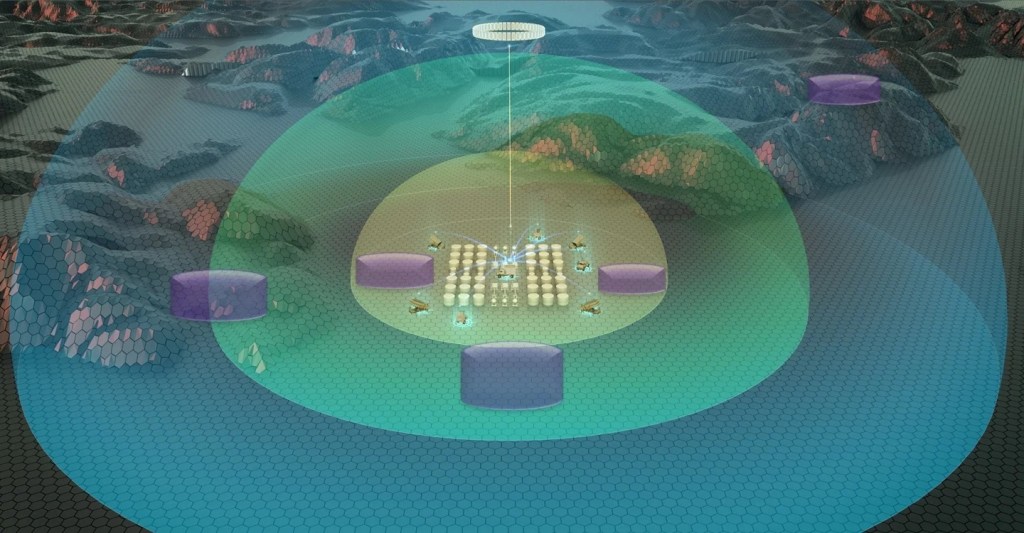
It is critical, however, to distinguish between Kongsberg’s industrial roadmap and Norway’s formal procurement policy. While FSAD aligns with the government’s long-term objectives, it remains an industry concept. Norway’s current, contracted path involves the procurement of NASAMS and a future, separate long-range system.
Overcoming Implementation Hurdles
Successfully realizing this ambitious vision will depend on navigating several key challenges over the next decade:
- Supply Chain Constraints: Global demand for air defense systems and their components has created significant production backlogs industry-wide.
- Industrial Capacity: While Kongsberg and its partners are expanding production, scaling up to meet the surge in demand remains a considerable challenge.
- Systems Integration: Any new long-range TBM system must be seamlessly integrated into Norway’s existing command and control networks to be effective.
- Budgetary Discipline: The historic 600 billion NOK commitment requires sustained political will and disciplined execution over the full 12-year period of the LTDP.
Conclusion: A Clear Strategy for a Complex Future
Norway’s air defense strategy is clear, funded, and decisive. By contracting for four additional NASAMS batteries, the government has reaffirmed the system as the foundation of its territorial defense. Simultaneously, by explicitly planning for a separate long-range TBM defense system, it has acknowledged the changing nature of aerial threats.
The path forward prioritizes bolstering existing, proven capabilities while laying the groundwork for the advanced systems needed to meet future challenges. While implementation will take years and require overcoming significant industrial and logistical hurdles, Norway has set a clear and credible course for securing its airspace in an increasingly uncertain world.

