

Integrated Air & Missile Defense (IAMD) unites protection against air-breathing threats—such as aircraft, drones, and cruise missiles—with defense against ballistic and hypersonic missile threats. In today’s interconnected defense environment, space-based systems play a pivotal role across multiple domains. This primer explores how satellite assets enhance every layer of integrated defense—offering persistent intelligence, precision tracking, secure communications, and early warning.
Space-Based Infrared Sensors: The Cornerstone of Missile Warning
Satellites equipped with infrared sensors are the first line of defense against ballistic missile launches. These systems detect the intense heat signatures produced by rocket engines during boost phase and relay alerts within seconds. The U.S. SBIRS constellation, building on the earlier Defense Support Program (DSP), exemplifies this approach and remains fundamental to global missile warning networks (Wikipedia, New Space Economy). Positioned in geostationary orbits for continuous coverage, space-based infrared assets also serve to cue ground-based radars and interceptor systems, enabling faster response times and greater situational awareness (New Space Economy, Wikipedia).
GMTI and Radar Satellites: Extending Surveillance Beyond the Horizon
In addition to infrared systems, satellites equipped with radar or ground-moving target indication (GMTI) sensors can detect and track airborne objects and mobile surface launchers over wide areas. This capability allows monitoring of stealth or low-altitude cruise missile threats beyond the line-of-sight of terrestrial radars. Space Tracking and Surveillance System (STSS), formerly known as SBIRS-Low, demonstrated that low-earth-orbit radar platforms could detect missiles in both boost and mid-course phases—thus improving tracking and engagement opportunities (Wikipedia).
Signals Intelligence (ELINT) from Orbit: Gleaning Clues from Electromagnetic Emissions
Spaceborne Electronic Intelligence (ELINT) satellites intercept radar emissions and other electronic signals from adversary systems. These platforms detect operational radars, missile guidance uplinks, radar pulses, and command systems—providing critical insight into an adversary’s electronic order of battle. ELINT payloads, such as France’s CERES constellation or other modern systems, operate in low-Earth orbit and thwart detection by collecting passive signals over a wide geography (New Space Economy). Analyzing technical signal characteristics (e.g. pulse width, PRF, frequency) supports target identification and exposure of threat vectors, while enabling countermeasure development and stealth design improvements (CRFS).
Navigation and Communications: Ensuring Interoperable Reach
Reliable Positioning, Navigation, and Timing (PNT)—through systems like Galileo or advanced GNSS—and secured satellite communication channels are indispensable to modern IAMD. They support encrypted, low-latency data transmission between satellites, command centers, aircraft, and ground-based defense elements.
Communication and data links are vital when operations occur across remote areas or contested environments, where terrestrial infrastructure may be degraded or unavailable (NSIN). This connectivity allows defense assets to integrate situational awareness and coordinate engagements in real time, enhancing both responsiveness and resilience.
Integrating Space Capabilities in Missile and Air Defense Operations
When a ballistic missile is launched, infrared satellites detect its heat signature and immediately forward that data through dedicated ground stations (e.g., JTAGS in U.S. architecture) to missile defense units for interceptor cueing (Wikipedia).
Meanwhile, ELINT satellites may detect activation of hostile air-defense radars or communications systems, signaling possible staging of air or cruise missile operations.
GMTI systems can track low-flying targets or mobile missile launchers well before ground radar acquisition is possible. Together, these layers not only establish early warning but also furnish direction and refined control of defensive responses—whether launching a SAM system, scrambling aircraft, or cueing radar-directed interceptors.

Long-Term Relevance: Why General IAMD Logic Stands the Test of Time
The space-enabled architecture described here holds longevity because it builds on enduring principles: early detection, wide-area surveillance, secure data flow, and cueing precision. As aerial threats evolve—from conventional aircraft and drones to stealth platforms and hypersonics—the same space-based infrastructure adapts without needing wholesale redesign. Satellite constellations designed for infrared, radar, ELINT, and communication functions continue to deliver strategic value even as specific programs evolve.
Moreover, space systems enhance resilience and redundancy. Dispersed constellations avoid single points of failure and can withstand individual satellite loss. This makes them ideal for integrated multi-threat environments, where continuity of surveillance and command is critical.
Considerations for Deployment and Integration
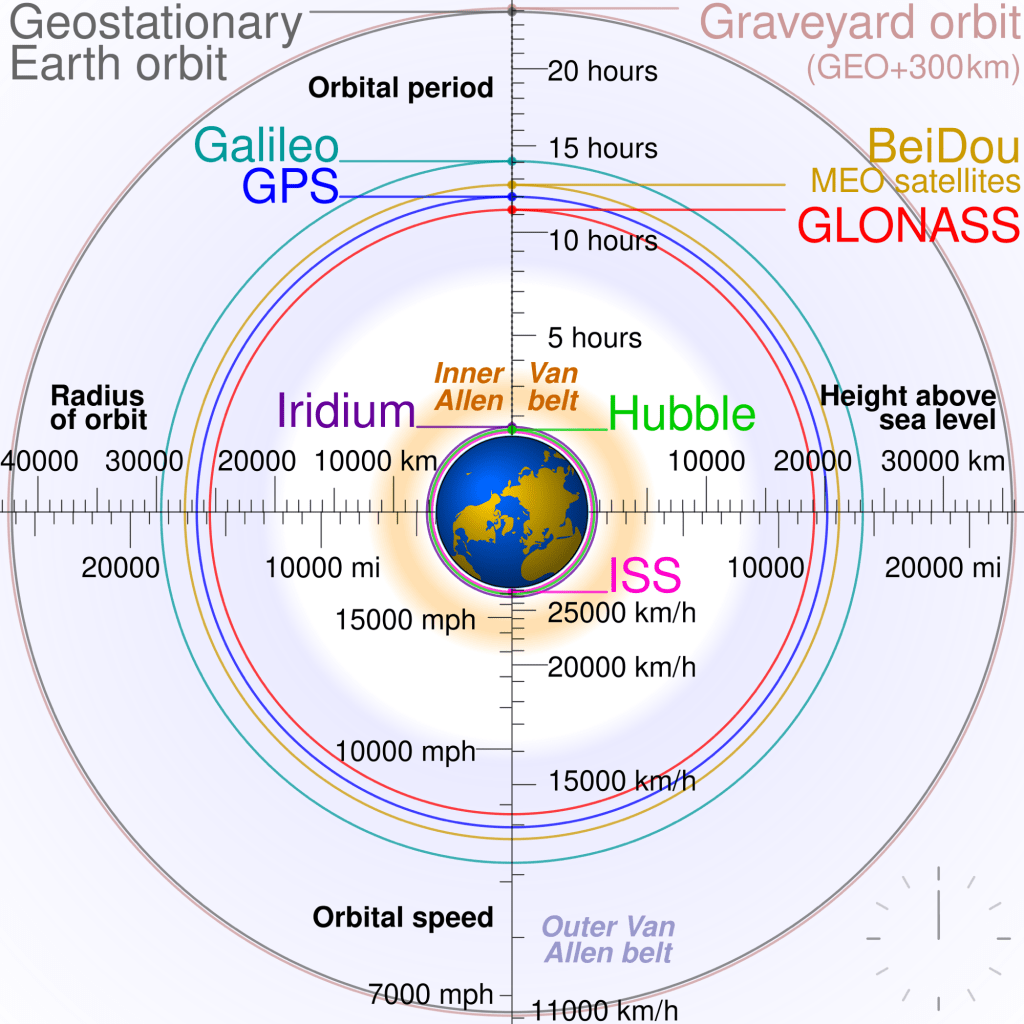
Designing effective space-ground IAMD demands careful consideration of orbital deployment: geostationary satellites for persistent infrared coverage; low or medium orbit constellations for GMTI and ELINT; and dedicated communication satellites for secure links. Integration demands robust sensor fusion and command-and-control (C2) frameworks that standardize data exchange across disparate platforms. Interoperability protocols—such as NATO STANAG equivalents—help ensure that space-derived data can effectively steer ground or aerial defense units.
Policy and legal constraints must also be addressed. Dual-use satellite surveillance raises questions around transparency, data-sharing norms, and adherence to space governance standards. Compliance with international law and diplomatic frameworks is essential for any IAMD architecture that relies on orbital assets (My Blog, TS2 Space).
Conclusion: Space as the Backbone of Modern Integrated Defense
Space-based systems serve as the foundation of modern Integrated Air & Missile Defense, beyond merely detecting ballistic missile launches. Infrared detection, radar surveillance, electronic intelligence, resilient communication, and navigation services collectively provide early warning, tracking, and operational command above and beyond terrestrial limits. This architecture remains adaptable to shifting threat types and technical advancements, making it a timeless reference for strategic planners, defense professionals, and policy architects. Future explorations can elaborate on constellation design, cost comparisons, or coalition-level implementation frameworks.

