
The selection of advanced air defense systems has become a defining strategic decision for European defense organizations navigating the complex intersection of technological sovereignty, alliance interoperability, and operational effectiveness. Three systems – Germany’s IRIS-T SL, France’s VL MICA, and Britain’s CAMM – represent distinct national approaches to medium-range air defense while embodying broader tensions between European strategic autonomy and NATO integration. Each system has demonstrated operational capabilities, yet their adoption patterns reveal fundamental differences in European defense philosophy and industrial strategy.
Executive Summary
IRIS-T SL emerges as the combat-proven leader with exceptional performance in Ukraine, achieving 90-99% intercept rates against diverse threats including cruise missiles and drone swarms. Its selection as the cornerstone of the European Sky Shield Initiative (ESSI) reflects broad European acceptance and standardization benefits. VL MICA offers unique dual-seeker flexibility with interchangeable infrared and radar seekers, embodying France’s strategic autonomy approach through independent capability development. CAMM provides advanced network-centric operations with superior launcher capacity and sophisticated active radar guidance, while maintaining transatlantic defense industrial cooperation despite Brexit.
The systems present distinct cost profiles: IRIS-T SL at €700K-900K per missile, VL MICA at €800K-1.2M, and CAMM at $3-4M per missile. All three contribute significantly to European defense industrial sovereignty, supporting over 25,000 direct jobs and representing multi-billion euro investments in European technological capabilities. The choice between systems increasingly reflects strategic decisions about European defense integration versus national autonomy approaches.
Technical Specifications and Capabilities Analysis
IRIS-T SL: Proven Combat Performance
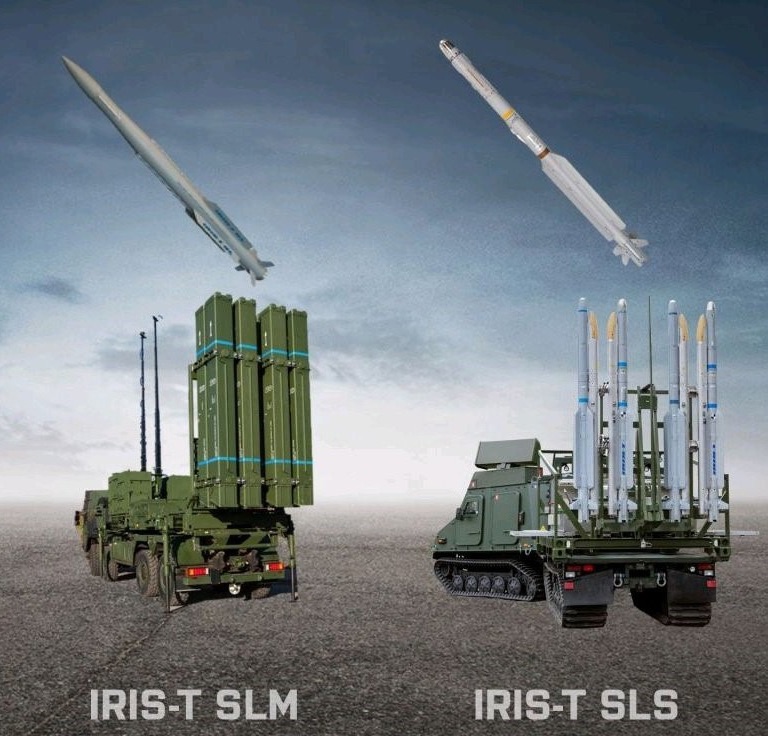
The IRIS-T SL family represents mature technology derived from the successful IRIS-T air-to-air missile, adapted for surface-launched applications with impressive results. The system offers scalable range capabilities across three variants: IRIS-T SLS provides 12km range for point defense, IRIS-T SLM extends to 40km for area defense, and the developmental IRIS-T SLX promises 80km range for long-range intercepts.
The missile’s 3.2-meter length and 87-150kg weight varies by configuration, with the SLM version incorporating additional boosters for extended range. The 11.4kg pre-fragmented warhead delivers lethal effects against diverse targets, while the high-precision infrared imaging seeker provides exceptional terminal guidance accuracy. The system’s 60g+ maneuverability at close range ensures high intercept probabilities against maneuvering threats.
Launcher configurations accommodate 4-8 missiles per vehicle, with rapid reload capabilities under 10 minutes. The system integrates seamlessly with the HENSOLDT TRML-4D radar, providing 360-degree coverage with vertical launch capabilities. NATO compatibility ensures interoperability with alliance systems while maintaining European technological sovereignty.
VL MICA: Dual-Seeker Flexibility
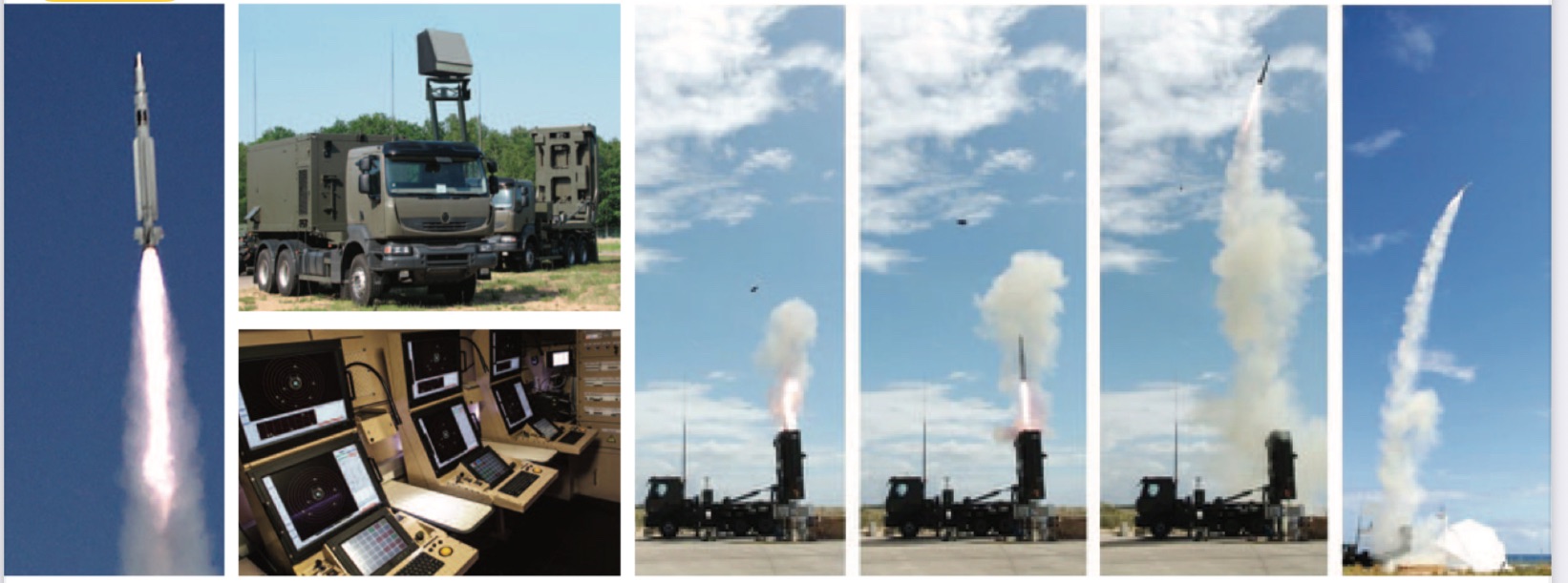
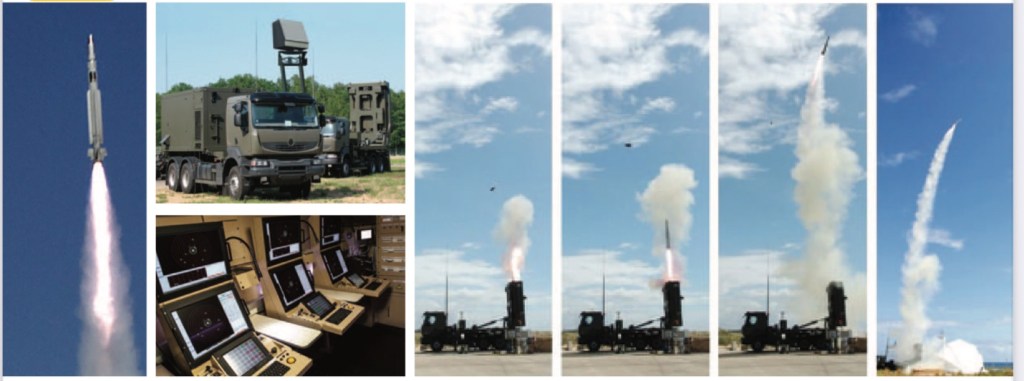
VL MICA’s most distinctive feature is its unique dual-seeker capability, offering both MICA-RF (active radar) and MICA-IR (infrared) variants that can be mixed within the same launcher. This flexibility provides tactical advantages against diverse threat scenarios and electronic warfare environments.
The 3.1-meter missile weighs 112kg with a 12kg directed fragmentation warhead, offering comparable lethality to competing systems. The 20km range of the standard variant extends to 40km+ with the VL MICA NG featuring bi-pulse motor technology. The system’s 50g maneuverability at close range reduces to 30g at 12km, providing effective engagement capabilities throughout the intercept envelope.
Launcher capacity of 4 missiles per vehicle appears limited compared to competitors, but the system’s 2-second firing intervals enable rapid engagement of multiple targets. The vertical launch system with thrust vector control provides full 360-degree coverage while maintaining compact system footprint. Integration with Thales Ground Master radars ensures effective sensor fusion.
CAMM: Advanced Network-Centric Operations
CAMM represents the most technologically advanced system, featuring sophisticated active radar seekers with gallium nitride technology for enhanced performance against modern threats. The 3.2-meter, 99kg missile incorporates advanced aerodynamics for exceptional maneuverability throughout the engagement envelope.
The system’s 25km+ range extends to 45km+ with CAMM-ER, providing comprehensive area defense capabilities. The soft vertical launch technology reduces system signature while enabling rapid engagement. Advanced blast-fragmentation warhead with laser proximity fuse ensures optimal lethality against diverse targets.
Launcher capacity of 12 missiles per iLauncher provides superior firepower compared to competitors, while the lock-on-after-launch capability enables engagement of multiple simultaneous targets. The system’s non-line-of-sight engagement capability enhances tactical flexibility, while NATO integration ensures alliance interoperability.

Real-World Combat Performance Assessment
IRIS-T SL: Ukraine Combat Excellence
IRIS-T SL’s performance in Ukraine provides unprecedented real-world validation of European air defense capabilities. Ukrainian forces report 90-99% intercept success rates with the system, including remarkable achievements such as 240 confirmed kills with near-100% effectiveness. A single battery neutralized 15 cruise missiles in one engagement, while another fire unit destroyed 8 cruise missiles with 8 interceptors within 30 seconds.
The system has proven effective against cruise missiles including Kalibr, Iranian Shahed drones, and various aerial threats. Performance against saturation attacks of 12+ simultaneous targets demonstrates the system’s capability against modern warfare scenarios. All-weather effectiveness over extended ranges has exceeded manufacturer expectations under harsh combat conditions.
Operational readiness in field conditions has been exceptional, with the system maintaining high availability rates throughout continuous operations. The integration with Ukrainian air defense networks proceeded smoothly, demonstrating the system’s adaptability to diverse operational environments.
VL MICA: Operational Reliability
VL MICA demonstrates 100% firing success rate with 19 successful firings without failure since development trials began in 2003. The system’s first operational deployment by French forces during the Paris 2024 Olympics showcased its readiness for critical national security missions.
Dual-seeker capability advantages become apparent in complex electromagnetic environments, with the ability to switch between infrared and radar guidance based on threat characteristics. The system’s effectiveness against low-signature targets and guided bombs provides tactical advantages in diverse scenarios.
International operational experience with Oman and other users demonstrates the system’s reliability across different operational environments. The 360-degree engagement capability with effective range performance validates design specifications.
CAMM: Network-Centric Validation
CAMM achieved its first combat success in the Red Sea when HMS Richmond destroyed 2 Houthi drones from a swarm of 28 UAVs, demonstrating effectiveness against asymmetric threats. The system’s performance in multinational coalition operations validates its interoperability capabilities.
Sky Sabre deployment to Poland through Operation Stifftail demonstrated the system’s rapid deployment capabilities and NATO integration. The 1,300 square kilometer protection area provides comprehensive area defense coverage.
Multi-target engagement capability against diverse threats within the 360-degree envelope has proven effective in operational scenarios. The system’s advanced active radar seeker provides autonomous engagement capabilities essential for modern warfare.
Strategic Cost Analysis and Industrial Implications
Acquisition and Lifecycle Cost Comparison
IRIS-T SL systems cost €100-140 million per complete fire unit including radar, command systems, and launchers. Recent contracts demonstrate consistent pricing: Sweden’s $900M for 7 systems ($128M per system), Slovenia’s €200M for 2 systems (€100M per system), and Ukraine’s €1.5-2 billion for 11 batteries (€140-178M per battery).
VL MICA pricing varies by configuration, with Morocco’s €192M for 4 batteries and France’s €702M for 12 systems indicating competitive pricing structures. The VL MICA NG upgrade path provides enhanced capabilities from 2026 with 40km+ range.
CAMM development required £483M ($759M) for Sea Ceptor development, with total UK investment of £850M across all programs. Export success includes Poland’s $2.4B for 44 iLaunchers and $4.89B for CAMM-ER with 1,000+ missiles.
Industrial Base and Employment Impact
The three systems collectively support over 25,000 direct jobs across European defense industries. MBDA’s €4.5 billion revenue (2023) with 13,000+ employees globally demonstrates the industrial significance of advanced missile systems. Diehl Defence’s production capacity of 400-500 missiles annually provides substantial industrial benefits.
Technology transfer and offset arrangements create additional value through local production capabilities. Poland’s CAMM production facilities and extensive European supply chains with 70+ suppliers demonstrate the broader industrial ecosystem benefits.
European Defense Industrial Sovereignty
The European Sky Shield Initiative creates economies of scale through joint procurement across 24 member states, reducing individual nation costs while strengthening European defense capabilities. Standardized training and maintenance programs provide additional cost efficiencies.
Export potential demonstrates European competitiveness in global defense markets. IRIS-T SL’s 12+ country adoption, VL MICA’s 15 armed forces usage, and CAMM’s growing international presence validate European technological capabilities.
European Defense Sovereignty Implications
European Sky Shield Initiative and Strategic Integration
The European Sky Shield Initiative represents the most significant European air defense cooperation effort, with IRIS-T SL selection reflecting “European preference” while maintaining NATO compatibility. The initiative creates standardization benefits through economies of scale and reduces dependency on non-European systems.
24 participating states demonstrate broad European acceptance of multilateral defense cooperation. Joint procurement reduces individual costs while strengthening European defense industrial capabilities. The model proves that European sovereignty can strengthen rather than undermine NATO effectiveness.
French Strategic Autonomy Approach
France’s VL MICA development embodies comprehensive autonomy doctrine, emphasizing complete capability independence while maintaining alliance partnerships. Recent orders for 8 additional systems demonstrate commitment to autonomous air defense capabilities.
The VL MICA NG technological advancement represents indigenous European technology development with 40km range and advanced AESA radar seekers. France’s approach prioritizes the ability to assess, decide and act in situations where European interests are at stake.
UK Post-Brexit Defense Engagement
Despite Brexit, CAMM demonstrates continued European defense cooperation through technology sharing and bilateral partnerships. The €2B+ Polish PILICA+ contract shows persistent European integration despite institutional separation.
NATO-centric approach prioritizes alliance frameworks while maintaining bilateral European partnerships. The UK’s selective re-engagement with EU defense initiatives through programs like Military Mobility demonstrates strategic balancing between US and European relationships.
NATO Interoperability versus European Autonomy Tensions
Fundamental contradictions persist between NATO standardization requirements and European sovereignty aspirations. Standards competition between European and US systems creates integration complexities while industrial protection measures limit transatlantic cooperation.
Strategic culture divergences are evident: Eastern Europe prioritizes NATO Article 5 guarantees, Western Europe emphasizes strategic autonomy, and Nordic countries balance NATO membership with European cooperation. These differences influence procurement decisions and alliance dynamics.
Comparative Analysis and Strategic Assessment
Technical Performance Comparison
IRIS-T SL offers proven combat effectiveness with exceptional performance in high-intensity conflict scenarios. The system’s 90-99% success rate in Ukraine operations provides unique validation of European air defense capabilities. Scalable range options from 12km to 80km provide flexible deployment options.
VL MICA’s dual-seeker capability provides tactical advantages unavailable in competing systems. The unique flexibility between infrared and radar guidance enables effective operation across diverse threat environments and electronic warfare scenarios.
CAMM’s advanced active radar technology and superior launcher capacity provide network-centric advantages. The 12-missile launcher capacity exceeds competitors while soft launch technology reduces system signature.
Strategic Procurement Considerations
Combat-proven performance favors IRIS-T SL for high-intensity conflict scenarios, while technological flexibility makes VL MICA attractive for diverse operational environments. Network-centric capabilities position CAMM for future warfare requirements.
Industrial cooperation benefits vary significantly between systems. ESSI framework provides multilateral cost reduction for IRIS-T SL, French autonomy approach limits VL MICA cooperation, and post-Brexit arrangements create complexity for CAMM integration.
NATO interoperability remains strong across all systems, though European preference increasingly influences procurement decisions. Technology sovereignty considerations balance capability requirements with strategic autonomy objectives.
Future Development Trajectories and Recommendations
Technological Evolution Paths
IRIS-T SLX development promises 80km range capability, extending the system’s effectiveness against long-range threats. Continuous upgrades maintain technological competitiveness while proven combat performance provides confidence for future investments.
VL MICA NG offers doubled range capabilities with advanced seeker technology, while modular design enables ongoing improvements. Export success demonstrates international validation of French technological capabilities.
CAMM’s modular architecture enables ongoing capability enhancements while network-centric design positions the system for future warfare requirements. International partnerships maintain technological advancement through shared development costs.
Strategic Recommendations for European Defense
Multilateral procurement through ESSI framework provides optimal cost-effectiveness while strengthening European defense capabilities. Technology sharing agreements maximize industrial cooperation benefits while maintaining competitive pressures for continued innovation.
Layered defense strategies combining multiple systems provide comprehensive protection against diverse threats. Industrial policy coordination should balance European preference with quality standards and competitive pricing.
Institutional innovation is required for post-Brexit cooperation and technology transfer frameworks. Clear definition of strategic autonomy reduces transatlantic misunderstandings while emphasizing burden-sharing benefits of European capability development.
Conclusions
The comparison of IRIS-T SL, VL MICA, and CAMM reveals three distinct approaches to European air defense that reflect broader strategic choices about sovereignty, alliance relationships, and industrial development. IRIS-T SL’s exceptional combat performance in Ukraine, combined with broad European adoption through ESSI, positions it as the most successful European air defense system. The system’s proven effectiveness validates European technological capabilities while multilateral cooperation demonstrates that sovereignty can strengthen rather than undermine alliance effectiveness.
VL MICA’s technological sophistication and dual-seeker flexibility provide unique capabilities, though limited European adoption despite French strategic autonomy emphasis reveals the challenges of purely national approaches. CAMM’s advanced network-centric capabilities offer future-oriented solutions while post-Brexit cooperation demonstrates the persistence of European defense integration despite institutional challenges.
All three systems contribute significantly to European defense sovereignty through advanced indigenous technologies, substantial industrial employment, and reduced dependence on non-European capabilities. The collective investment of over €10 billion in European air defense systems creates substantial industrial benefits while export success demonstrates global competitiveness.
Strategic timing proves critical as the Ukraine conflict accelerates European defense procurement and sovereignty discussions. The window of opportunity for major structural changes in European defense requires careful balance between NATO interoperability and European strategic autonomy. Success depends on managing competing priorities while maintaining alliance cohesion and effective deterrence against current threats.
The future of European air defense lies not in choosing between these systems, but in leveraging their complementary capabilities within integrated defense frameworks that strengthen both European sovereignty and alliance effectiveness. The European Sky Shield Initiative provides a proven model for multilateral cooperation that should be expanded to other capability areas, while institutional innovation enables continued cooperation despite political challenges.
European defense organizations must navigate the complex intersection of technological sovereignty, alliance interoperability, and operational effectiveness in their procurement decisions. The success of these three systems demonstrates that European defense capabilities can meet the highest operational standards while strengthening rather than undermining transatlantic security relationships. The choice between systems should reflect not just technical capabilities, but fundamental strategic decisions about European defense integration and alliance cooperation in an increasingly complex security environment.
Reference List
Primary Sources
- Defence Industry Europe. “IRIS-T SLM air defence system achieves very high effectiveness in Ukraine.” 2024.
- Militarnyi. “IRIS-T: Missile Shield for Ukraine.” 2024.
- Army Recognition. “Ukraine Strengthens Its Air Defense with 4 New German IRIS-T Systems.” 2025.
- MBDA. “VL MICA | MBDA.” Accessed 2025.
- Asia Pacific Defence Reporter. “MBDA launches the new VL MICA NG air defence system.” 2024.
Technical Specifications
- Wikipedia. “IRIS-T SL.” Accessed 2025.
- Wikipedia. “MICA (missile).” Accessed 2025.
- Wikipedia. “CAMM (missile family).” Accessed 2025.
- Airforce Technology. “IRIS-T SL Surface-to-Air Guided Missile.”
- Army Technology. “Mica Vertical Launch Short-Range Air-Defence System.”
- Army Recognition. “CAMM Sky Sabre Air Defense Missile System.”
Strategic Analysis
- HENSOLDT. “ESSI – European Sky Shield Initiative.” 2024.
- Defence Industry Europe. “The expansion of the European Sky Shield Initiative (ESSI).” 2024.
- Euro-SD. “European Ground-Based Air Defence Programmes.” 2023.
- Breaking Defense. “France and Italy order new SAMP/T air defense systems.” 2024.
Combat Performance
- Army Recognition. “French Air Force deploys VL MICA air defense system for the first time to secure Paris 2024 Olympics.” 2024.
- Military Africa. “Morocco receives VL MICA missiles from France.” 2022.
- Think Defence. “Common Anti Air Missile (CAMM).” 2022.
Market Analysis
- Meta-defense. “VL MICA, NASAMS or IRIS-T SLM? Denmark takes all three!” 2025.
- MilitaryLeak. “Bulgaria Parliament Approves Purchase of IRIS-T SLM Air Defense System.” 2024.
AI-assisted article.

