
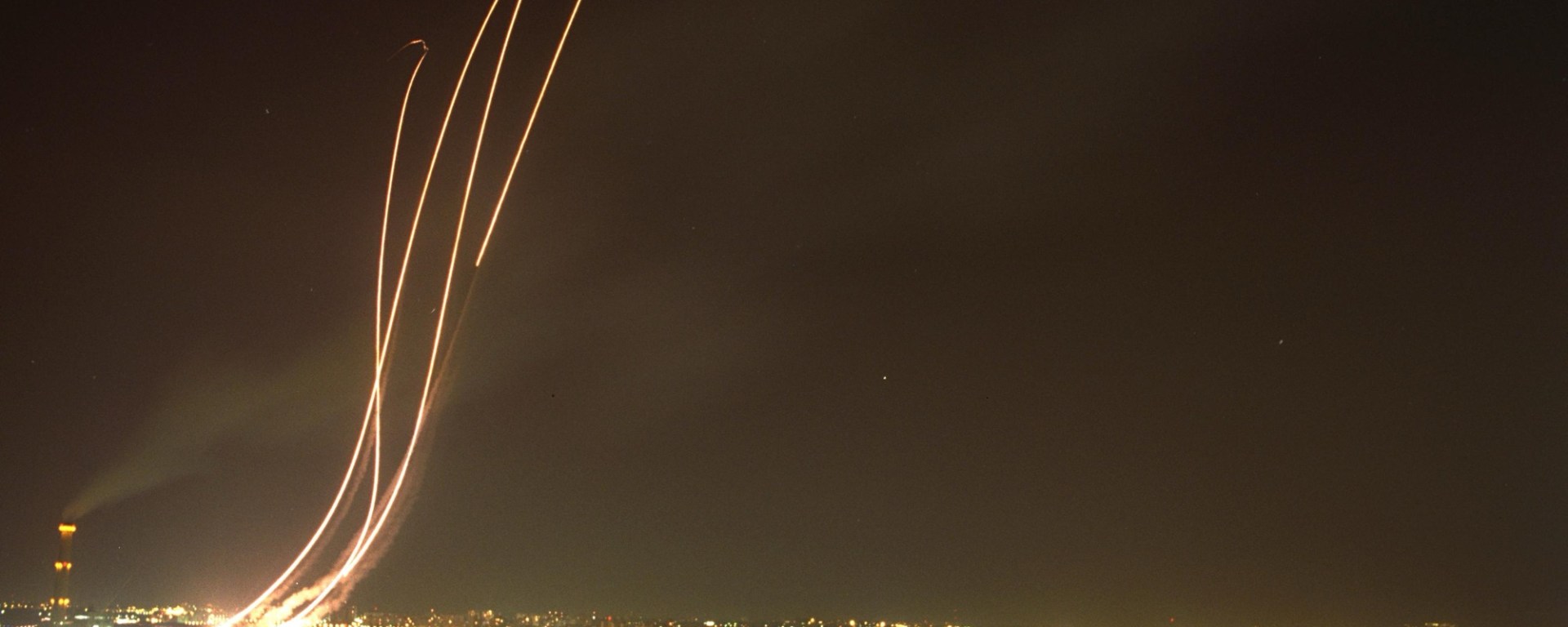
World-class IAMD systems succeed through five fundamental criteria: comprehensive multi-layered defense architectures, seamless sensor-to-shooter integration, adaptive threat response capabilities, sustainable cost-effectiveness, and robust international interoperability. The most successful Western implementations—from Israel’s Iron Dome to NATO’s integrated networks—demonstrate that technical excellence must be matched by operational flexibility, strategic deterrence value, and the ability to evolve with emerging threats. Modern IAMD systems achieve success rates of 85-95% against diverse threats while maintaining operational costs of $40,000-$15 million per intercept, depending on system type and threat complexity.
Success hinges on first principles thinking that prioritizes physics-based constraints, mission-critical requirements, and integrated system-of-systems approaches. The Ukraine conflict has validated key principles: mobility trumps static defense, selective engagement optimizes resources, and human-machine teaming enables rapid adaptation. Future world-class systems will integrate AI-powered decision-making, directed energy weapons, space-based sensors, and hypersonic interceptors while maintaining the foundational elements that define excellence today.

Chapter 1: Understanding the Fundamentals
What is integrated air and missile defense?
Integrated Air and Missile Defense represents a revolutionary approach to protecting against aerial threats, combining multiple defensive systems into a unified network capable of simultaneous engagement across different altitudes, ranges, and threat types. Unlike traditional air defense systems that operate independently, IAMD creates a “system of systems” that shares information instantaneously and coordinates responses across multiple platforms.
The core concept emerged from a simple recognition: modern threats are too diverse and numerous for any single defensive system to handle effectively. A successful IAMD architecture must simultaneously counter everything from small drones costing hundreds of dollars to hypersonic missiles worth millions, often arriving in coordinated salvos designed to overwhelm individual defenses.
The three pillars of IAMD success
Detection and Tracking: The foundation of any IAMD system lies in its ability to see threats across vast distances and track them with precision. Modern systems employ multiple sensor types—long-range surveillance radars detecting targets at 500-1,000+ kilometers, electro-optical systems providing precise identification, and space-based sensors offering global coverage. The AN/TPY-2 radar used in THAAD systems, for example, can detect basketball-sized objects at 870 kilometers, providing critical early warning for defensive responses.
Command and Control: The nervous system of IAMD operations, command and control networks must process enormous amounts of data and make split-second decisions about threat priority, engagement timing, and resource allocation. Advanced systems like the U.S. Integrated Battle Command System (IBCS) enable “any sensor to any shooter” capability, meaning radar data from one system can guide interceptors from completely different platforms, dramatically improving flexibility and effectiveness.
Engagement Systems: The final pillar encompasses the actual weapons used to neutralize threats, ranging from kinetic interceptors that destroy targets through direct impact to directed energy weapons that disable threats at the speed of light. Modern systems employ layered engagement zones—long-range interceptors like THAAD operating at 40-150 kilometers altitude, medium-range systems like Patriot covering 20-160 kilometers, and close-range defenses handling threats within 4-70 kilometers.
Why integration matters more than individual capability
The power of IAMD lies not in any single component but in the synergistic effects of integration. Consider Israel’s Iron Dome system, which achieves 85-95% success rates not through superior individual components but through intelligent integration of radar detection, trajectory calculation, and selective engagement algorithms. The system only fires $40,000-$100,000 interceptors at rockets that pose actual threats to populated areas, dramatically improving cost-effectiveness.
This integration extends beyond technical systems to operational doctrine. NATO’s 360-degree IAMD approach recognizes that threats can originate from any direction and employ diverse tactics. Success requires seamless coordination between national systems, standardized communication protocols, and shared situational awareness across allied forces.
Chapter 2: The Building Blocks of Excellence
Sensors: The eyes of the system
Modern IAMD systems depend on sophisticated sensor networks that provide continuous surveillance of airspace. Active electronically scanned array (AESA) radars form the backbone of detection capabilities, using thousands of individual transmit/receive modules to create precise, steerable beams. These systems can simultaneously track hundreds of targets while maintaining surveillance of vast areas.
The physics of radar detection follow the fundamental equation where detection range is proportional to the fourth root of transmitted power and antenna size, but inversely related to target radar cross-section. This means that detecting stealthy targets requires exponentially more power or larger antennas, driving the development of increasingly sophisticated sensor networks.
Electro-optical and infrared sensors complement radar systems by providing passive detection capabilities that cannot be jammed or detected by adversaries. Modern IRST systems can detect aircraft at 50-90 kilometers depending on aspect angle, while space-based infrared sensors provide global coverage for ballistic missile detection during boost phase.
Multi-sensor fusion represents the cutting edge of detection capability, combining data from radar, electro-optical, space-based, and signals intelligence sources to create comprehensive threat pictures. AI-powered systems can correlate information from dozens of sensors to identify and track targets that would be invisible to individual systems.
Interceptors: The sword of defense
Kinetic energy interceptors represent the most mature technology for threat neutralization, using hit-to-kill techniques that destroy targets through direct impact rather than explosive warheads. The physics are compelling: a 70-kilogram interceptor traveling at 3 kilometers per second delivers the kinetic energy equivalent of a truck traveling at 600 mph, ensuring target destruction without requiring explosive proximity.
The PAC-3 MSE (Missile Segment Enhancement) exemplifies modern kinetic interceptor design, featuring a two-pulse solid rocket motor that enables high-g maneuvering throughout the engagement envelope. Advanced seekers provide terminal guidance with circular error probable measurements in centimeters, ensuring high kill probability against maneuvering targets.
Directed energy weapons are revolutionizing IAMD by offering near-instantaneous engagement at the speed of light. High-energy laser systems delivering 10-300 kilowatts can disable or destroy threats at costs of $1-10 per shot, compared to $40,000-$15 million for kinetic interceptors. The Raytheon HELWS and Lockheed Martin ATHENA systems demonstrate operational capability against drones and rockets, with higher-power systems under development for ballistic missile defense.
High-power microwave weapons provide complementary capabilities by disrupting electronic systems rather than physically destroying targets. These systems can engage multiple threats simultaneously within their beam patterns, offering unique advantages against drone swarms and electronic systems.
Command and control: The brain of operations
Modern IAMD command and control systems process enormous amounts of data to make critical decisions in compressed timeframes. Battle management systems like IBCS employ artificial intelligence to formulate kill chains within seconds, automatically assigning optimal interceptors to incoming threats based on engagement geometry, threat priority, and available resources.
The challenge lies in managing complexity while maintaining human oversight for critical decisions. Advanced systems provide commanders with real-time situational awareness through common operational pictures that integrate data from multiple sources, but retain human authority for engagement decisions in complex scenarios.
Network architecture becomes critical as IAMD systems scale. Secure, high-bandwidth communications enable distributed operations while maintaining centralized coordination. Modern systems employ multiple communication pathways including satellite links, tactical data links, and commercial internet protocols to ensure resilient connectivity.
Chapter 3: First Principles Thinking and Design Philosophy
Physics-based constraints and opportunities
Successful IAMD design begins with fundamental physics principles that govern detection, tracking, and engagement. Detection range limitations follow the radar equation, where range scales as the fourth root of transmitter power and antenna aperture. This means doubling detection range requires 16 times more power or antenna size, driving the need for distributed sensor networks rather than single large radars.
Kinetic energy requirements for successful intercepts demand high-velocity interceptors capable of maneuvering to compensate for target movement. The energy required scales with the square of velocity, making high-performance propulsion systems essential for extended-range intercepts.
Atmospheric effects significantly impact both sensor performance and interceptor capability. Radar performance degrades in rain and snow, while interceptor maneuverability depends on atmospheric density that varies with altitude. These constraints drive the development of multi-spectral sensors and altitude-optimized interceptors.
Mission-based requirements decomposition
World-class IAMD systems begin with clear mission definition that drives all subsequent design decisions. Asset protection requirements determine the size and location of defended areas, which directly influences sensor placement and interceptor positioning. High-value targets like command centers or population centers require different protection levels than general military facilities.
Threat spectrum analysis identifies the specific capabilities required to counter expected threats. Systems designed primarily for cruise missile defense have different requirements than those focused on ballistic missile protection. World-class systems address the full threat spectrum through layered approaches that provide multiple engagement opportunities.
Operational environment considerations include factors like weather, terrain, and electromagnetic interference that affect system performance. Desert environments present different challenges than maritime or arctic conditions, requiring adapted sensor configurations and maintenance procedures.
Integration complexity management
The transition from individual systems to integrated networks introduces exponential complexity that must be managed through systematic engineering approaches. Interface standardization enables different systems to communicate effectively, requiring detailed protocol specifications and extensive testing.
Failure mode analysis becomes critical as system complexity increases. Single points of failure must be identified and eliminated through redundancy and graceful degradation capabilities. The 1991 Gulf War incident where a Patriot system failed to intercept a Scud missile due to software timing errors illustrates the importance of comprehensive failure analysis.
Human factors integration ensures that operators can effectively manage complex systems under stress. User interface design, training requirements, and decision-making processes must be optimized for human capabilities and limitations.
Chapter 4: Success Criteria and Performance Metrics
Quantitative performance measures
Kill probability (Pk) represents the fundamental measure of IAMD effectiveness, typically expressed as single-shot kill probability for individual engagements. Current systems achieve Pk values ranging from 0.56 for complex scenarios to over 0.95 for optimal conditions. Multiple interceptor salvos increase overall kill probability, with four interceptors providing 0.97 cumulative probability against single targets.
Detection probability (Pd) measures sensor system effectiveness across different ranges, weather conditions, and target types. Modern long-range radars achieve detection probabilities above 0.90 for conventional aircraft at maximum range, degrading to 0.60-0.80 for low-observable targets.
Coverage area calculations determine the protected zone size and shape, accounting for terrain masking, radar horizon effects, and interceptor engagement envelopes. Overlapping coverage zones provide redundancy and eliminate potential gaps in defensive coverage.
Engagement timeline analysis measures the time required from initial detection to interceptor impact, critical for fast-moving threats. Modern systems achieve detection-to-launch times of 10-30 seconds, with total engagement times of 60-120 seconds for optimal intercept geometry.
Qualitative assessment frameworks
Adaptability measures evaluate system capability to respond to evolving threats and tactics. This includes software upgrade capability, sensor reconfiguration flexibility, and training adaptation speed. Systems that can rapidly integrate new threat signatures and engagement techniques demonstrate superior adaptability.
Interoperability assessment examines integration capability with allied systems and joint operations. NATO standardization agreements provide baseline requirements, but true interoperability requires extensive testing and validation under operational conditions.
Survivability evaluation measures system resistance to attack and degradation. This includes physical hardening, electronic warfare resistance, and distributed operations capability. Mobile systems generally demonstrate superior survivability compared to fixed installations.
Operational effectiveness metrics
Mission success rates provide the ultimate measure of IAMD system value, typically measured as percentage of successful defense missions under specified conditions. Israel’s Iron Dome system demonstrates exceptional mission success with over 85% intercept rates across multiple conflicts.
Asset protection effectiveness measures the value of defended assets relative to system cost and performance. This includes both direct damage prevention and indirect effects like maintained operational capability and civilian morale.
Deterrence effectiveness represents the strategic value of IAMD systems in preventing conflicts through demonstrated defensive capability. While difficult to quantify directly, deterrence effects can be measured through adversary behavior changes and diplomatic outcomes.
Chapter 5: Western Implementation Case Studies
Israel’s Iron Dome: The paradigm of operational excellence
Iron Dome represents the most successful operational IAMD system, with over 5,000 successful intercepts across multiple conflicts since 2011. The system’s success stems from intelligent integration of three key components: the ELM-2084 multi-mission radar, the battle management and weapon control system, and the Tamir interceptor missile.
Selective engagement algorithms provide the key innovation, calculating trajectory predictions for incoming rockets and only engaging those threatening populated areas. This approach dramatically improves cost-effectiveness by avoiding unnecessary engagements against rockets that would land in unpopulated areas.
Performance metrics demonstrate exceptional capability: 85-95% intercept rates, 4-70 kilometer engagement range, and coverage up to 10 kilometers altitude. Each battery protects approximately 60 square miles, with 10+ batteries providing comprehensive coverage of populated areas.
Strategic impact extends beyond tactical success to strategic deterrence. The 2006 conflict resulted in 53 civilian deaths from rocket attacks, compared to only 2 rocket-related deaths in the 2014 conflict after Iron Dome deployment, demonstrating the system’s strategic value.
U.S. Patriot system: Evolution through operational experience
The MIM-104 Patriot system exemplifies continuous improvement through operational experience, evolving from air defense to ballistic missile defense through three major upgrade cycles. Currently deployed by 19 nations, Patriot represents the most widely used Western IAMD system.
Evolutionary development addressed early challenges through systematic improvement. The 1991 Gulf War exposed software timing issues that caused system failures after extended operation. Subsequent upgrades addressed these problems through improved software architecture and system monitoring.
PAC-3 MSE capability represents the current state-of-the-art, featuring hit-to-kill interceptors with advanced seekers and two-pulse rocket motors. The system demonstrates 20-160 kilometer engagement range with intercept altitudes up to 24 kilometers.
International partnership enables cost-sharing for system improvements while maintaining interoperability across allied forces. The 19-nation consortium provides funding for continuous upgrades and standardized training programs.
NATO integrated architecture: Multinational coordination excellence
NATO’s Integrated Air and Missile Defense system covers 81 million square kilometers through interconnected national systems, demonstrating successful large-scale integration across multiple nations and system types.
Standardization agreements provide the foundation for interoperability through common data formats, communication protocols, and operational procedures. Key standards include STANAG 4420 for command and control interfaces and STANAG 4193 for minimum system requirements.
Operational coordination enables centralized planning with decentralized execution, allowing national systems to maintain sovereignty while contributing to collective defense. The system demonstrated effectiveness during various crises and conflicts.
Lessons learned highlight the importance of political commitment, sustained investment, and continuous training for multinational integration success. Technical interoperability requires ongoing maintenance and periodic updates to maintain effectiveness.
European Sky Shield Initiative: Next-generation cooperation
The European Sky Shield Initiative (ESSI) represents an innovative approach to multinational IAMD development, involving 24 European nations in collaborative procurement of integrated systems.
Burden sharing enables smaller nations to access advanced IAMD capabilities through shared costs and coordinated procurement. The initiative demonstrates how multinational cooperation can overcome individual budget constraints.
Modular architecture allows different nations to contribute different system components while maintaining overall integration. This approach accommodates varying national industrial capabilities and security requirements.
Implementation challenges include managing complex multinational decision-making processes, balancing industrial interests across multiple nations, and ensuring technical compatibility across diverse systems.
Chapter 6: Integration Challenges and Advanced Solutions
Technical interoperability complexities
Modern IAMD systems must integrate components from multiple manufacturers, nations, and technology generations, creating significant technical challenges. Protocol standardization requires detailed specification of data formats, timing requirements, and interface characteristics. NATO’s standardization agreements provide baseline requirements, but implementation requires extensive testing and validation.
Sensor fusion algorithms must correlate data from diverse sources with different update rates, accuracy levels, and coordinate systems. Advanced systems employ Kalman filtering and Bayesian inference techniques to optimally combine information from multiple sensors while accounting for measurement uncertainties.
Network synchronization becomes critical when multiple systems must coordinate engagements in real-time. Timing accuracy requirements approach nanosecond levels for precision coordination of interceptor launches and sensor handovers.
Operational doctrine integration
Command relationships must be clearly defined to enable rapid decision-making while maintaining national sovereignty. NATO’s integrated command structure provides a model for combining centralized planning with decentralized execution authority.
Rules of engagement require standardization across allied forces while accommodating different national legal frameworks and operational constraints. Common procedures enable seamless transitions between national systems and commanders.
Training standardization ensures operators from different nations can effectively coordinate operations. NATO’s Common Education and Training Programme provides standardized curricula and certification requirements.
Advanced technology integration
Artificial intelligence integration enables automated threat classification, engagement prioritization, and resource allocation. Machine learning algorithms can process vast amounts of sensor data to identify subtle threat signatures and predict adversary behavior patterns.
Directed energy weapon integration requires new battle management algorithms to optimize engagement sequences between kinetic and energy weapons. Power management systems must coordinate energy weapon operations with other platform systems.
Space-based sensor integration provides global coverage and persistent surveillance capability, but requires sophisticated data processing to extract actionable intelligence from enormous data volumes.
Chapter 7: Operational Doctrines and Strategic Implementation
NATO 360-degree defense concept
NATO’s comprehensive approach to IAMD recognizes that threats can originate from any direction and employ diverse tactics. The 360-degree defense concept integrates active and passive measures across all domains—land, sea, air, space, and cyber.
Layered defense architecture provides multiple engagement opportunities using different systems optimized for specific altitude bands and threat types. Upper-tier systems like THAAD engage targets at 40-150 kilometers altitude, while lower-tier systems like Patriot operate from surface to 20 kilometers.
Flexible response capabilities enable rapid adaptation to changing threat scenarios through software-defined architectures and modular system designs. Systems can be reconfigured for different mission requirements without hardware changes.
Agile combat employment principles
Modern IAMD operations emphasize mobility and dispersal to enhance survivability against precision strikes. Ukrainian operations demonstrate the effectiveness of “shoot-and-scoot” tactics that deny adversaries the ability to target static defensive positions.
Rapid deployment capabilities enable IAMD systems to respond to emerging threats and changing operational requirements. Systems like THAAD and Patriot employ truck-mounted configurations that can be deployed within hours of arrival.
Distributed operations reduce vulnerability to single-point failures while complicating adversary targeting. Multiple smaller units operating in coordination provide more resilient defense than single large installations.
Multi-domain integration strategies
Cross-domain coordination enables IAMD systems to leverage capabilities from other domains. Space-based sensors provide global coverage for ballistic missile warning, while cyber operations can disrupt adversary command and control systems.
Joint operations integration ensures IAMD systems support broader military operations rather than operating in isolation. Air defense systems must coordinate with offensive operations to avoid fratricidal engagements while maintaining protection.
Civil-military coordination becomes essential for homeland defense missions where IAMD systems must operate within civilian airspace and coordinate with civil aviation authorities.
Chapter 8: Future Trends and Emerging Technologies
Artificial intelligence and machine learning revolution
Autonomous target engagement represents the next evolution in IAMD capability, enabling systems to identify and engage threats without human intervention. Advanced AI algorithms can process sensor data faster than human operators while maintaining high accuracy levels.
Predictive maintenance uses machine learning to anticipate system failures before they occur, enabling proactive maintenance that maintains high availability rates. AI systems can analyze thousands of sensor readings to identify subtle patterns indicating impending failures.
Adaptive threat recognition enables systems to automatically update threat libraries and engagement parameters based on operational experience. Machine learning algorithms can identify new threat signatures and optimal engagement techniques without human programming.
Directed energy weapons integration
High-energy laser systems provide near-instantaneous engagement at the speed of light, eliminating the time-of-flight delays inherent in kinetic interceptors. Current systems demonstrate effectiveness against drones and rockets, with higher-power systems under development for ballistic missile defense.
Cost-effectiveness advantages are dramatic, with directed energy weapons offering engagement costs of $1-10 per shot compared to $40,000-$15 million for kinetic interceptors. This economic advantage enables engagement of low-value threats that would be uneconomical for kinetic systems.
Technical challenges include power generation, beam quality maintenance through atmospheric turbulence, and target acquisition for rapidly moving threats. Advanced beam control systems and adaptive optics are addressing these challenges.
Space-based sensor networks
Proliferated satellite constellations provide continuous global coverage for threat detection and tracking. Low Earth orbit satellites with infrared sensors can detect ballistic missile launches within seconds and provide continuous tracking throughout flight.
Hypersonic threat detection requires space-based sensors due to the unique flight profiles of hypersonic glide vehicles. These threats fly too high for traditional early warning radars yet too low for effective detection from ground-based sensors.
Resilient architectures employ hundreds of small satellites rather than few large platforms, providing graceful degradation under attack and reduced vulnerability to single-point failures.
Hypersonic defense capabilities
Glide breaker interceptors represent the cutting edge of hypersonic defense, using advanced guidance systems and high-g maneuvering to engage highly maneuverable targets. DARPA’s Glide Breaker program is developing interceptors capable of outmaneuvering hypersonic glide vehicles.
Tracking challenges require ubiquitous sensor networks capable of continuously tracking maneuvering targets throughout their flight profiles. Space-based sensors provide the persistent coverage required for effective engagement.
Engagement timelines are compressed by hypersonic flight speeds, requiring automated systems capable of making engagement decisions within seconds. Human operators cannot process information and make decisions fast enough for effective hypersonic defense.
Chapter 9: Cost-Effectiveness and Economic Considerations
Cost-exchange ratio analysis
The fundamental economic challenge in IAMD lies in cost-exchange ratios between offensive and defensive systems. Analysis indicates that defenders must typically spend 8-10 times more than attackers in optimistic scenarios, with ratios potentially reaching 100:1 or higher for complex threats.
Asymmetric warfare economics exacerbate this challenge, as low-cost threats like drones and cruise missiles can be produced in large numbers to overwhelm expensive defensive systems. Mass-produced quadcopters costing hundreds of dollars can potentially defeat interceptors costing tens of thousands.
Directed energy solutions offer potential cost parity, with per-shot costs of $1-10 enabling engagement of low-value threats. However, these systems require significant capital investment and have limited range compared to kinetic interceptors.
Procurement strategy optimization
Multi-national cooperation enables cost-sharing for system development and procurement while maintaining interoperability. The European Sky Shield Initiative demonstrates how 24 nations can collaborate to achieve capabilities that would be unaffordable individually.
Spiral development allows continuous capability improvement through regular upgrades rather than complete system replacement. This approach spreads costs over time while maintaining technological currency.
Commercial integration leverages civilian technology advances in areas like artificial intelligence, communications, and manufacturing. Commercial space capabilities provide cost-effective alternatives to military satellite systems.
Lifecycle cost management
Total ownership costs include not just acquisition but operations, maintenance, training, and disposal over system lifetimes of 20-30 years. These costs often exceed initial procurement costs by factors of 3-5.
Sustainability considerations are increasingly important, with lifecycle assessments showing potential for 15% reductions in greenhouse gas emissions and energy consumption through efficient design and operations.
Technology refresh planning ensures systems remain effective against evolving threats while managing upgrade costs. Open architecture designs enable technology insertion without complete system replacement.
Chapter 10: Training Excellence and Human Factors
Operator proficiency requirements
Complex decision-making under extreme time pressure requires extensive training and regular skill maintenance. IAMD operators must process enormous amounts of information and make critical decisions within seconds while maintaining situational awareness.
Stress management capabilities are essential for maintaining performance under combat conditions. Training programs must replicate the psychological pressures of actual operations while building operator confidence and competence.
Team coordination becomes critical in multinational operations where operators from different nations must work together seamlessly. Common training standards and certification programs ensure interoperability across allied forces.
Advanced training methodologies
Immersive simulation provides realistic training environments that replicate complex operational scenarios without requiring expensive live-fire exercises. Virtual reality systems enable training on diverse threat scenarios and system configurations.
Adaptive learning systems use artificial intelligence to customize training programs for individual operators based on their performance and learning patterns. These systems can identify skill gaps and provide targeted training to address deficiencies.
Distributed training enables multinational exercises without requiring physical co-location of personnel and equipment. Advanced networking allows realistic joint training exercises across multiple nations simultaneously.
Human-machine teaming optimization
Trust calibration between human operators and automated systems requires careful balance. Operators must trust system recommendations while maintaining appropriate skepticism and override capability for unusual situations.
Cognitive load management ensures operators can effectively process information and make decisions without becoming overwhelmed by system complexity. User interface design and information presentation are critical for maintaining operator effectiveness.
Skill degradation prevention requires regular training and practice to maintain proficiency with complex systems. Automated systems can paradoxically reduce operator skills through lack of practice, requiring structured training programs to maintain competence.
Chapter 11: Advanced Technical Systems and Integration
Sensor fusion architectures
Multi-spectral integration combines data from radar, electro-optical, infrared, and signals intelligence sources to create comprehensive threat pictures. Advanced algorithms must correlate information from sensors with different characteristics, update rates, and accuracy levels.
Kalman filtering techniques optimally combine measurements from multiple sources while accounting for sensor uncertainties and target motion models. Extended Kalman filters handle nonlinear target dynamics and measurement relationships.
Bayesian inference methods enable probabilistic threat assessment and engagement decision-making. These techniques can process incomplete or uncertain information to provide optimal decisions under uncertainty.
Advanced interceptor technologies
Kinetic kill vehicle design requires precise guidance systems capable of terminal homing against maneuvering targets. Advanced seekers use multi- mode sensors and sophisticated algorithms to maintain target lock through countermeasures.
Propulsion system optimization balances thrust, maneuverability, and range requirements through advanced solid rocket motor designs. Two-pulse motors provide sustained acceleration throughout the engagement envelope.
Guidance and control systems employ advanced algorithms to optimize intercept geometry and maximize kill probability. Modern systems can adjust trajectory in real-time based on target behavior and environmental conditions.
Network architecture design
Resilient communications ensure continued operations under electronic attack and physical damage. Multiple communication pathways and adaptive routing protocols provide graceful degradation under adverse conditions.
Cybersecurity integration protects against sophisticated cyber attacks while maintaining operational capability. Advanced encryption and authentication prevent unauthorized access while minimizing impact on system performance.
Scalability considerations enable systems to grow from small deployments to large integrated networks without fundamental architecture changes. Modular designs and standard interfaces support expansion and modification.
Chapter 12: Strategic Implementation and Future Outlook
Emerging threat response strategies
Hypersonic threat adaptation requires fundamental changes in sensor networks, engagement timelines, and interceptor capabilities. Traditional engagement sequences must be compressed from minutes to seconds.
Drone swarm countermeasures demand new approaches to mass engagement, including directed energy weapons and automated engagement systems. Traditional one-on-one engagement approaches cannot handle hundreds of simultaneous threats.
Multi-domain attack resistance requires integration of cyber, electronic warfare, and kinetic defensive measures. Adversaries will employ coordinated attacks across multiple domains to overwhelm defensive systems.
Technology integration roadmaps
Artificial intelligence evolution will progress from current decision-support systems to fully autonomous engagement capability. Machine learning algorithms will enable systems to adapt to new threats without human programming.
Directed energy maturation will expand from current anti-drone applications to full-spectrum threat engagement. Higher-power systems will provide ballistic missile defense capability with near-infinite magazine depth.
Space-based architecture will provide persistent global coverage through proliferated satellite constellations. These systems will enable hypersonic threat detection and tracking from launch to impact.
International cooperation frameworks
Standards development will continue evolving to accommodate new technologies and threat types. Artificial intelligence integration will require new standards for autonomous system behavior and human oversight.
Burden sharing mechanisms will enable smaller nations to contribute specialized capabilities rather than complete systems. Niche capabilities like electronic warfare or cyber defense can provide valuable contributions to alliance defense.
Technology sharing agreements will balance capability sharing with security requirements. Advanced technologies will require careful export control management while maintaining alliance interoperability.
Conclusion: The Path to World-Class IAMD Excellence
World-class IAMD systems represent the convergence of advanced technology, operational excellence, and strategic vision. The most successful implementations combine several key elements: comprehensive technical capabilities that address the full threat spectrum, intelligent integration that maximizes synergistic effects, adaptive architectures that evolve with emerging threats, and sustainable economic models that maintain long-term viability.
The technical foundation requires mastery of complex physics and engineering challenges. Detection ranges are limited by fundamental radar equations, interceptor performance depends on energy and guidance precision, and command systems must process enormous data volumes in real-time. Success depends on understanding these constraints and optimizing systems within physical limits.
Operational excellence emerges from the integration of technology with human factors and organizational structures. The most effective systems enable rapid decision-making while maintaining human oversight, provide comprehensive training that maintains operator proficiency, and support flexible operations that adapt to changing conditions.
Strategic implementation requires long-term vision that balances immediate needs with future requirements. Successful programs invest in architecture flexibility that accommodates technology evolution, maintain strong international partnerships that enable burden sharing, and develop sustainable economic models that support decades of operations.
The future of IAMD will be shaped by artificial intelligence, directed energy weapons, space-based sensors, and hypersonic interceptors. However, the fundamental principles of world-class implementation will remain constant: comprehensive threat coverage, intelligent integration, adaptive capability, and sustainable economics. Organizations that master these principles while embracing technological innovation will achieve the decisive advantages that define world-class IAMD excellence.
The stakes could not be higher. As threats continue to evolve and proliferate, the nations and alliances that develop world-class IAMD capabilities will maintain the strategic freedom of action essential for security and prosperity. The path forward requires sustained commitment, intelligent investment, and relentless pursuit of excellence in one of the most challenging and consequential military capabilities of the modern era.
Reference List
Primary Sources
Arms Control Association (2025). Current U.S. Missile Defense Programs at a Glance. Retrieved from https://www.armscontrol.org/factsheets/current-us-missile-defense-programs-glance
Center for Strategic and International Studies (2024). Lessons from the Ukraine Conflict: Modern Warfare in the Age of Autonomy, Information, and Resilience. Retrieved from https://www.csis.org/analysis/lessons-ukraine-conflict-modern-warfare-age-autonomy-information-and-resilience
NATO (2025). NATO Integrated Air and Missile Defence Policy. Official Text, February 13, 2025. Retrieved from https://www.nato.int/cps/en/natohq/official_texts_233084.htm
NATO (2025). Integrated Air and Missile Defence (NATO IAMD). Retrieved from https://www.nato.int/cps/en/natohq/topics_8206.htm
NATO Integrated Air & Missile Defence Centre of Excellence (2025). IAMD Fundamentals and Doctrine. Retrieved from https://iamd-coe.org/
Technical References
DefenseScoop (2024). Pentagon’s Directed Energy Guru Sees ‘Uncomfortable Choices’ Ahead for Military Commanders. Retrieved from https://defensescoop.com/2024/01/23/directed-energy-weapon-pentagon-peterkin-uncomfortable-choices/
Euro-SD (2024). Manoeuvre Formations’ Air and Missile Defence. Retrieved from https://euro-sd.com/2024/03/articles/36911/manoeuvre-formations-air-and-missile-defence/
House of Commons Library (2025). UK Defence in 2025: Integrated Air and Missile Defence. Research Briefing CBP-10249. Retrieved from https://commonslibrary.parliament.uk/research-briefings/cbp-10249/
U.S. Government Accountability Office (2023). Science & Tech Spotlight: Directed Energy Weapons. Retrieved from https://www.gao.gov/products/gao-23-106717
System-Specific Sources
Defense Feeds (2024). Iron Dome System: Inside Israel’s Shield Against Missile Threats. Retrieved from https://defensefeeds.com/military-tech/army/air-defense-systems/iron-dome-system/
Lockheed Martin (2025). Directed Energy Capabilities. Retrieved from https://www.lockheedmartin.com/en-us/capabilities/directed-energy.html
Raytheon Technologies (2025). Global Patriot Solutions. Retrieved from https://www.rtx.com/raytheon/what-we-do/integrated-air-and-missile-defense/global-patriot-solutions
Sandboxx (2024). The Ultimate Guide to the Patriot Air Defense System. Retrieved from https://www.sandboxx.us/news/the-ultimate-guide-to-the-patriot-air-defense-system/
Academic and Research Institutions
Atlantic Council (2024). ‘First, We Will Defend the Homeland’: The Case for Homeland Missile Defense. Retrieved from https://www.atlanticcouncil.org/in-depth-research-reports/report/first-we-will-defend-the-homeland-the-case-for-homeland-missile-defense/
Joint Air Power Competence Centre (2024). Allied Air Command Lessons from Ukraine. Retrieved from https://www.japcc.org/articles/allied-air-command-lessons-from-ukraine/
Royal United Services Institute (2025). Integrated Air and Missile Defence Research. Retrieved from https://www.rusi.org/explore-our-research/topics/integrated-air-and-missile-defence
International Cooperation
European Sky Shield Initiative (2023). NATO News: 10 NATO Allies Take Further Step to Boost European Air and Missile Defence Capabilities. Retrieved from https://www.nato.int/cps/en/natohq/news_219119.htm
Technical Standards and Metrics
Total Military Insight (2024). Understanding Missile System Effectiveness Metrics for Defense Analysis. Retrieved from https://totalmilitaryinsight.com/missile-system-effectiveness-metrics/
Wikipedia (2025). Integrated Air and Missile Defense Systems Overview. Retrieved from https://en.wikipedia.org/wiki/Integrated_Air_and_Missile_Defense
This reference list includes primary authoritative sources on IAMD systems, operational doctrine, technical specifications, and international cooperation frameworks. All sources were accessed in 2025 and reflect the most current available information on world-class IAMD implementations.
AI-assisted article.

