
Two cutting-edge missile defense systems demonstrate complementary approaches to countering ballistic missile threats, with THAAD excelling in mobile deployment and Arrow leading in layered integration and combat experience. Both systems have proven their effectiveness against real-world threats, though recent challenges from hypersonic missiles reveal evolving capability gaps. THAAD’s strength lies in its global deployment flexibility and advanced radar technology, while Arrow’s multi-tiered architecture and extensive combat use showcase mature operational integration. The systems represent different philosophies – American mobility versus Israeli layered defense – yet both are adapting to address next-generation hypersonic threats through significant modernization programs.
The comparison reveals two mature defense systems at critical junctures, with THAAD pursuing enhanced integration capabilities and Arrow expanding internationally while developing next-generation variants. Recent combat experience has validated both systems’ core capabilities while highlighting areas for improvement against advanced maneuvering threats.
Technical specifications reveal distinct design philosophies
THAAD System Architecture
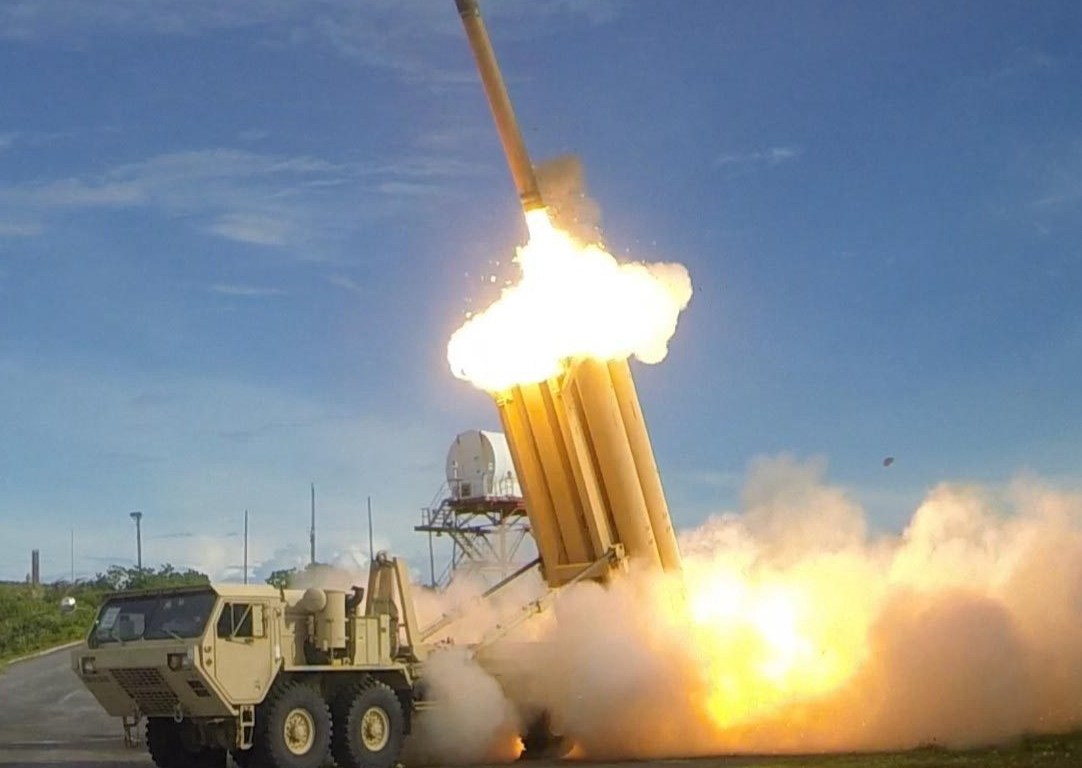
THAAD represents the pinnacle of mobile missile defense technology, designed for rapid global deployment. The system’s centerpiece is the 6.17-meter interceptor weighing 900 kilograms, utilizing pure kinetic hit-to-kill technology without explosive warheads. Each interceptor carries sophisticated infrared seekers with staring focal plane arrays and Boeing-developed liquid DACS (Divert and Attitude Control System) for terminal guidance adjustments.
The AN/TPY-2 radar stands as one of the world’s most capable missile tracking systems, featuring 25,344 solid-state transmit/receive modules in its 9.2-square-meter X-band active electronically scanned array. Operating at 8-12 GHz with 400 kW peak power, the radar can detect targets at ranges exceeding 1,800 kilometers while consuming 1.1 MW of total system power. The radar’s recent Gallium Nitride (GaN) upgrade delivered in May 2025 doubles detection range and provides enhanced sensitivity for hypersonic threat tracking.
A complete THAAD battery deploys with six M1120 HEMTT-based launchers, each carrying eight interceptors, for a total capacity of 48 missiles. The mobile configuration allows rapid deployment anywhere in the world, requiring a 95-soldier crew for full operations.
Arrow System Technical Approach
Israel’s Arrow system takes a fundamentally different approach with its multi-tiered architecture spanning atmospheric and exoatmospheric intercept zones. Arrow 2 provides terminal-phase defense using 7-meter interceptors with high-explosive focused fragmentation warheads, reaching Mach 9 speeds and 50-kilometer altitude ceilings. Arrow 3 represents a technological leap into exoatmospheric space intercept, employing hit-to-kill kinetic energy against targets up to 2,400 kilometers away and altitudes exceeding 100 kilometers.
The system’s Green Pine radar operates in L-band (500-1,000 MHz) with 2,000-2,300 transmit/receive modules across a 12×5-meter phased array. While providing longer range detection up to 900 kilometers in its Super Green Pine configuration, the L-band frequency offers better atmospheric penetration but lower resolution than THAAD’s X-band system.
Arrow’s dual-interceptor approach provides strategic flexibility – Arrow 2 handles medium-range ballistic missiles in the terminal phase while Arrow 3 engages long-range threats and ICBMs exoatmospherically. This layered design integrates seamlessly with Iron Dome and David’s Sling systems for comprehensive coverage from short-range rockets to intercontinental ballistic missiles.
Development histories show contrasting paths to maturity
THAAD’s Rocky Road to Success
THAAD’s development began in 1987 following Gulf War lessons about ballistic missile threats, with Lockheed Martin winning the prime contract in September 1992. The program’s early years proved challenging – six consecutive intercept failures between 1995-1999 nearly killed the program. These failures stemmed from quality control deficiencies in manufacturing, including problems with propulsion systems, stage separation, and seeker hardware.
The program’s turning point came with the June 1999 first successful intercept, followed by a comprehensive redesign featuring more powerful thrust vector control and simplified avionics. Since the 2006 redesign, THAAD has achieved an unprecedented 100% intercept success rate in flight tests, with 17 consecutive successful intercepts demonstrating the system’s maturity.
Production THAAD reached initial operational capability in 2008 with the first battery at Fort Bliss, Texas. The system achieved its first combat intercept in January 2022 when UAE successfully engaged a Houthi ballistic missile, followed by additional successful engagements through 2024-2025.
Arrow’s Evolutionary Success
Arrow development launched in 1986 through U.S.-Israeli cooperation under Reagan’s Strategic Defense Initiative, with the program benefiting from sustained joint investment. Unlike THAAD’s dramatic failures and recovery, Arrow followed a steady evolutionary path from Arrow 1 technology demonstrator (1990-1994) through Arrow 2 operational deployment (2000) to Arrow 3’s advanced exoatmospheric capability (2017).
The program demonstrated remarkable technical advancement, with Arrow 3’s capabilities described by former MDA Director Henry Obering as “more advanced than what we have in the United States.” This technological sophistication reflects intensive U.S.-Israeli cooperation, with Boeing producing 40-50% of Arrow 3 content and the United States contributing over $3.7 billion in development funding.
Arrow systems achieved operational status earlier than THAAD, with Arrow 2 deployed in March 2000. The system’s first operational intercept occurred in October 2023 when Arrow 2 successfully engaged a Houthi long-range ballistic missile, followed by Arrow 3’s first combat use in November 2023.
Combat performance validates designs with notable limitations
THAAD’s Mixed Operational Record
THAAD has demonstrated exceptional performance in controlled testing environments but faces challenges in complex operational scenarios. The system maintains a perfect test record since 2006, with all 17 recent flight tests resulting in successful intercepts. This performance translated to early combat success, including successful intercepts in the UAE (January 2022) and Israel (December 2024).
However, recent operational failures reveal system limitations against advanced threats. In May 2025, THAAD failed to intercept a hypersonic missile targeting Ben Gurion Airport, followed by a second failure against a Houthi missile within one week. These failures highlight challenges against maneuvering hypersonic threats that operate below THAAD’s optimal engagement envelope.
The system’s deployment constraints also limit operational effectiveness. With only seven operational batteries as of 2024, over half remain deployed operationally, creating sustainability challenges for crew rotation and maintenance. The eighth battery entering service in 2025 provides minimal relief given global commitments.
Arrow’s Extensive Combat Validation
Arrow systems have accumulated substantial combat experience, particularly during the intense missile exchange periods of 2023-2024. The system successfully intercepted ballistic missiles during Iran’s Operation True Promise (April 2024) and subsequent attacks in October 2024, engaging multiple waves totaling 181 missiles over two separate incidents.
Arrow 3’s November 2023 intercept of a Ghadr-110 missile marked the first successful space-based combat interception in history, demonstrating exoatmospheric capabilities against real threats. The system’s integration with Iron Dome and David’s Sling provided layered defense effectiveness, with different systems engaging threats at optimal intercept points.
Combat performance data suggests Arrow systems maintain high intercept rates during operational use, though specific success percentages remain classified. The April and October 2024 Iranian attacks provided the most extensive real-world testing of any missile defense system, with Arrow components playing crucial roles in comprehensive defense operations.
Current deployments reflect strategic priorities and constraints
THAAD’s Global Presence
THAAD deployments reflect U.S. strategic priorities across multiple theaters. South Korea hosts one battery at Seongju, 130 miles south of Seoul, providing regional missile defense despite Chinese objections. Guam maintains Task Force Talon with Echo Battery relocating from Andersen Air Force Base to Camp Blaz, protecting critical Pacific installations.
Middle East deployments include one battery deployed in 2023 that remains in the region, plus recent deployments to Israel (October 2024 and January 2025) supporting regional stability. The UAE operates two batteries delivered under Foreign Military Sales arrangements, representing the first international customer deployment.
The constraint of limited inventory severely impacts operational flexibility. With seven operational batteries and global commitments, the system operates at maximum capacity with minimal rotation capability. Congressional testimony has raised concerns about sustainment and crew fatigue under current deployment tempo.
Arrow’s Integrated Defense Architecture
Arrow systems form the backbone of Israel’s multi-layered missile defense, with Arrow 2 batteries at Palmachim Airbase and Ein Shemer Airfield providing comprehensive territorial coverage. Arrow 3 systems integrate with existing infrastructure while adding exoatmospheric capability across multiple sites.
The system’s successful integration with Iron Dome (short-range) and David’s Sling (medium-range) creates seamless coverage across threat spectrums. This integration proved decisive during major attacks, with different systems engaging threats at optimal intercept points for maximum effectiveness.
International expansion began with Germany’s €3.5 billion Arrow 3 purchase, the largest Israeli defense export in history. German systems become operational by late 2025 as part of the European Sky Shield Initiative, demonstrating export potential despite U.S. technology transfer restrictions.
Integration capabilities define system effectiveness
THAAD’s Multi-System Connectivity
THAAD excels in integration with broader U.S. missile defense architecture through C2BMC (Command and Control, Battle Management, Communications) systems. The AN/TPY-2 radar provides tracking data to multiple interceptor systems, including Patriot PAC-3 MSE missiles that can engage targets using THAAD’s superior detection capability.
System Build 4.0 upgrades enable remote launch capabilities and enhanced integration with Patriot systems, allowing optimized intercept solutions across different threat types. The planned IBCS integration (despite Congressional concerns) would provide comprehensive battle management across Army air defense systems.
THAAD’s NATO compatibility supports alliance missile defense through deployments and exercises, with the system contributing to Integrated Air and Missile Defence capabilities. International deployments provide regional partners with advanced missile defense while demonstrating interoperability.
Arrow’s Layered Defense Mastery
Arrow systems represent the gold standard for layered missile defense integration. The Citron Tree battle management system coordinates engagement decisions across Arrow 2, Arrow 3, David’s Sling, and Iron Dome systems, optimizing intercept solutions for incoming threats.
Golden Citron enhanced battle management handles up to 14 simultaneous target engagements while coordinating with Hazelnut Tree launch control centers positioned up to 300 kilometers from radar sites. This distributed architecture provides resilience against attacks on command centers.
The system’s Link-16 datalink capability enables integration with allied systems, including U.S. AN/TPY-2 radars and Aegis BMD systems. The successful 2019 Alaska tests demonstrated Arrow 3 integration with U.S. sensor networks, validating interoperability for multinational operations.
Engagement envelopes and target capabilities differ significantly
THAAD’s High-Altitude Terminal Defense
THAAD operates in a 40-150 kilometer altitude envelope with maximum ranges exceeding 200 kilometers, positioning it as an endo and exoatmospheric terminal-phase interceptor. The system engages short, medium, and intermediate-range ballistic missiles (SRBM, MRBM, IRBM) carrying nuclear, chemical, biological, or conventional warheads.
The system’s hit-to-kill technology provides clean intercepts without debris concerns, crucial for defending populated areas. Advanced discrimination algorithms distinguish between warheads and countermeasures, though recent failures suggest challenges against sophisticated penetration aids and maneuvering threats.
Key limitations include inability to engage low-flying targets such as UAVs and cruise missiles below radar coverage. The system’s large radar signature also creates vulnerability, requiring protection by other air defense systems during deployment.
Arrow’s Comprehensive Coverage Spectrum
Arrow systems provide complementary engagement zones optimized for different threat phases. Arrow 2 handles terminal-phase intercepts up to 50 kilometers altitude against medium-range ballistic missiles, while Arrow 3 extends coverage to exoatmospheric intercepts beyond 100 kilometers altitude.
Arrow 3’s 2,400-kilometer range enables intercept of long-range ballistic missiles and ICBMs during midcourse flight phases, providing strategic defense against the most challenging targets. The system’s demonstrated anti-satellite capability adds strategic value though this remains officially unacknowledged.
The multi-warhead engagement capability allows Arrow 3 to handle MIRV targets and maneuvering warheads, with successful tests demonstrating effectiveness against advanced countermeasures. Integration with other systems provides coverage from short-range rockets to intercontinental ballistic missiles.
Cost analysis reveals different economic approaches
The system’s space-integrated architecture leverages emerging space-based sensors for enhanced tracking and discrimination, supporting comprehensive missile defense across multiple domains.
THAAD’s Premium Pricing
THAAD represents a high-cost, high-capability solution with $1.0-1.8 billion per battery depending on configuration and support packages. Individual interceptors cost $12.9-25 million each, reflecting sophisticated kinetic kill vehicle technology and advanced guidance systems.
Recent procurement shows $484.7 million FY 2024 and $639.9 million FY 2025 MDA requests, with interceptor procurement ranging from 11-12 units annually. The February 2024 $2.8 billion development contract for THAAD 6.0 represents substantial ongoing investment through 2035.
International sales generate significant revenue, with UAE contracts totaling $3.3 billion, Saudi Arabia $15 billion, and Qatar’s $42 billion comprehensive agreement. These sales help offset development costs while building allied defense capabilities.
Arrow’s Cooperative Economics
Arrow systems benefit from U.S.-Israeli cost-sharing arrangements, with the United States contributing over $3.7 billion in development funding since 1988. This cooperative approach reduces individual nation costs while accelerating technological advancement.
Arrow 2 interceptors cost approximately $2.5-3.0 million each, while Arrow 3 missiles cost around $2.0 million per unit, significantly less expensive than THAAD interceptors. Lower unit costs enable higher inventory levels and more sustainable operations.
The Germany export success at €3.5 billion validates international market potential despite technology transfer restrictions. Boeing’s 40-50% content share provides American industrial benefits while supporting allied capabilities.
Recent upgrades address evolving threat environments
THAAD Modernization Focus
THAAD’s modernization centers on System Build 6.0 development, accelerated from 2032 to 2027 following recent threat assessments. The $2.8 billion development program enhances capabilities against maneuvering threats while expanding engagement areas and improving integration.
GaN radar upgrades delivered in May 2025 double detection range while providing enhanced sensitivity for hypersonic threat tracking. The advanced radar enables “hit before maneuvering” engagement philosophy, launching interceptors before hypersonic weapons begin terminal maneuvers.
AI/ML integration in THAAD 6.0 provides streamlined decision-making and predictive analysis for anticipating missile maneuvers. Enhanced discrimination capabilities assist in differentiating between threats and decoys in complex engagement scenarios.
Arrow System Evolution
Arrow 4 development accelerated following April 2024 Iranian attacks, targeting more affordable production costs and higher volumes. The system combines Arrow 3’s technological advances with atmospheric intercept capability, specifically designed for hypersonic missile threats.
Arrow 3 operational success during 2023-2024 combat operations validated system effectiveness while identifying areas for improvement. Continuous capability enhancements maintain effectiveness against advancing threats while supporting international expansion.
Future development roadmaps show divergent priorities
THAAD’s Integration-Focused Future
THAAD’s future development emphasizes multi-system integration and hypersonic defense adaptation. The planned THAAD-ER (Extended Range) concept addresses hypersonic threats through enhanced radar capabilities and extended engagement ranges.
Space-based sensor integration with Hypersonic and Ballistic Tracking Space Sensor (HBTSS) constellations provides global threat detection complementing ground-based radars. The Golden Dome comprehensive missile defense architecture incorporates THAAD as a key component.
Directed energy weapon integration under consideration for THAAD 6.0 would provide speed-of-light engagement capability against maneuvering threats, complementing kinetic interceptors for layered defense.
Arrow’s Technological Leadership Path
Arrow development focuses on maintaining technological edge through continuous innovation and international expansion. Arrow 4 targets mid-2020s deployment with enhanced affordability and production capacity for growing international demand.
Advanced discrimination capabilities and AI-enhanced threat recognition position Arrow systems at the forefront of missile defense technology. The system’s proven combat effectiveness supports export expansion despite technology transfer restrictions.
German partnership opens European markets while potentially leading to Arrow 4 international development, with Germany expressing interest as the first international Arrow 4 customer for post-2030 delivery.
Comparative strengths reveal complementary capabilities
THAAD’s Global Mobility Advantage
THAAD’s greatest strength lies in rapid global deployment capability, allowing strategic flexibility for emerging threats worldwide. The system’s proven interoperability with allied systems supports coalition operations and technology sharing agreements.
Recent combat validation in multiple theaters demonstrates effectiveness while highlighting areas for improvement. The system’s advanced radar technology provides superior detection capability supporting multiple interceptor systems beyond THAAD itself.
THAAD’s challenges include limited inventory constraining global deployment options and recent failures against advanced hypersonic threats. High per-unit costs limit procurement quantities while complex operations require extensive crew training.
Arrow’s Integrated Defense Mastery
Arrow systems excel in layered defense integration, providing comprehensive coverage from short-range rockets to ICBMs through seamless coordination between multiple systems. Extensive combat experience validates effectiveness while driving continuous improvement.
Technological advancement positions Arrow systems as among the world’s most sophisticated missile defenses, with capabilities that exceed some American systems in specific areas. Export success demonstrates international confidence in system effectiveness.
Limitations include U.S. approval dependency for exports and regional optimization that may not translate to all threat environments. Single-source manufacturing creates production constraints for expanding international demand.
Both THAAD and Arrow represent mature, combat-proven missile defense technologies facing similar challenges from evolving hypersonic and maneuvering threats. Their complementary approaches – American global mobility versus Israeli layered integration – provide valuable lessons for next-generation missile defense development. Success against future threats will depend on continued modernization, international cooperation, and adaptation to rapidly evolving missile technologies that challenge traditional defense paradigms.
AI-assisted article.

