
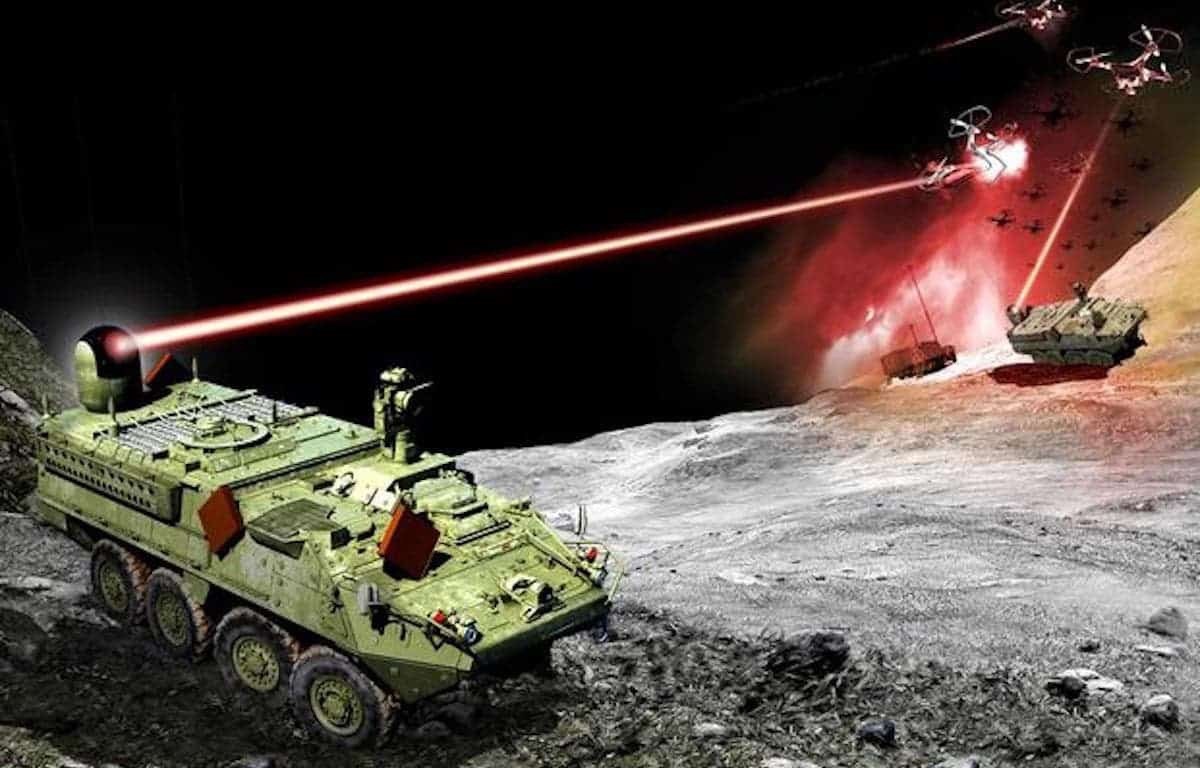
As high powered laser weapon systems mature and become widely deployed, the very nature of the battlefield is set to change dramatically. The adoption of directed-energy systems such as the U.S. Army’s DE M-SHORAD, Israel’s Iron Beam, and the U.K.’s DragonFire offers not only a revolutionary method for countering short-range air threats but also paves the way for systemic changes across doctrine, logistics, and tactical operations. In a landscape where Ukraine’s recent success in shooting down thousands of hostile aerial vehicles highlights the importance of advanced air defense, laser air defenses represents a potential game changer for both national defense and global exports. Laser air defenses when deployed in large numbers, have the potential to fundamentally reshape both defensive and offensive operations in the battlefields of the not so distant future.
Estimated basic characteristics of common laser air defense weapons in a not to distant future battlefield:
Laser Power: Capable of delivering around hundred kilowatts of energy in short pulses, sufficient to destroy small incoming projectiles.
Effective Range: Typically effective up to approximately 5 kilometers under optimal conditions.
Reaction Time: Capable of engaging targets within 2–5 seconds of detection.
Cost Efficiency: With a cost per engagement potentially as low as a few cents versus millions of dollars per missile intercept, laser weapons offer a transformative economic advantage.
Field tests have confirmed the potential, demonstrating successful interception of various targets in controlled environments. Yet, despite the promise, this class of weapons are still being refined to mitigate environmental limitations, such as performance degradation in fog, rain, or dust conditions.
The following analysis outlines the likely impacts on both defensive and offensive operations in each side of a conflict.
Overall Battlefield Redefinition
In a future where such laser air defenses are prolific, the battlefield would be characterized by:
High-Speed Engagement Networks: Both sides would operate integrated, sensor-driven networks with near-instantaneous response times, reducing the time available for adversary decision-making.
Economic Rebalancing: The dramatic cost differential between low-cost laser engagements and expensive missile interceptors would influence budget priorities, with defensive forces potentially reallocating resources toward sustaining and upgrading directed-energy capabilities.
Inter-Domain Shifts: Offensive operations may increasingly turn to unconventional domains (cyber, electronic warfare, space) in an effort to bypass or overwhelm state-of-the-art laser defenses, leading to a more multidimensional approach to warfare.
Doctrine and Training Transformation: Both defenders and attackers would have to update their tactics and training regimens to incorporate the advantages and limitations of directed-energy systems. Rapid, adaptive operations and resilient, redundant command-and-control networks would become central to military planning.
Impact on Defensive Operations
Rapid and Continuous Engagement
Faster Reaction Times: Laser systems can neutralize threats in a matter of seconds. This rapid engagement minimizes the window of vulnerability and allows defenders to quickly respond to a barrage of incoming projectiles, whether they are short-range rockets, artillery shells, or drones.
Cost Efficiency and Sustainability: With each laser shot costing a fraction of the expense of a kinetic interceptor, forces employing prolific laser weapons can afford to engage numerous low-cost threats repeatedly, reducing the strain on their interceptor inventories during prolonged or saturation attacks.
Integration into Multi-Layer Defense Architectures
Sensor Network Fusion: Laser systems are typically integrated with advanced sensor networks and real-time command and control systems. This integration enhances situational awareness by providing a unified operational picture. Consequently, defensive forces can coordinate their responses, assigning laser engagements for low-cost or high-volume targets while reserving traditional interceptors for strategic, high-value enemy munitions.
Mobility and Flexibility: Many modern laser systems are designed to be mounted on mobile platforms. This mobility allows defenders to reposition quickly based on evolving threat corridors or to cover gaps in fixed defenses, thereby increasing overall battlefield resilience.
Operational Adaptability
Adaptive Defense Posture: The capability to rapidly engage multiple threats encourages a flexible defensive posture. Commanders may shift away from static, area-denial strategies to more dynamic, responsive methods of protecting critical assets. Integrated laser systems might be used in combination with kinetic interceptors, establishing a multi-layered shield that adjusts to different threat types and densities.
Reduced Attrition of Expensive Missiles: With lasers handling a significant share of incoming low-cost targets, the overall consumption of expensive missile interceptors could be reduced. This resource preservation may enhance the sustainability of defensive operations over extended conflicts.
Impact on Offensive Operations
Adversary Countermeasures and Increased Complexity
Adapting to High-Volume Defenses: Knowing that lasers provide near-instantaneous, continuous air defense, offensive forces may revise their tactics. Traditional massed missile or drone attacks might become less effective, forcing attackers to either increase the volume of ordnance or develop sophisticated countermeasures to overcome the rapid engagement capabilities.
Diversification of Attack Profiles: Offensively, adversaries could shift toward more stealthy or low-observable methods to avoid detection by advanced sensor networks or may employ decoys and electronic warfare techniques to confuse laser systems. This evolution would require attackers to invest in advanced countermeasures and to reallocate resources to overcome the high-speed, layered defenses.
Extended Operational Planning and Resource Allocation
Balancing Force Structure: As defenders rely more on lasers, offensive planners may need to reconsider their own force structure to maintain an effective strike capability. This could include developing alternative delivery platforms that exploit other domains (such as cyber or space) to bypass robust laser defenses.
Cost Considerations on the Attack Side: The low cost and high repetition rate of laser defenses might compel offensive forces to either invest in a significantly larger arsenal of cheap, disposable munitions (to overwhelm the defensive system) or redirect funds toward sophisticated stealth and electronic warfare technologies.
Impact on Strategic Deterrence
Increased Deterrence Effect: A highly effective, continuous air defense shield based on lasers could act as a strong deterrent. Offensively, potential adversaries may be discouraged from launching large-scale aerial attacks if they are confident that even low-cost, high-volume threats will be neutralized rapidly.
Shifting Offensive Priorities: Should laser defenses prove robust, offensive strategies might pivot toward alternative domains. For example, attackers might increase reliance on cyber operations to disrupt the integrated sensor and command networks, or adopt ground-based and maritime strategies that target the logistical infrastructure supporting these defenses.
Image: Northrop Grumman
AI-assisted article.

