
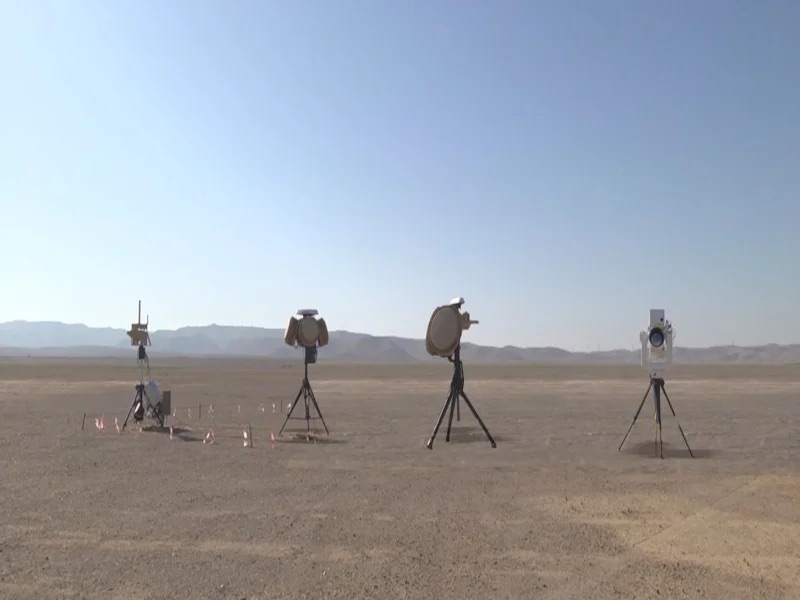
The Drone Dome, a comprehensive counter-drone system developed by Rafael Advanced Defense Systems. Designed to protect against a wide range of unmanned aerial threats, Drone Dome employs a multi-layered approach, combining radar, electro-optical/infrared sensors, RF jamming, and optional laser capabilities.
System Overview
- Name: Drone Dome
- Manufacturer: Rafael Advanced Defense Systems
- Country of Origin: Israel
- Type: Multi-layered counter-drone system (RF jamming, radar, laser)
- Intended Use: Military, homeland security, and critical infrastructure protection against UAV threats
Technical Specifications
- Detection Capabilities:
- 3D AESA radar for tracking multiple drones simultaneously
- Electro-optical/infrared (EO/IR) sensors for visual tracking
- RF direction-finding sensors to detect drone communication signals
- Neutralization Method:
- RF jamming: Disrupts drone communication and GPS signals
- High-energy laser (optional variant): Burns drones mid-flight
- Effective Range:
- RF Jamming: Up to 3–5 km
- Laser Variant: Estimated to be effective within 2 km
- Mobility:
- Fixed or mobile configuration, can be vehicle-mounted or deployed at static sites
- Deployment Mode:
- Automated or manual operation, depending on the threat level
Operational Use & Effectiveness
- Known Deployments:
- Israel Defense Forces (IDF)
- British Armed Forces (for protecting critical infrastructure)
- Used in the Middle East, Europe, and select NATO operations
- Combat/Field Testing History:
- Successfully intercepted drones in operational environments
- Demonstrated high effectiveness against drone swarms
- Effectiveness Against Various Drone Types:
- Capable of defeating Group 1, 2, and some Group 3 UAVs
- RF jamming is effective against commercial and military drones
Notable Features & Advantages
- Key Strengths:
- Multi-layered approach (radar, EO/IR, RF jamming, and laser options)
- High success rate against swarm attacks
- Unique Capabilities:
- Passive detection using RF sensors, making it stealthy and low-power
- Laser option provides silent, kinetic-free interception
- Adaptability & Scalability:
- Can be integrated into national air defense systems
Limitations & Challenges
- Known Weaknesses:
- RF jamming has limited range and can be countered by frequency-hopping drones
- Lasers are weather-dependent and have a relatively short range
- Operational Constraints:
- Requires constant surveillance and operator oversight
- High-power requirements for laser variant
- Adversary Countermeasures:
- Autonomous drones (pre-programmed waypoints) bypass RF jamming
- Hardened drones with RF shielding may resist jamming attacks
Future Developments & Upgrades
- Planned Enhancements:
- AI-enhanced automation for autonomous target prioritization
- Higher-power lasers for extended range engagements
- Integration with Other Systems:
- Can integrate with Israeli Iron Dome and other air defense networks
- Future Deployment Plans:
- Expansion to additional NATO forces and increased use in urban security settings
Image: Rafael Systems
AI-assisted article.

