

The Resurgence and Revenge of the Gun
The landscape of gun-based air defense artillery systems has undergone significant transformation throughout military history, with recent developments indicating a renaissance for these platforms despite the proliferation of missile-based systems. Current analysis reveals that gun-based systems maintain critical relevance in modern integrated air defense architectures due to their cost-effectiveness, rapid response capabilities, and effectiveness against emerging threats like drones and loitering munitions. Western nations continue to invest in advancing these technologies through improved fire control systems, programmable ammunition, and integration with broader detection networks. The fusion of traditional gun-based principles with cutting-edge technologies suggests these systems will remain a vital component of layered air defense strategies well into the future, complementing rather than being replaced by missile-based alternatives.
Historical Development of Air Defense Artillery
The Birth of Anti-Aircraft Artillery
The emergence of gun-based air defense systems coincides with the advent of aerial warfare during World War I, representing humanity’s first systematic attempt to counter threats from above. As aircraft became weaponized and began threatening ground forces and civilian populations, militaries urgently developed specialized artillery pieces capable of engaging aerial targets. Early anti-aircraft guns were essentially modified field artillery with rudimentary fire control systems that relied heavily on visual spotting and manual calculations. The British QF 3-inch gun and the German 8.8 cm Flak 18 were among the pioneering systems that established fundamental principles still relevant in modern designs. These early developments laid the groundwork for increasingly sophisticated systems, establishing the core challenge that would define air defense artillery: accurately predicting the intersection between a projectile’s trajectory and a moving aerial target. The interwar period saw continued refinement of these principles, with mechanical computers and improved fire control systems enhancing accuracy while gun designs evolved to achieve higher muzzle velocities and greater effective ceilings.
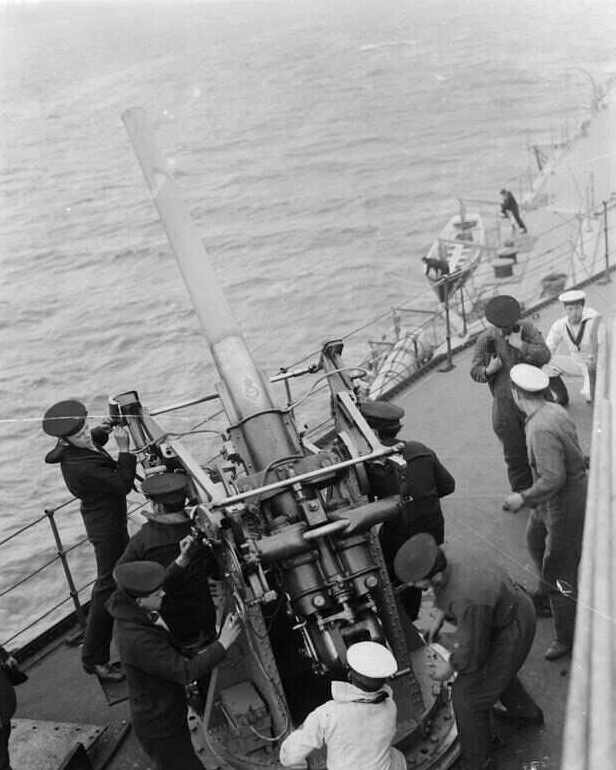
(Imperial War Museums)
World War II and Cold War Advancements
World War II represented the first full-scale testing of gun-based air defense concepts, with systems like the legendary German 88mm Flak gun and American 90mm M1 demonstrating remarkable versatility against both air and ground targets. This era saw the first integration of radar with anti-aircraft artillery, dramatically improving engagement capabilities in all weather conditions and at night. The introduction of proximity fuses by Allied forces significantly enhanced lethality, eliminating the need for direct hits by detonating shells when merely close to targets. Post-war developments accelerated during the Cold War, with both NATO and Warsaw Pact nations developing increasingly sophisticated systems. The rapid advancement of jet aircraft technology pushed the limits of gun-based systems, leading to fully automatic cannons with radar-controlled fire solutions. Systems like the American M42 Duster and the Swiss Oerlikon 35mm twin cannon exemplified this evolution, with higher rates of fire and improved targeting capabilities becoming essential to counter faster, more maneuverable threats. The period also saw the emergence of self-propelled air defense gun systems that combined mobility with firepower, allowing air defense assets to keep pace with mechanized formations.

(Marine Corps History Division)
Transition to the Missile Age
The introduction of guided surface-to-air missiles in the 1950s and their increasing sophistication in subsequent decades initially appeared to signal the decline of gun-based air defense systems. Missiles offered greater range, higher engagement altitudes, and improved hit probability against high-performance aircraft. This technological shift led many Western militaries to reduce investment in gun-based systems, particularly for medium and high-altitude engagements. However, rather than disappearing, gun-based systems evolved toward specialized roles where they maintained distinct advantages: point defense, cost-effective engagement of lower-tier threats, and situations requiring rapid response times. The 1970s and 1980s saw significant developments in naval Close-In Weapon Systems (CIWS) like the Phalanx, designed specifically to counter anti-ship missiles that might penetrate outer defensive layers. These systems pioneered autonomous search, detection, and engagement capabilities that would later influence land-based counterparts. By the end of the Cold War, gun-based systems had found their niche in a layered defense concept, with a renewed appreciation for their complementary role alongside missile systems, particularly against saturation attacks where missile inventories might be quickly depleted.

(Chuck Homler)
Contemporary Gun-Based Air Defense Systems
Naval Close-In Weapon Systems
The development of naval Close-In Weapon Systems (CIWS) represents one of the most successful adaptations of gun-based air defense to contemporary threats. The Phalanx CIWS, developed by General Dynamics (now Raytheon), stands as the archetypal system of this class, featuring a 20mm M61 Vulcan Gatling gun capable of firing up to 4,500 rounds per minute, coupled with autonomous radar and computer systems that handle detection, tracking, and engagement with minimal human intervention. The system’s primary purpose is to serve as a ship’s last line of defense against anti-ship missiles and aircraft that penetrate outer defensive layers. Its autonomous operation addresses the critical challenge of engaging high-speed threats like sea-skimming missiles, where human reaction times would be insufficient. European alternatives include the Dutch Goalkeeper system, utilizing a 30mm GAU-8 Avenger cannon, and the Italian DARDO system with dual 40mm Bofors guns. These systems continue to evolve, with the latest generation Phalanx Block 1B incorporating enhanced detection capabilities for small, slow-moving targets like small boats and unmanned aerial vehicles, demonstrating adaptability to emerging asymmetric threats. The success of these naval systems has directly influenced the development of land-based counterparts, transferring technology and operational concepts between domains.

Italian DARDO CIWS turret aboard the Maestrale class frigate Scirocco
(Wikimedia Commons)
Land-Based Systems and Counter-Rocket, Artillery, and Mortar (C-RAM) Protection
The adaptation of naval CIWS technology to land-based applications has revitalized gun-based air defense for ground forces, particularly in the Counter-Rocket, Artillery, and Mortar (C-RAM) role. The U.S. Army’s C-RAM system, derived from the naval Phalanx, was deployed to protect forward operating bases in Iraq and Afghanistan from insurgent indirect fire attacks. This system demonstrated the flexibility of gun-based approaches, effectively engaging small, inexpensive projectiles where missile-based interception would be prohibitively expensive or technically challenging. Germany’s MANTIS (Modular, Automatic and Network-capable Targeting and Interception System) represents another significant development in this category, utilizing twin 35mm automatic cannons with programmable air-burst ammunition capable of creating precise patterns of fragments to defeat incoming projectiles. Unlike earlier generation systems, MANTIS can provide 360-degree protection and operates as part of a networked defense system with multiple sensor inputs. These systems have proven particularly valuable in asymmetric warfare scenarios and for protecting high-value fixed installations, demonstrating that gun-based air defense maintains distinct advantages in specific operational contexts despite the prevalence of missile technologies.

MANTIS Air Defence System (Modular, Automatic and Network Capable Targeting and Interception System), formerly titled NBS-C-RAM (Nächstbereichschutzsystem Counter Rocket, Artillery, and Mortar), is a very short range air defence protection system of the German Air Force, intended for base-protection.[citation needed]It is produced by Rheinmetall Air Defence, a subsidiary of Rheinmetall of Germany. It is a part of the air force’s future SysFla air-defence project.
(Frank Vincentz)
Mobile Short-Range Air Defense Systems
The renaissance in gun-based air defense is particularly evident in Western mobile Short-Range Air Defense (SHORAD) capabilities, an area that had seen reduced investment following the Cold War but has recently gained renewed emphasis. Systems like Rheinmetall’s Skyranger 35 represent the cutting edge of this revival, combining a 35mm automatic cannon with modern fire control systems on a mobile platform, capable of engaging aircraft, helicopters, drones, and cruise missiles at ranges up to 4 kilometers. The U.S. Army’s Interim Maneuver Short-Range Air Defense (IM-SHORAD) system, mounted on Stryker vehicles, integrates a 30mm cannon with Stinger missiles, exemplifying the hybrid approach that leverages both gun and missile technologies for complementary capabilities. These mobile systems address a critical vulnerability identified in recent conflicts: the need for air defense assets that can keep pace with maneuver forces and operate effectively in contested electromagnetic environments where guidance for missile systems might be degraded. European nations have been particularly active in this field, with systems like the Polish PIT-RADWAR Poprad and the Finnish ASRAD-R demonstrating sophisticated fire control and multi-sensor integration. The operational concept has evolved beyond simple anti-aircraft roles to encompass counter-UAS missions and protection against emerging threats like loitering munitions, reflecting adaptation to changing battlefield realities.
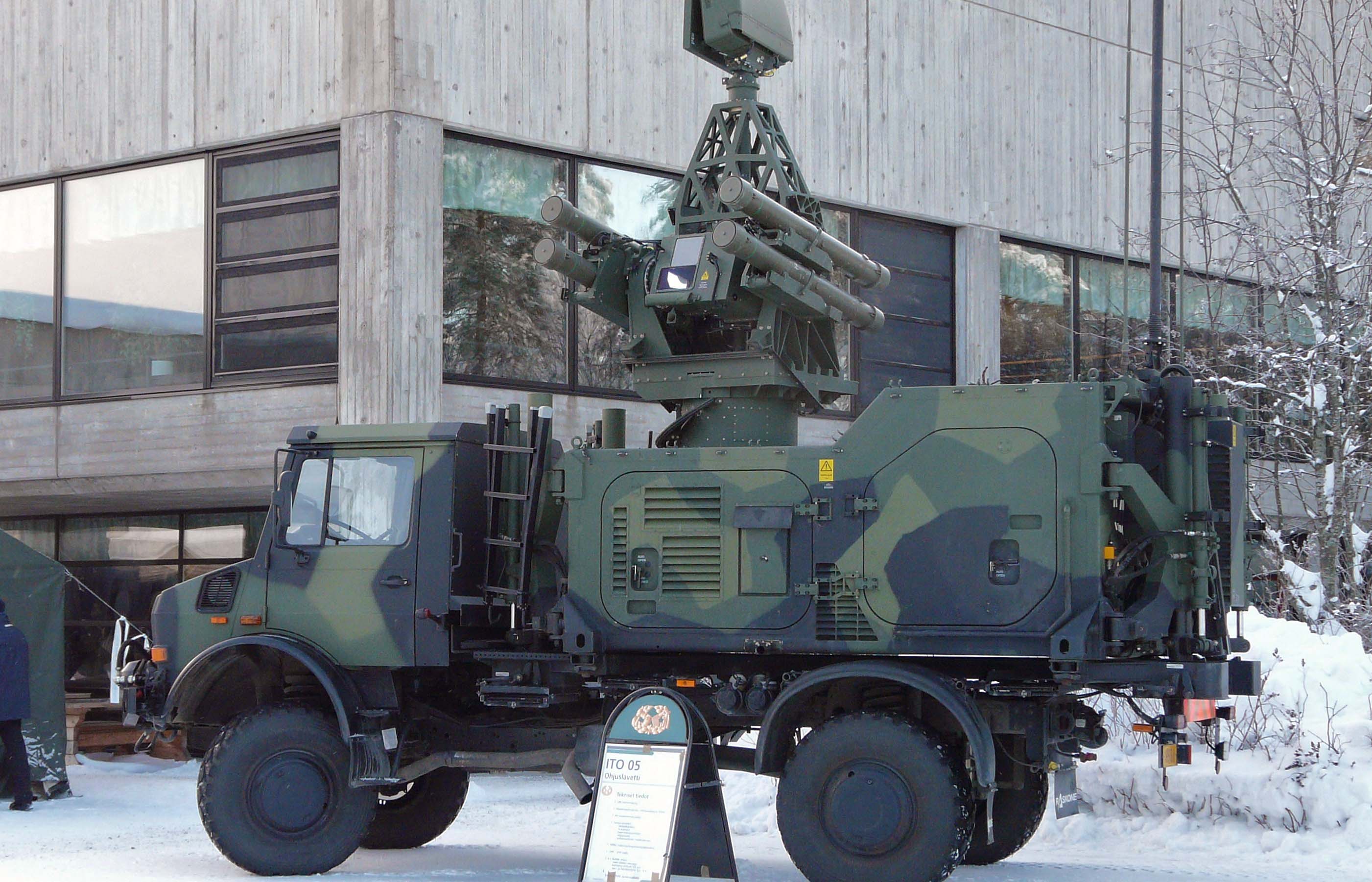
(Tauno Räsänen)
Integration with Multi-Layered Defense Networks
Contemporary gun-based air defense systems no longer operate in isolation but function as integral components of sophisticated, multi-layered air defense networks that combine different engagement technologies for comprehensive protection. Israel’s Iron Dome system exemplifies this approach, incorporating both missile interceptors and the Phalanx-derived “Iron Beam” laser system for different threat categories. The German MANTIS system operates as part of the broader IRIS-T SL missile system, with gun-based defenses handling shorter-range threats while missiles engage targets at greater distances. This integration is facilitated by advanced command and control systems like NATO’s Integrated Air Defense System (NATINADS) that enable coordinated responses across multiple platforms. The networking capability extends to sensor fusion, allowing gun-based systems to receive targeting data from external radars, electro-optical systems, and even airborne platforms, dramatically expanding their effective engagement envelopes. Systems like Thales’s Ground Master 200 radar can simultaneously track multiple targets and direct appropriate weapons systems, including gun-based platforms, based on threat assessment and optimal engagement parameters. This network-centric approach represents a significant evolution from standalone anti-aircraft guns of previous generations, enabling gun-based systems to remain relevant within sophisticated modern air defense architectures that respond to multi-domain threats.

Current Technologies and Innovations
Advanced Fire Control and Targeting Systems
The remarkable resurgence of gun-based air defense systems in Western nations owes much to revolutionary advances in fire control and targeting technologies that have transformed engagement capabilities. Modern systems employ sophisticated multi-mode radars capable of simultaneously tracking dozens of targets while distinguishing between threat types and calculating optimal firing solutions. These radars operate across multiple frequency bands to enhance resistance to jamming and improve detection capabilities against low-observable targets. Complementing radar systems, advanced electro-optical sensors incorporating infrared, daylight cameras, and laser rangefinders provide additional targeting data and operate effectively in environments with electromagnetic interference. The integration of these multiple sensor types enables all-weather, 24-hour operation while significantly reducing false alarm rates. The computational elements have similarly evolved, with modern fire control computers capable of processing vast amounts of sensor data to predict intercept points with exceptional accuracy, compensating for environmental factors like wind, temperature, and barometric pressure. Systems like Raytheon’s Accelerated Improved Intercept Initiative (AI3) demonstrate how these technological advances enable the engagement of increasingly challenging targets, with response times measured in fractions of a second from detection to firing. The human-machine interface has also been revolutionized, with intuitive displays and semi-autonomous operating modes that optimize operator workload while maintaining appropriate human oversight of engagement decisions.
Smart and Programmable Ammunition
Perhaps the most significant technological advancement enabling the continued relevance of gun-based air defense has been the development of programmable and “smart” ammunition that dramatically increases effectiveness against modern aerial threats. The 35mm Advanced Hit Efficiency and Destruction (AHEAD) ammunition developed by Oerlikon (now Rheinmetall) exemplifies this innovation. Each AHEAD round contains a programmable time fuse and approximately 152 sub-projectiles, effectively creating a precisely controlled cloud of tungsten pellets in the path of the incoming threat. The fire control system calculates the optimal detonation point, and the fuse is programmed during the milliseconds the round is traveling down the barrel. Similar technologies include the U.S.-developed Programmable Air Burst Munition (PABM) for 30mm systems and the Multi-Purpose Programmable Ammunition for various calibers. These smart munitions significantly increase the probability of hit against small, agile targets like drones and cruise missiles, while reducing ammunition expenditure compared to traditional contact-fuzed shells. Another important development is proximity-fuzed ammunition with advanced sensors that detonate when optimal fragmentation patterns will intersect with the target. The latest generation of these rounds incorporates course-correction capabilities, allowing minor trajectory adjustments in flight to compensate for target evasive maneuvers. These ammunition innovations have effectively multiplied the engagement effectiveness of gun-based systems, allowing relatively modest caliber weapons to achieve engagement probabilities previously requiring much larger guns or guided missiles.

Automation and Artificial Intelligence Applications
The integration of automation and artificial intelligence represents a transformative frontier for gun-based air defense systems, enabling capabilities that were unimaginable in previous generations. Modern systems increasingly incorporate autonomous detection, classification, and tracking features that can operate with minimal human intervention, crucial for engaging high-speed threats where reaction time is critical. The latest generation Phalanx Block 1B and the German MANTIS system demonstrate how AI algorithms can distinguish between threat types, prioritize targets based on assessed danger level, and even predict evasive maneuvers. Machine learning techniques are being applied to pattern recognition in radar and electro-optical data, dramatically improving the ability to identify threats against complex background clutter and discriminate between military targets and civilian aircraft. Companies like Raytheon and Rheinmetall are pioneering neural network applications that continuously improve system performance through operational experience. Autonomous engagement capabilities remain carefully controlled, with human operators maintaining approval authority for weapons release in most implementations, reflecting both ethical considerations and operational doctrine. However, research continues into fully autonomous modes for specific scenarios like saturation attacks where human decision cycles might be overwhelmed. The trajectory of development points toward increasingly sophisticated AI integration that will enhance discrimination capabilities, reduce false alarms, optimize ammunition expenditure, and enable coordinated responses across multiple defensive systems, potentially revolutionizing the effectiveness of gun-based air defense against next-generation threats.
Modern Sensors and Detection Systems
The detection capabilities of contemporary gun-based air defense systems have undergone revolutionary advancement, incorporating multi-spectral sensing technologies that dramatically expand the types of threats that can be effectively engaged. Modern systems typically integrate active electronically scanned array (AESA) radars that can simultaneously track multiple targets while maintaining high resistance to jamming and electronic countermeasures. These radars employ sophisticated signal processing algorithms to detect low-observable targets, including those employing stealth technology or flying at extremely low altitudes. Complementary infrared search and track (IRST) systems provide passive detection capabilities that operate without electromagnetic emissions, making them immune to anti-radiation weapons and contributing to overall system survivability. Advanced acoustic sensors can detect approaching aircraft or drones based on their unique sound signatures, providing additional early warning capability. The integration of these diverse sensor types creates a comprehensive detection envelope that is highly resistant to countermeasures and capable of operating in degraded environments. Systems like Rheinmetall’s Oerlikon Skyranger incorporate these multi-sensor suites to enable detection and tracking of miniature drones as small as 20cm in wingspan at tactically relevant ranges. The processing of sensor data has similarly advanced, with artificial intelligence algorithms fusing information from multiple sources to create high-fidelity target tracks even when individual sensors may have incomplete or intermittent detection. These sensing capabilities ensure that modern gun-based systems can identify and engage the full spectrum of aerial threats, from traditional fixed-wing aircraft to the smallest tactical drones.
Future Prospects and Developments
Emerging Technologies in Gun-Based Air Defense
The future evolution of gun-based air defense systems is being shaped by several emerging technologies that promise to further enhance their capabilities against increasingly sophisticated aerial threats. Electromagnetic rail guns represent one of the most revolutionary developments on the horizon, potentially offering muzzle velocities two to three times greater than conventional powder guns, dramatically extending engagement ranges and reducing time-to-target. While power supply and barrel durability challenges remain, companies like BAE Systems and General Atomics continue to make progress toward tactical implementations of this technology. Hypervelocity projectiles, capable of speeds exceeding Mach 5, are being developed for both conventional and electromagnetic guns, potentially enabling gun-based systems to engage targets previously requiring missile interceptors. Advanced materials science is contributing to the development of new barrel linings and projectile compositions that extend system service life while improving performance. Directed energy weapons, particularly high-energy lasers, are increasingly being integrated alongside traditional gun systems in hybrid configurations, with the U.S. Navy’s LAWS (Laser Weapon System) demonstrating this complementary approach. New propellant formulations promise increased muzzle velocities while reducing barrel wear and signature. Advanced cooling systems are being developed to address the thermal management challenges associated with sustained high rates of fire, potentially allowing future systems to maintain maximum fire rates for extended engagements without degradation in performance. These technological frontiers collectively suggest that gun-based systems will continue to evolve significantly beyond their current capabilities, maintaining relevance in future air defense architectures.
Countering Modern Threats: Drones, Hypersonics, and Swarms
The air defense landscape faces unprecedented challenges from emerging threat categories that are driving innovation in gun-based systems. The proliferation of unmanned aerial systems across the battlefield spectrum – from large military-grade platforms to small commercial drones modified for military use – has created a defensive challenge particularly well-suited to gun-based solutions. Small drones present difficult targets for expensive missile interceptors but fall well within the engagement envelope of advanced gun systems with smart ammunition. Current research focuses on enhancing detection capabilities for mini and micro drones while developing cost-effective engagement methods. Hypersonic threats, including both cruise missiles and glide vehicles traveling at speeds exceeding Mach 5, present an even more demanding challenge. While traditional gun systems would struggle against such high-speed targets, research into hypervelocity projectiles and electromagnetic guns aims to address this capability gap. Perhaps most significant is the emerging threat of drone swarms—coordinated attacks using multiple low-cost unmanned platforms that could overwhelm traditional air defenses through saturation. Gun-based systems, with their deep ammunition magazines and rapid engagement capabilities, offer promising counters to swarm tactics. Companies like Raytheon and Rheinmetall are developing specific counter-swarm capabilities, including specialized fire control algorithms that optimize target prioritization and engagement sequences against multiple simultaneous threats. The continued evolution of these threats will likely drive further specialization within gun-based air defense, with systems optimized for specific threat categories deployed as part of integrated defense networks.
Hybrid Systems and Integration Trends
The future landscape of air defense will increasingly feature hybrid systems that combine gun-based components with other defensive technologies in integrated packages optimized for specific operational contexts. This trend is already evident in platforms like the U.S. Army’s IM-SHORAD, which combines a 30mm cannon with Stinger missiles and a machine gun on a single platform. Future developments will likely take this integration further, with single systems incorporating guns, missiles, and directed energy weapons controlled by unified fire control systems that select the optimal effector based on threat characteristics. The German Skyranger 35 already demonstrates this approach with options to integrate missile launchers alongside its primary 35mm cannon. Beyond platform-level integration, system-of-systems approaches will connect gun-based defenses with broader networks of sensors and complementary weapons systems. The U.S. Army’s Integrated Air and Missile Defense Battle Command System (IBCS) exemplifies this trend, linking different defensive systems into coordinated networks with shared situational awareness. Another significant integration trend involves counter-drone capabilities, with specialized gun-based systems being developed specifically for this role. Rheinmetall’s Skyranger 30 represents this specialization, optimized for engaging small, agile aerial targets. As threats continue to diversify, this trend toward hybrid systems and network integration will likely accelerate, with gun-based components maintaining critical roles within broader defensive architectures due to their cost-effectiveness and rapid engagement capabilities against specific threat categories.

Research Directions and Investments
Current investment patterns and research initiatives indicate continued commitment to advancing gun-based air defense technologies across Western nations, with several key focus areas emerging. Significant resources are being directed toward improved fire control algorithms that leverage artificial intelligence for target prioritization and engagement optimization in complex scenarios involving multiple simultaneous threats. Research into advanced materials for barrel construction aims to extend service life while enabling higher muzzle velocities and sustained rates of fire. The development of new ammunition types represents another major investment area, with programmable multi-purpose rounds capable of engaging diverse threat categories with a single ammunition type. The U.S. Department of Defense has allocated substantial funding to hypervelocity projectile research that could dramatically extend the engagement envelope of gun-based systems. European defense contractors like Rheinmetall and BAE Systems continue to invest in evolutionary improvements to existing platforms while exploring revolutionary technologies. The Counter-Rocket, Artillery, and Mortar (C-RAM) mission area has attracted particular attention following operational successes in Iraq and Afghanistan, with new systems under development to enhance protection of forward operating bases and critical infrastructure. Naval research continues to focus on improving CIWS capabilities against increasingly sophisticated anti-ship missiles, including hypersonic threats. These research vectors collectively suggest that Western nations see continued strategic value in gun-based air defense, maintaining investment levels that ensure these systems will evolve to meet emerging challenges rather than being entirely replaced by alternative technologies.
Effectiveness and Relevance in Modern Warfare
Cost-Effectiveness Analysis and Operational Advantages
The enduring relevance of gun-based air defense systems in Western military inventories is heavily influenced by their compelling cost-effectiveness profile when compared to alternative defensive technologies. Contemporary analysis reveals that gun-based systems offer significantly lower cost-per-engagement figures than missile alternatives, particularly when countering lower-tier threats like unmanned aerial vehicles and cruise missiles. A single advanced air defense missile may cost tens or hundreds of thousands of dollars, making their use against inexpensive targets economically unsustainable, especially in scenarios involving numerous threats. By contrast, even sophisticated programmable ammunition for gun-based systems typically costs only hundreds to a few thousand dollars per round. The Phalanx system’s engagement costs, for instance, remain a fraction of comparable missile-based solutions, while maintaining high effectiveness against its intended target set. Beyond direct ammunition costs, gun-based systems generally require less complex logistics chains and maintenance infrastructure. Their deep magazines allow for multiple engagements without reloading, crucial during sustained or saturation attacks where missile launchers would require frequent reloading. Modern gun systems also demonstrate operational advantages in reaction time, with systems like Rheinmetall’s Oerlikon Skyranger capable of engaging threats within seconds of detection. The ability to maintain defensive coverage for extended periods without resupply represents another significant operational advantage, particularly in expeditionary or forward-deployed scenarios where logistics chains may be strained. These economic and operational factors ensure that gun-based systems maintain a crucial place in balanced air defense architectures, providing cost-effective defensive capability against appropriate threat categories.
Limitations and Challenges in Contemporary Environments
Despite their significant capabilities, modern gun-based air defense systems face important limitations and operational challenges that influence their deployment and future development. The inherent physics of ballistic trajectories creates range limitations that restrict engagement envelopes compared to missile-based alternatives, with even the most advanced conventional gun systems typically limited to effective ranges under 5 kilometers. Altitude limitations similarly constrain the types of targets that can be engaged, with most systems optimized for lower-altitude threats. Modern gun systems must also contend with increasingly sophisticated countermeasures, including electronic warfare systems designed to degrade radar performance and advanced decoys intended to confuse targeting systems. Environmental factors present additional challenges, with heavy precipitation or dust potentially affecting sensor performance and ballistic calculations. The integration of gun-based systems into broader air defense networks remains technically complex, requiring sophisticated interfaces and protocols to ensure seamless information sharing and coordinated responses. Training requirements for operators have increased with system complexity, necessitating comprehensive programs to ensure personnel can maximize system capabilities. Mobility considerations impact larger-caliber systems in particular, with weight and recoil management affecting platform design and deployment options. The rising prominence of hypersonic threats presents perhaps the most significant technical challenge, as their extreme speeds strain the ability of conventional gun systems to establish viable intercept solutions. Many leading defense contractors are actively addressing these limitations through research into extended-range ammunition, improved targeting systems, and integration of multiple complementary defensive technologies on common platforms or within networked architectures.
Complementary Role with Missile-Based Systems
The modern air defense doctrine in Western nations has evolved toward a sophisticated understanding of gun and missile systems as complementary rather than competing technologies, each with distinct advantages against particular threat categories. This complementary relationship is evident in the layered defense concept, where gun-based systems typically form the innermost protection layer after longer-range missile systems have engaged distant threats. Systems like the U.S. Navy’s Aegis combine long-range SM-2/SM-6 missiles for area defense with the Phalanx CIWS for point defense, creating a comprehensive protective envelope. The economic dimension of this relationship is particularly important, with gun-based systems providing cost-effective options against lower-value targets while preserving limited missile inventories for high-value threats that exceed gun engagement capabilities. The different performance characteristics of these systems also create complementary advantages—missiles offering extended range and altitude coverage while guns provide rapid response times, sustained firing capabilities, and effectiveness against smaller, faster targets at close ranges. This complementary relationship extends to counter-countermeasures, as gun and missile systems often employ different targeting technologies that may not be simultaneously vulnerable to the same electronic warfare tactics. The future trajectory of this relationship appears to be toward even greater integration, with unified fire control systems automatically selecting the optimal engagement method based on threat characteristics, range, and defensive resource management. Programs like the U.S. Army’s Integrated Air and Missile Defense Battle Command System (IBCS) exemplify this trend, creating networks where gun and missile systems share targeting data and coordinate engagements. This evolution toward integrated, multi-layered defenses ensures that gun-based systems will remain relevant components of comprehensive air defense architectures rather than being rendered obsolete by missile technology.
Recent Combat Performance and Lessons Learned
Operational deployments of gun-based air defense systems in recent conflicts have provided valuable insights into their effectiveness against contemporary threats, validating their continued relevance while highlighting areas for improvement. The U.S. Army’s deployment of C-RAM systems to Iraq and Afghanistan demonstrated remarkable effectiveness against insurgent indirect fire attacks, with interception rates exceeding 70% against rockets and mortar rounds. These deployments confirmed the value of gun-based systems against asymmetric threats, while also revealing the importance of reducing false alarm rates and improving discrimination between threats and non-combatant aircraft. Naval CIWS systems have similarly proven their worth in real-world engagements, with the Phalanx system successfully defending against anti-ship missile attacks and small boat threats in multiple incidents. The conflict in Ukraine has provided the most recent and comprehensive testing ground for air defense concepts, with both gun and missile systems being employed against diverse aerial threats including conventional aircraft, cruise missiles, and various unmanned platforms. Early analysis suggests that integrated air defense networks combining multiple engagement technologies demonstrate significantly greater resilience and effectiveness than single-system approaches. These operational experiences have directly influenced ongoing development programs, with emphasis being placed on improved target discrimination, reduced reaction times, and enhanced integration between complementary systems. Lessons regarding ammunition consumption rates have informed magazine capacity requirements for next-generation systems, while experiences with challenging electromagnetic environments have driven improvements in sensor robustness and anti-jamming capabilities. Perhaps most significantly, recent combat experiences have validated the layered defense concept, with gun-based systems providing crucial capabilities against specific threat categories as part of comprehensive air defense architectures.
Conclusion
The examination of gun-based air defense artillery systems reveals a technology domain that has demonstrated remarkable adaptability and resilience through decades of military evolution. Far from being rendered obsolete by missile technology, these systems have found renewed relevance in addressing contemporary and emerging threats through the integration of cutting-edge technologies with proven operational concepts. Their continued development by Western nations reflects recognition of their unique value proposition: cost-effective engagement capabilities against specific threat categories, particularly in an era of proliferating unmanned systems and potential saturation attacks. The history of these systems demonstrates continuous adaptation to changing threat environments, from early anti-aircraft artillery to sophisticated autonomous defensive systems capable of engaging targets beyond human reaction capabilities. The contemporary landscape features increasingly networked and integrated approaches where gun-based systems form critical components of layered defenses rather than standalone solutions. This integration trend will likely accelerate, with future systems characterized by hybridization at both the platform and network levels. The technological frontiers discussed—including hypervelocity projectiles, electromagnetic launch systems, programmable ammunition, and artificial intelligence applications—suggest significant performance enhancements on the horizon that will further cement the role of these systems in balanced air defense architectures. As aerial threats continue to diversify and proliferate, the fundamental attributes of gun-based systems—rapid response, deep magazines, and cost-effective engagement capabilities—ensure they will remain essential elements of Western military capabilities for the foreseeable future, complementing rather than being replaced by alternative defensive technologies.
AI-assisted article

