
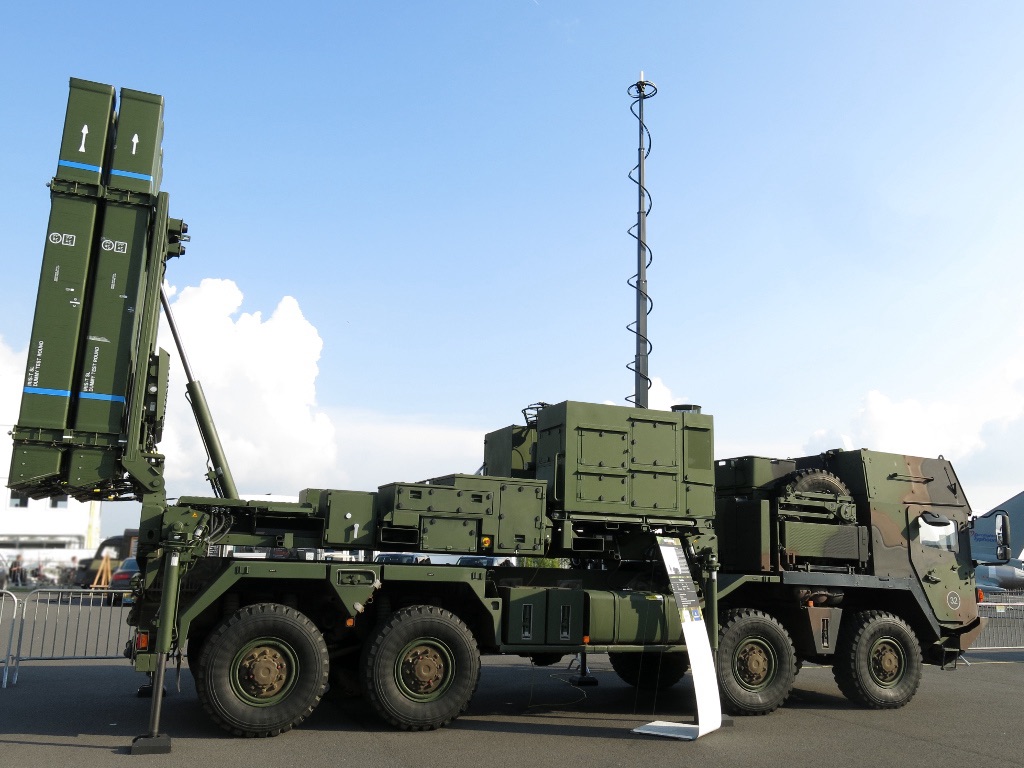
Advanced Air Defence with a Focus on Precision and Mobility
The IRIS-T SL (Infra Red Imaging System Tail/Thrust Vector Controlled – Surface Launched) represents one of the most modern and capable short- to medium-range air defence systems available today. Developed by the German company Diehl Defence, the IRIS-T SL is designed to combat a wide range of modern air threats with high precision and mobility. The system is based on the successful IRIS-T air-to-air missile and extends its capabilities to the surface-to-air domain.
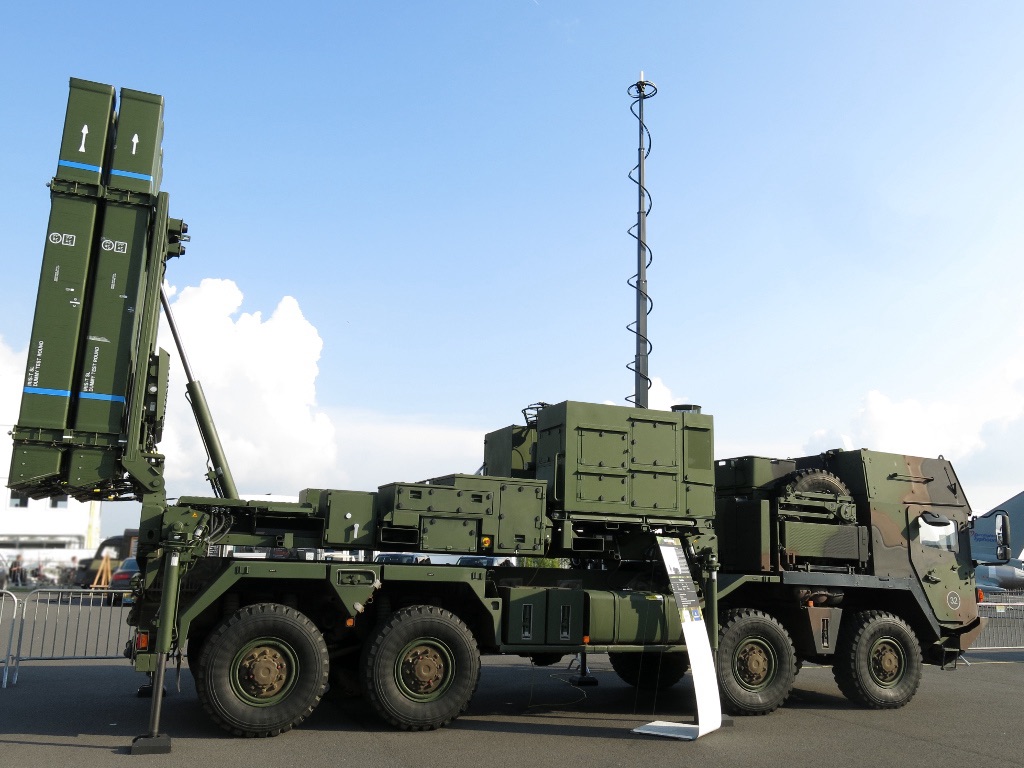
The IRIS-T SL is a modern and advanced air defence system that has established itself as an important player in short- and medium-range air defence. With its high precision, mobility, and ability to combat a wide range of modern threats, the IRIS-T SL represents a significant increase in capability for countries that acquire the system. Operational use, particularly in Ukraine, has confirmed the system’s effectiveness and underscored its importance in today’s security landscape. The IRIS-T SL is an example of innovation and advanced technology within the European defence industry, and helps to strengthen the air defence for countries facing modern air threats.
Development and Background
The development of the IRIS-T began in the 1990s as a joint European programme to replace the AIM-9 Sidewinder air-to-air missile. Germany led the development, with participation from a number of other European nations. The goal was to create a modern short-range missile with high manoeuvrability and resistance to countermeasures.
Based on the success of the air-to-air version, Diehl Defence began developing a ground-launched version, the IRIS-T SL, to meet the need for modern short- and medium-range air defence. The development of the IRIS-T SL focused on utilising the missile’s advanced capabilities in a surface-to-air role, with an emphasis on high precision, mobility and the ability to combat a wide range of threats, including cruise missiles, drones, aircraft and helicopters. The IRIS-T SL was first publicly presented in 2007 and has since undergone further development and improvements.
During a widely publicized test in January 2014 the configuration tested was that of the IRIS-T SL launcher, a CEAFAR active phased array radar from CEA Technologies in Australia, the BMD-Flex command, control and communication system from Terma in Denmark and the Oerlikon Skymaster battle management system from Rheinmetall Air Defence in Switzerland. Diehl Defence integrated all components and provided the missiles and launcher. The company stressed that the IRIS-T SLM GBADS is a modular design featuring open system architecture, allowing it to use a variety of radars and control systems.
System Components and Capabilities
The IRIS-T SL is a modular and flexible system that consists of several main components:
- Launcher: The IRIS-T SL uses mobile launch units that are typically based on truck chassis. Each launch unit can carry a number of IRIS-T SL missiles in containers. The launch unit is designed for rapid deployment and redeployment, which contributes to the system’s high mobility.
- Missiles: The system uses the IRIS-T SL missile, which is a ground-launched variant of the IRIS-T air-to-air missile. The IRIS-T SL missile is characterised by:
- Infrared (IR) seeker: Uses an advanced infrared seeker that provides high precision and resistance to electronic countermeasures. This makes the system particularly effective against low-flying targets and in environments with electronic jamming.
- Thrust Vector Control (TVC): The missile is equipped with thrust vector control, which provides extreme manoeuvrability, especially in the final stages of flight towards the target. This increases the probability of hitting, even against fast and manoeuvring targets.
- Range: The IRIS-T SL has a range of up to 40 km, which places it in the category of short- to medium-range air defence.
- High speed: The missile operates at hypersonic speed, which reduces the target’s reaction time.
- Radar: The IRIS-T SL can be integrated with various radars depending on the customer’s needs and existing infrastructure. Often, the CEAFAR/CEAMOUNT radars from the Australian company CEA Technologies are used. These radars are active, electronically steered phased array radars that provide:
- 3D airspace surveillance: Continuous surveillance of the airspace in 360 degrees.
- Rapid target detection and tracking: Ability to quickly detect and track a large number of targets simultaneously.
- High accuracy: Precise target data for effective missile guidance.
- Fire Control Centre: This unit is the centre of the IRIS-T SL system. It receives data from the radar, creates a situational picture, identifies and prioritises threats, and calculates firing solutions. The C2 unit enables:
- Network integration: The system can be integrated into a larger air defence network for increased situational awareness and coordination.
- Automated threat assessment: Assistance to operators in quickly assessing and prioritising threats.
- Effective weapon allocation: Optimal allocation of missiles to the most prioritised targets.
Capabilities
The IRIS-T SL is designed to combat a wide range of modern air threats, including:
- Aircraft: Fighter jets, bombers, transport aircraft.
- Helicopters: Combat helicopters, attack helicopters, transport helicopters.
- Cruise missiles: Low-flying cruise missiles, including those designed to avoid radar.
- Drones (UAV/UAS): Both military drones and smaller, commercial drones.
- Ballistic missiles (tactical): In some configurations, the IRIS-T SL may also have a limited ability to engage tactical ballistic missiles.
The IRIS-T SL is particularly well-suited to protect:
- Military forces in the field: Provides mobile air defence for advancing or stationary military units.
- Important infrastructure: Airports, ports, power plants, command centres.
- Urban areas: Cities and densely populated areas that are vulnerable to air attacks.
The system’s high mobility and relatively fast reaction time make it effective in dynamic and unpredictable conflict scenarios. The IRIS-T SL can operate independently or as part of a layered air defence network, in cooperation with longer-range systems.
Operational Use and Deployment
Although the IRIS-T SL is a relatively new system, it has already been acquired by several countries, and has proven to be operationally effective, particularly in Ukraine.
- Ukraine: Ukraine has received several IRIS-T SL systems from Germany, and these have been used in the defence against Russian air attacks. Ukrainian authorities have reported the system’s high effectiveness against cruise missiles and drones, and have emphasised its importance in protecting civilian infrastructure and population. The operational use in Ukraine has given the IRIS-T SL considerable attention and confirmed its capabilities in real combat situations.
- Egypt: Egypt is another known operator of the IRIS-T SL system. It is believed that Egypt uses the system to protect critical infrastructure and military installations.
Other European buyers
As of April 2025, several European countries have procured or are in the process of acquiring the IRIS-T SLM (Surface-Launched Medium-range) air defense system developed by Germany’s Diehl Defence. These acquisitions are often part of broader initiatives like the European Sky Shield Initiative (ESSI) or the Joint Air Missile Defence Initiative in Europe (JAMIE), aimed at enhancing collective air defense capabilities. Below is an updated overview:
🇩🇪 Germany
- Procurement: Ordered six IRIS-T SLM fire units for its air force.
- Initiatives: Founding member of ESSI; also participates in JAMIE.
🇪🇪 Estonia & 🇱🇻 Latvia
- Procurement: Jointly ordered IRIS-T SLM systems in September 2023. AP News
- Initiatives: Founding members of ESSI; also participate in JAMIE.
🇸🇮 Slovenia
- Procurement: Signed a contract for one IRIS-T SLM fire unit under the ESSI framework in January 2024.
- Initiatives: Participant in ESSI; also involved in JAMIE.
🇧🇬 Bulgaria
- Procurement: Signed a contract for one IRIS-T SLM fire unit in October 2024, with options for additional units.
- Initiatives: Participant in ESSI; also involved in JAMIE.
🇦🇹 Austria
- Procurement: Plans to purchase eight IRIS-T fire units, including both SLM and SLS variants.
- Initiatives: Participant in ESSI; also involved in JAMIE.
🇨🇭 Switzerland
- Procurement: In advanced negotiations to acquire four or five IRIS-T SLM systems.
- Initiatives: Participant in ESSI; also involved in JAMIE.
🇺🇦 Ukraine
- Procurement: Germany has delivered six IRIS-T SLM systems to Ukraine, with plans to deliver six more.
- Initiatives: Not part of ESSI or JAMIE; receives systems through bilateral agreements with Germany.
On Configurations: While specific radar and battle management system configurations for some countries have not been publicly disclosed, the IRIS-T SLM system is designed for integration with various radar systems and command and control centers, allowing for flexibility based on national requirements and existing defense infrastructure.
Advantages and Strengths
The IRIS-T SL has several key strengths that contribute to its effectiveness and appeal:
- High precision and hit probability: The infrared seeker and thrust vector control give the missile very high precision, even against manoeuvring and advanced targets.
- Effective against cruise missiles and drones: The system is specifically designed to combat the modern threats from cruise missiles and drones, which are often difficult to detect and combat for older air defence systems.
- Mobility and rapid deployment: Mobile launch units and components make the system quick to deploy and redeploy, which is important in modern, dynamic conflict scenarios.
- Modular and flexible design: Can be adapted to different needs and integrated into existing air defence networks.
- Resistant to countermeasures: The infrared seeker is less vulnerable to electronic jamming than radar-based systems.
- Continuous development: Diehl Defence continuously invests in further development and upgrading of the IRIS-T SL to meet future threats and technological advances.
- European technology: Represents high-quality European technology, and reduces dependence on non-European suppliers for European countries.

