

A Versatile and Modern Air Defence System
The Norwegian Advanced Surface-to-Air Missile System (NASAMS) is a highly adaptable, medium-range air defence system developed in collaboration between Kongsberg Defence & Aerospace and Raytheon Missiles & Defence. First operational in 1998, NASAMS has since become a crucial component of air defence strategies for multiple nations.
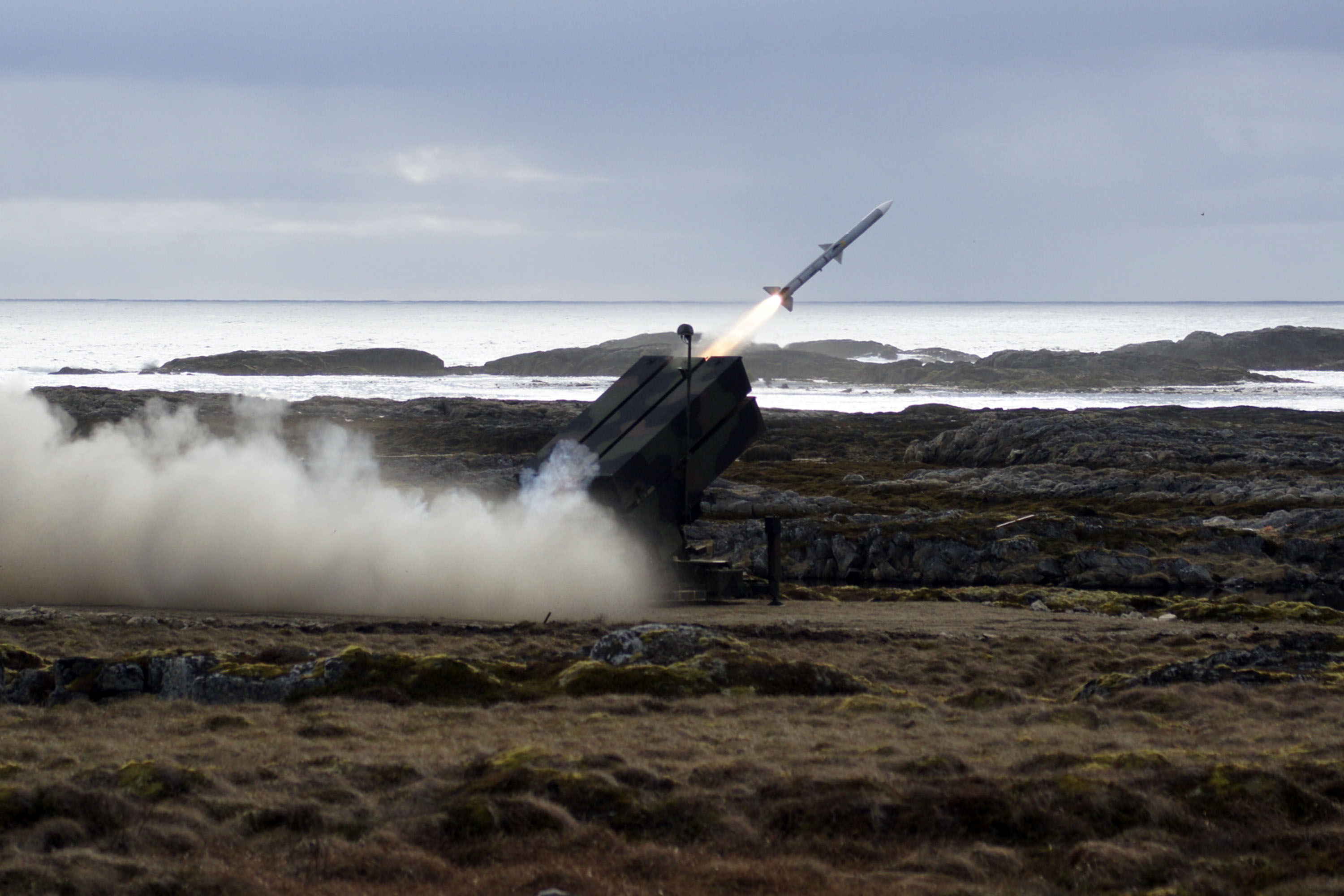
Photo: The Dutch Ministerie van Defensie
System Architecture and Capabilities
NASAMS is a network-centric air defence system with a modular structure, allowing for flexibility and scalability. A typical NASAMS unit consists of:
- A Fire Distribution Centre (FDC) for command and control
- An active 3D radar, typically the Raytheon AN/MPQ-64F1 Sentinel
- Passive electro-optical and infrared sensors
- Multiple missile launchers equipped with AIM-120 AMRAAM missiles
This configuration enables simultaneous engagement of multiple targets, including fixed-wing aircraft, helicopters, drones, and cruise missiles.
Evolution and Upgrades
Since its introduction, NASAMS has undergone several upgrades:
- NASAMS 1 (1998): The first operational version
- NASAMS 2 (2007): Introduced enhanced networking capabilities, including Link 16 integration, improving battlefield awareness and coordination
- NASAMS 3 (2019): Supports additional missile types, such as AMRAAM-ER, extending its operational range.
Global Adoption and Operational Use
As of 2022, NASAMS is actively deployed by 13 countries, including Norway, the United States, Spain, the Netherlands, Finland, Oman, Lithuania, and Indonesia, with additional contracts for Australia, Qatar, Hungary, and Ukraine. Furthermore, nations such as Poland, Greece, and Turkey have implemented Kongsberg’s command and control solutions for various weapons systems.
One of NASAMS’ most prominent operational roles is its deployment in Washington D.C., where it has been safeguarding the U.S. capital since 2005, demonstrating its reliability and effectiveness in real-world air defence scenarios.
Flexibility and Future Prospects
The modular design of NASAMS allows it to integrate various missile types and sensors, ensuring its continued relevance against evolving threats. With ongoing technological advancements, NASAMS remains at the forefront of modern air defence, providing robust and adaptable protection for nations worldwide.

